Operator Safety Practice Questions
Safety sits inside the administrative and safety areas of every California, Texas and WPI outline. These questions cover the rules that keep operators alive.
100 questions across the published subjects, with a score for every area and an explanation for every option.
Or try the free safety drill- 31 original safety questions, every option explained
- Tested on 25 of our 25 practice exams
What is the safe range for oxygen in a confined space under OSHA rules?
What our safety questions cover
- Permit-required confined spaces, gas testing order and rescue
- Hydrogen sulfide, methane and oxygen limits
- Trenches 5 feet and deeper, spoil piles and competent persons
- Work-zone traffic control, lockout/tagout and electrical safety
- Chemical PPE, SDSs, lifting, ladders, noise and hygiene
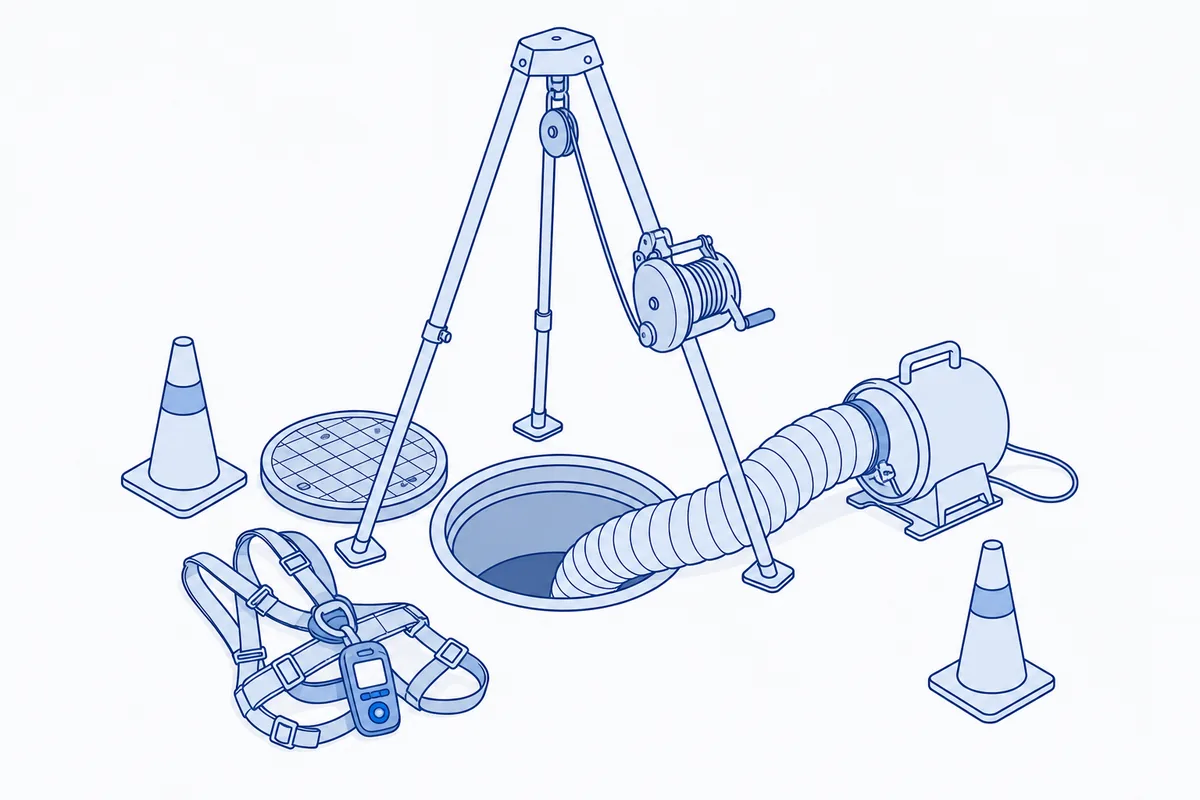
This list is our own summary, written for practice. The exam owners publish their outlines: California’s Expected Range of Knowledge, TCEQ’s Need-to-Know Criteria and WPI’s Need-to-Know Criteria.
Drill safety, then sit a full practice exam
100 questions across the published subjects, with a score for every area and an explanation for every option.
Or try the free safety drillIdeas the questions test most
- Test oxygen first, then flammables, then toxics.
- Safe oxygen: 19.5 to 23.5 percent.
- H2S is heavier than air and deadens the sense of smell.
- Attendants never enter to rescue.
Start the free safety drill · TCEQ Class D Water practice test · California T1 practice test · California T2 practice test · California T3 practice test · California T4 practice test · California D1 practice test
Common questions
What is the safe oxygen range for confined space entry?
OSHA defines oxygen-deficient air as below 19.5 percent and oxygen-enriched air as above 23.5 percent.
When does a trench need shoring or a shield?
OSHA requires a protective system for trenches 5 feet or deeper unless they are entirely in stable rock, and a ladder in trenches 4 feet or deeper.
100 questions across the published subjects, with a score for every area and an explanation for every option.
Or try the free safety drillMore operator topics
- Source Water and Wells
- Coagulation, Sedimentation and Filtration
- Water Disinfection and Chlorination
- Corrosion, Iron, Manganese and Fluoride
- Water Lab and Sampling
- Water Mains, Valves and Hydrants
- Distribution Hydraulics and Storage
- Cross-Connection and Backflow
- Drinking Water Regulations
- Water Math
- Pumps, Motors and Equipment
- Management, Records and Customer Service
- Preliminary and Primary Treatment
- Activated Sludge
- Trickling Filters, RBCs and Ponds
- Sludge Digestion and Biosolids
- Wastewater Disinfection and Effluent
- Wastewater Lab and Sampling
- Wastewater Permits and Regulations
- Wastewater Math
- Sewer Cleaning and Inspection
- Collection System Maintenance
- Inflow, Infiltration and Overflows
- Lift Stations
Outlines used for these questions: Expected Range of Knowledge, Drinking Water Treatment Exam (rev. 4/2020, PDF) · Expected Range of Knowledge, Drinking Water Distribution Exam (rev. 4/2020, PDF) · TCEQ: Need-to-Know Criteria for public water system operators · TCEQ: What applicants for wastewater licenses need to know · WPI: 2025 Need-to-Know Criteria.
Game Assessment Prep is an independent practice site, not affiliated with or endorsed by Water Professionals International (WPI, formerly ABC), the California State Water Resources Control Board or the Texas Commission on Environmental Quality. Every question is original; none is taken from a certification exam, an official study guide or another prep provider.