Free MCA Orals Practice Questions
Original questions on the MCA deck oral syllabus, from COLREGs and IALA buoyage to the Master’s law, each with the model answer an examiner expects. Knowledge practice for a spoken exam, plus a timed OOW Part A practice test.
Two sailing vessels are approaching with risk of collision. One has the wind on her port side, the other on her starboard side. Which keeps out of the way?
435 original questions · 137 on COLREGs and IALA buoyage, the two 90% Part A topics · 30 with drawings of lights, shapes and buoys
MCA orals practice questions by topic
The nine OOW topics are the ones MIN 690 names for Part A, with the MCA’s minimum for each; the two Master topics follow the Master Unlimited syllabus in MIN 653. Each topic has a guide with study notes and a free ten-question drill with a model answer after every question.
COLREGs
Part A: 3 of 15 questions · 90% to pass
Steering and sailing rules, lights and shapes, and sound and light signals: lookout, safe speed, risk of collision, crossing and overtaking, narrow channels, traffic separation schemes and restricted visibility.
IALA Buoyage
Part A: 3 of 15 questions · 90% to pass
Lateral marks in Regions A and B, cardinal, isolated danger, safe water, special and emergency wreck marks: shapes, colours, topmarks and light rhythms, and the direction of buoyage.
Navigational Procedures
Part A: 3 of 15 questions · 80% to pass
Passage planning, keeping a navigational watch, calling the master, position fixing, ECDIS, radar and ARPA, compass errors, tides, publications and the bridge procedures an officer of the watch follows.
Seaworthiness
Part A: 1 of 15 questions · 50% to pass
Stability terms (G, M, GM, GZ), free surface, list and loll, load lines, watertight integrity and preparing the ship for sea and for heavy weather.
Cargo Work
Part A: 1 of 15 questions · 50% to pass
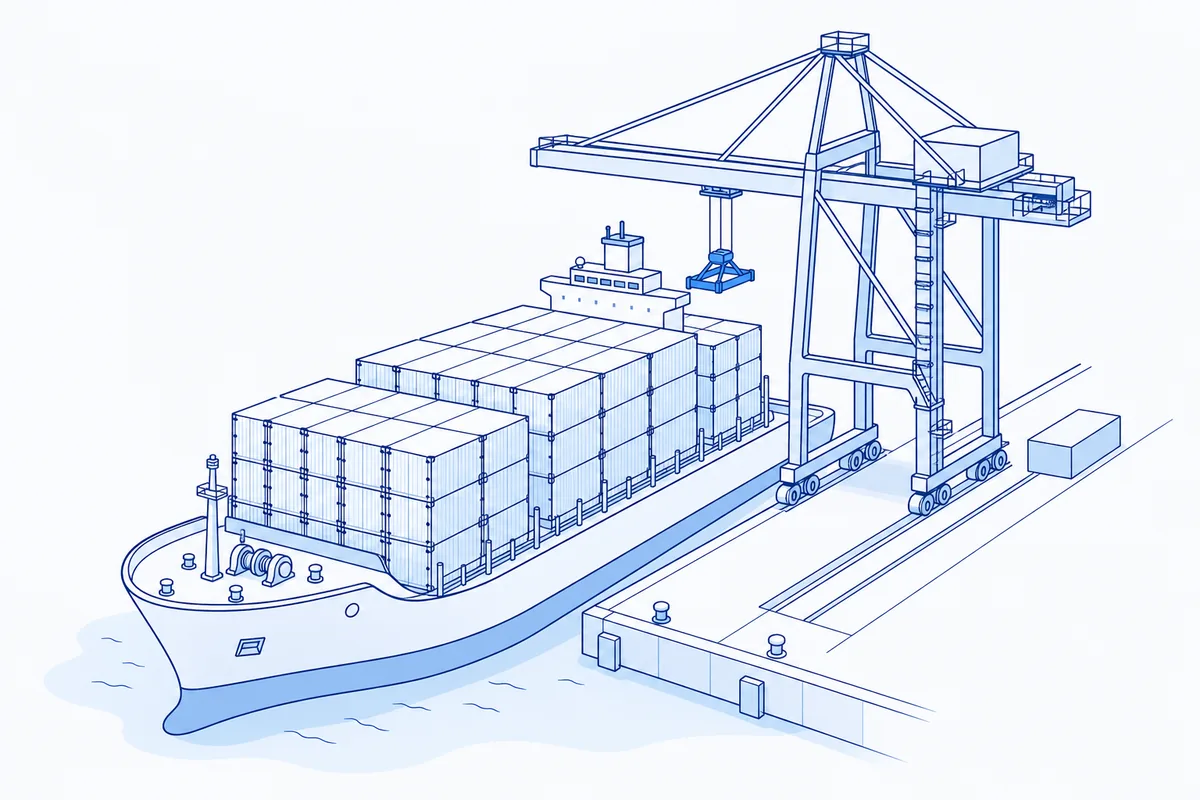
Cargo handling, stowage and securing, the IMDG Code, bulk, grain, liquid, container, reefer, ro-ro and timber cargoes, enclosed space entry and the hydrometer.
Emergency Procedures
Part A: 1 of 15 questions · 50% to pass
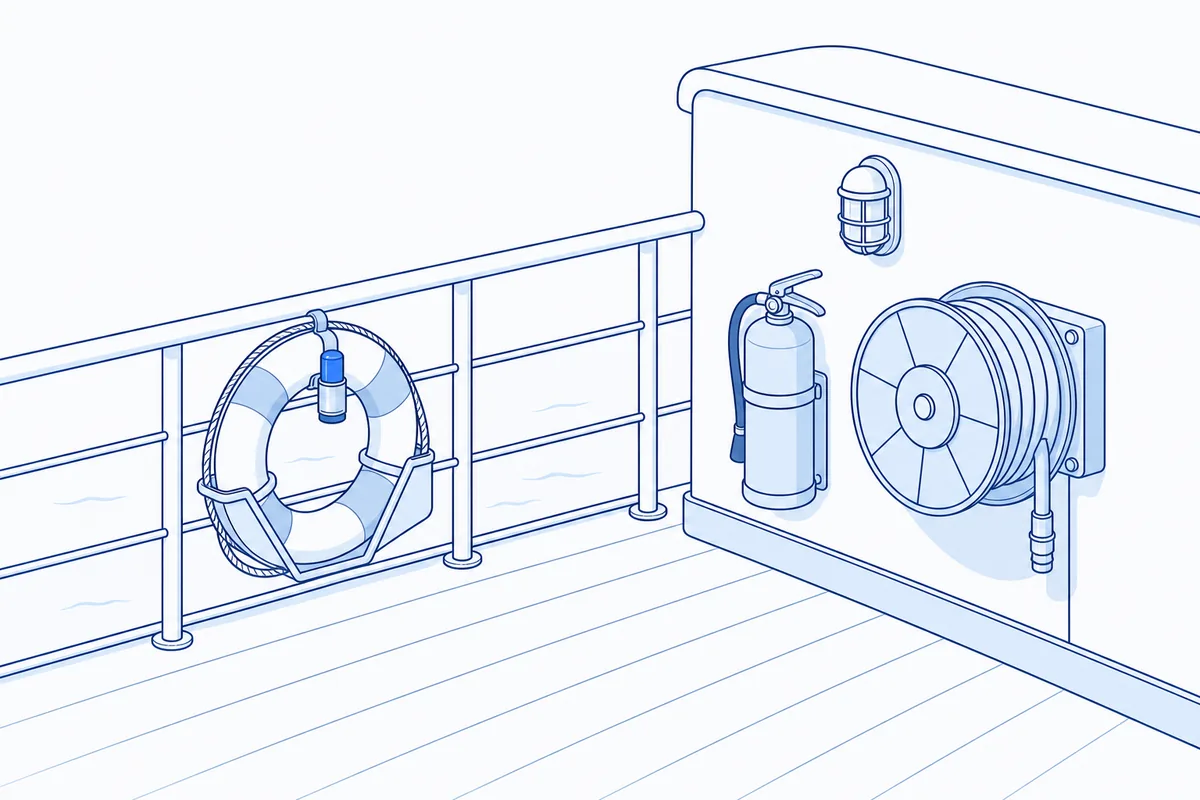
Initial action for man overboard, collision, grounding, flooding, fire, steering failure and abandoning ship; fire-fighting and life-saving appliances, survival craft and medical emergencies.
Communication
Part A: 1 of 15 questions · 50% to pass
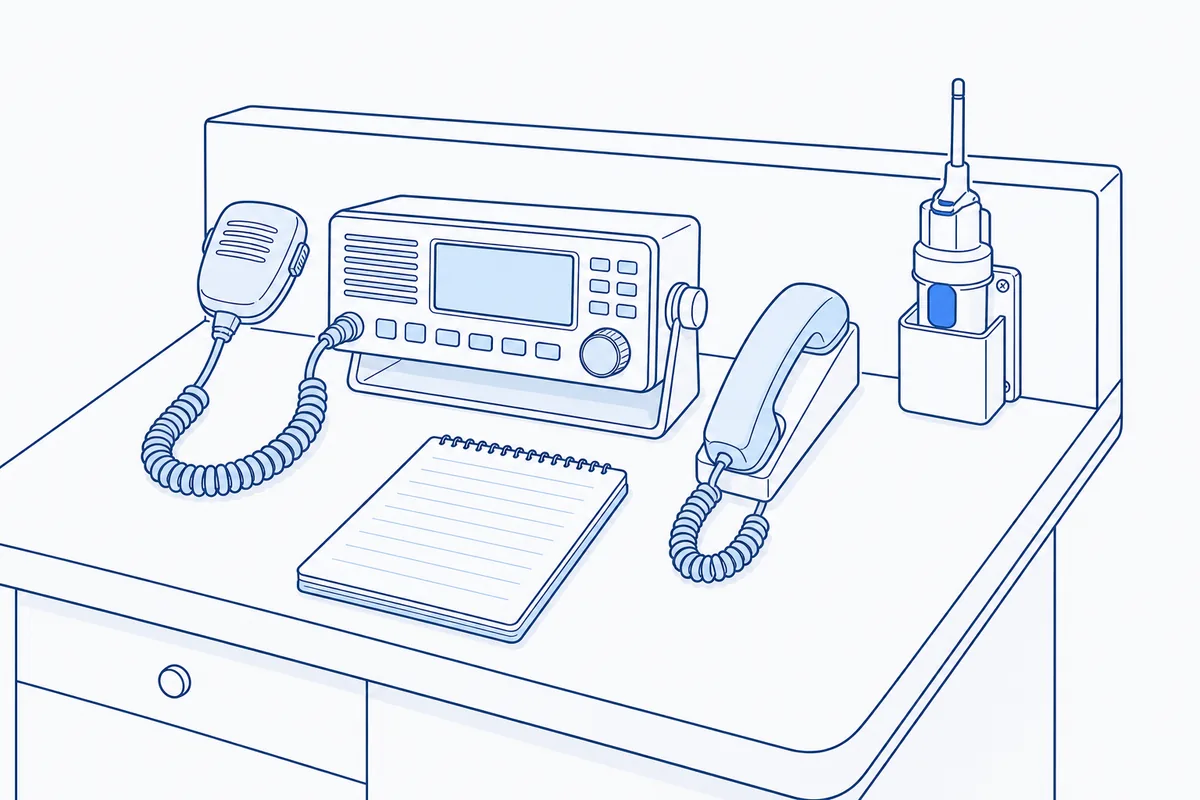
Distress, urgency and safety messages, GMDSS equipment and sea areas, EPIRBs and SARTs, IAMSAR Volume III, the International Code of Signals and the IMO Standard Marine Communication Phrases.
Regulation
Part A: 1 of 15 questions · 50% to pass
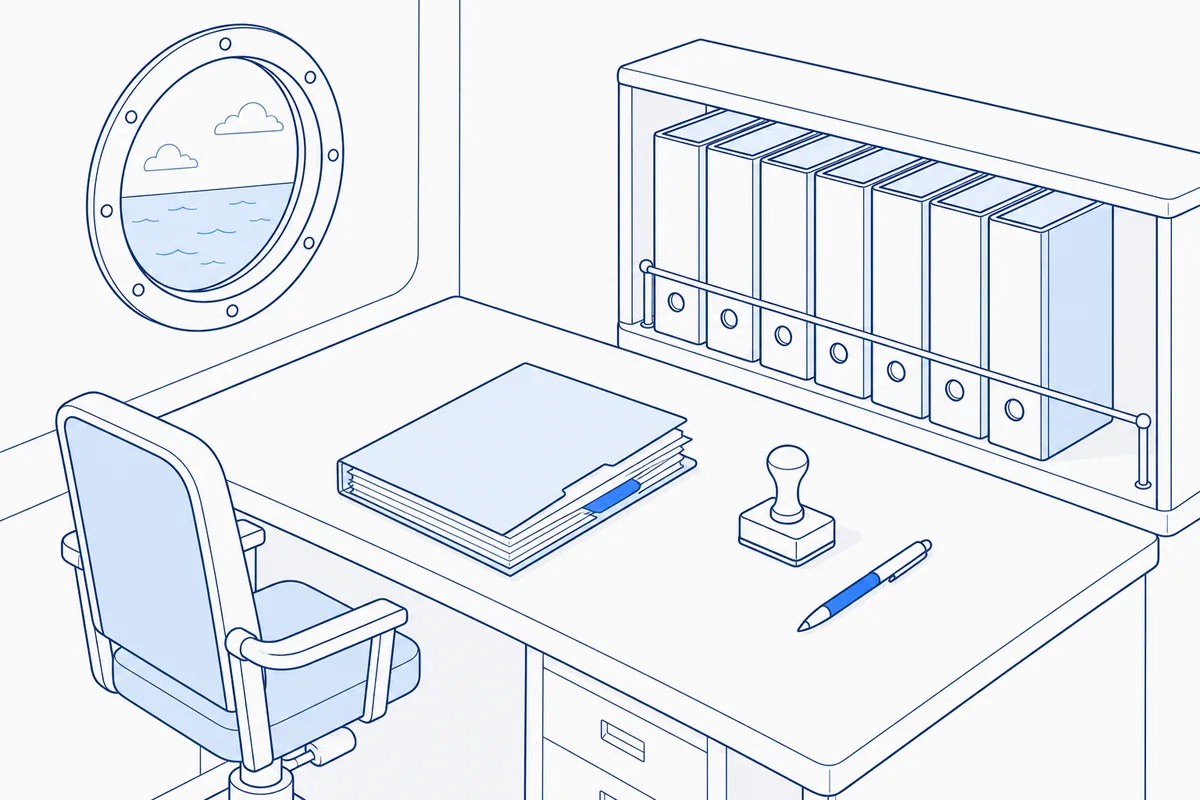
SOLAS, MARPOL, STCW, the ISM and ISPS Codes, MLC 2006, flag and port state control, Merchant Shipping Notices, MGNs and MINs, and the Code of Safe Working Practices.
Ship Handling, Meteorology and Security
Part A: 1 of 15 questions · 50% to pass
Anchoring, berthing, squat and interaction, pilot transfer, tropical revolving storms, weather systems and forecasts, and security levels and duties.
Master: Law and Surveys
Master and Chief Mate orals
Statutory certificates and surveys, load line, safe manning, crew agreements, the official log book, hours of rest, port state control, the master’s legal duties and the documents of carriage.
Master: Operations
Master and Chief Mate orals
Management-level stability, damage and flooding, angle of loll, dry-docking, emergency towing, search and rescue coordination, ice, heavy weather and the master’s decisions in an emergency.
Mixed
Every OOW and Master topic
Ten questions drawn from every topic, OOW and Master, for a quick check across the whole syllabus.
Ready for Part A?
15 questions of four test points (60 in all) in 40 minutes, in the MCA’s topic split and scored against every topic minimum, with a model answer for every point.
Or start with a free drillThe MCA oral exam at a glance
The MCA oral is a spoken interview with an MCA examiner. These are knowledge drills for it, with the model answer an examiner would expect after every question; they are not a simulation of the interview. The timed test copies the format of the OOW Part A computer-based exam.
The Maritime and Coastguard Agency (MCA) issues UK Certificates of Competency to merchant navy officers. After your sea service, training and college qualification, you apply for a Notice of Eligibility (£220) and sit the oral, the final assessment before the certificate. These pages follow the MCA deck oral syllabus in MIN 653 (Amendment 1, extended to May 2027) and the Part A rules in MIN 690 (checked November 2026).
- Exam
- The MCA oral examination, which every candidate for a UK Certificate of Competency (CoC) passes before the CoC is issued. Deck orals include Officer of the Watch (OOW) Unlimited (STCW II/1), Chief Mate and Master Unlimited (STCW II/2) and the near-coastal and smaller-ship certificates; engineer orals cover the EOOW, Second and Chief Engineer certificates
- How the oral runs
- One-to-one with an MCA examiner over Microsoft Teams, recorded. The examiner presents routine, non-routine and emergency scenarios and probes your answers; questions can come from any part of the syllabus. The examiner tells you the result at the end
- OOW Part A
- OOW Unlimited (II/1) candidates first pass Part A: an online, proctored computer-based exam of 15 questions, each with four test points, in at most 40 minutes. Three questions each on the Collision Regulations, IALA buoyage and navigational procedures; six from the rest of the syllabus
- Part A pass marks
- Every topic has its own minimum: Collision Regulations 90%, IALA buoyage 90%, navigational procedures 80%, and 50% in seaworthiness, cargo work, emergency procedures, communication, regulation and other topics. MIN 690 says the minimums are not negotiable
- Part B
- The oral itself, booked once Part A is passed. Part B must be passed within 12 months of the Part A pass, or Part A is taken again
- Fees
- Notice of Eligibility (NOE) application £220 including courier (MSF 4274, June 2026). Oral or Part B resit £159. Part A: first attempt no extra charge, second attempt £159, later attempts £84
- Resits
- Second attempt at least two weeks after the first; third at least six weeks after the second, with all other CoC evidence submitted; fourth at least three months after the third; three months’ further sea service before a fifth. Appeals within five working days
- Validity
- An oral pass is valid for three years and must be in date when the CoC is issued. A Part A pass is valid for one year
- Written exams
- Separate from the oral. Deck candidates who started before August 2025 sit the MCA written safety exams in navigation and stability, run by Qualifications Scotland, until April 2028 (degree routes are exempt); new starters take the MCA Deck Operational Level Digital Assessment (MIN 720)
- Pass rate
- The MCA does not publish oral exam pass rates or candidate numbers
What these drills can and cannot do for a spoken exam
- They test the knowledge the examiner builds scenarios on: the rule, the light, the mark, the procedure, the regulation. If you cannot pick the right answer from four, you will not produce it unprompted.
- Every question ends with a model answer in the words an examiner listens for, so you can practise saying it.
- They do not reproduce the oral itself: the follow-up questions, the escalating scenario, the model board or the examiner’s judgement of how you explain. For that, say each answer out loud before you check it, and practise with a colleague or an instructor.
- The timed test copies the published structure and minimums of OOW Part A, the computer-based exam before the oral.
How to use this MCA orals prep
- Take the free mixed drill to see where you stand.
- Drill COLREGs and IALA buoyage until you score 90% or better: Part A needs 90% in each, and every deck oral returns to them.
- Drill navigational procedures to 80%, then the six other OOW topics.
- Take the Part A practice test under the 40-minute clock. Drill any topic below its minimum and take it again; each new sitting draws questions you have not seen first.
- For the Master or Chief Mate oral, add the two Master drills on law, certificates and surveys, and on stability, damage and emergencies.
- Say every answer out loud before you check it. The oral is spoken.
Common questions
Is the MCA oral exam multiple choice?
No. The oral, and Part B for OOW Unlimited candidates, is a spoken interview with an MCA examiner over Microsoft Teams. Only Part A, the computer-based exam OOW Unlimited candidates pass before booking the oral, is answered on screen. These pages are knowledge practice for both: every question ends with the model answer an examiner expects, and the timed test copies the Part A format.
What is the MCA OOW Part A exam?
An online, proctored computer-based exam for OOW Unlimited (STCW II/1) candidates with an NOE issued from 1 May 2023. It has 15 questions, each with four test points, and lasts at most 40 minutes: three questions each on the Collision Regulations, IALA buoyage and navigational procedures, and six from the rest of the MIN 653 syllabus. You must pass it before you can book Part B, the oral.
What is the pass mark for MCA Part A?
Each topic has its own minimum, and you need every one: 90% on the Collision Regulations, 90% on IALA buoyage, 80% on navigational procedures and 50% on each of seaworthiness, cargo work, emergency procedures, communication, regulation and other topics (ship handling, meteorology, safety and security). The practice test scores you against the same minimums.
How much does the MCA oral exam cost?
The Notice of Eligibility application that leads to the oral costs £220 including courier (MSF 4274, June 2026). A resit of the oral or Part B costs £159. The first Part A attempt has no extra charge; a second Part A attempt costs £159 and later attempts £84.
How soon can I resit a failed MCA oral?
At least two weeks after the first attempt for the second, at least six weeks after the second for the third (with all your other CoC evidence submitted), and at least three months after the third for the fourth. A fifth attempt needs three more months of sea service first. The same intervals apply to Part A.
What topics come up in the Master oral?
MIN 653 maps the Master Unlimited oral to STCW table A-II/2 at management level: passage planning and weather routing, collision regulations, search and rescue, damage and stability, cargo and hull stress, dry-docking, emergency towing, certificates and surveys, load line, safe manning, crew agreements, hours of rest, the ISM and ISPS Codes, MARPOL and the master’s legal duties. The two Master drills cover these.
Do these pages cover the engineer orals (EOOW, Second and Chief Engineer)?
Not yet. The questions follow the deck syllabus in MIN 653: OOW Unlimited and Master Unlimited. The engineer orals follow a separate syllabus, MIN 654.
Does the MCA publish oral exam pass rates?
No. The MCA does not publish pass rates or the number of candidates for its oral examinations.
Are these past MCA oral questions?
No. Every question here is original, written from the MCA’s published syllabus (MIN 653), the COLREG text in MSN 1781 and the IALA Maritime Buoyage System. They are not questions reported by candidates and not MCA questions.
Ready for exam day?
15 questions of four test points (60 in all) in 40 minutes, in the MCA’s topic split and scored against every topic minimum, with a model answer for every point.
Or start with a free drillSources
- MCA: MIN 653 (M) Amendment 1, Deck Oral Exam Syllabus (OOW, Chief Mate and Master; expires 1 May 2027)
- MCA: MIN 690 Amendment 6, oral exam booking, Part A and Part B, resits and appeals
- MCA: MSF 4274, application for a deck oral examination (fees, oral pass validity)
- MCA: MIN 720 (M) Amendment 1, modernised officer qualifications and digital assessments (30 September 2026)
- MCA: MIN 654 (M) Amendment 1, Engineering and Electro-technical Officer Oral Exam Syllabus
- MCA: MSN 1781 (M+F) Amendment 3, the COLREG as applied in the UK
- IALA: Recommendation R1001, the IALA Maritime Buoyage System (Edition 2.0)
Contains public sector information licensed under the Open Government Licence v3.0.
Original practice questions written from the MCA deck oral exam syllabus (MIN 653), the COLREG 1972 as applied by MSN 1781 and the IALA Maritime Buoyage System; they are not MCA questions or questions reported by candidates. The real oral is a spoken interview with an MCA examiner, and this is knowledge practice for it, not a simulation of the interview. Independent practice, not affiliated with or endorsed by the Maritime and Coastguard Agency.