Water Lab and Sampling Practice Questions
Laboratory procedures are 15 questions on every California T exam and 16 on WPI’s Class I and II water treatment exams. Practice the tests operators run.
100 questions in the official content counts, with a score for every area and an explanation for every option.
Or try the free water lab drill- 31 original water lab questions, every option explained
- Tested on 16 of our 25 practice exams
Why should water temperature be recorded with disinfection data?
What our water lab questions cover
- Collecting bacteriological, lead and copper and chlorine samples
- Total coliform, E. coli and HPC; RTCR repeat sampling
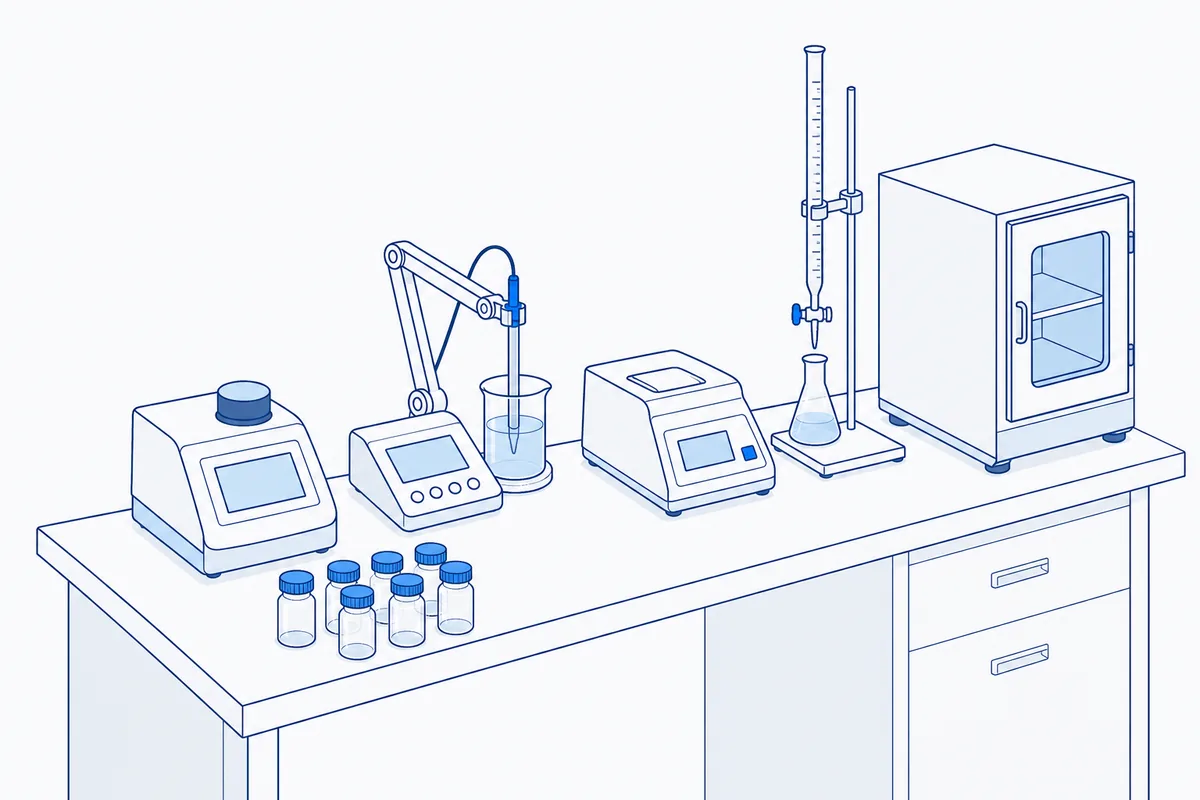
- pH, alkalinity and hardness titrations, turbidity and conductivity
- DPD chlorine and fluoride methods
- Lab safety, reagents, duplicates and calibration curves
This list is our own summary, written for practice. The exam owners publish their outlines: California’s Expected Range of Knowledge, TCEQ’s Need-to-Know Criteria and WPI’s Need-to-Know Criteria.
Drill water lab, then sit a full practice exam
100 questions in the official content counts, with a score for every area and an explanation for every option.
Or try the free water lab drillIdeas the questions test most
- Sodium thiosulfate in the bottle neutralizes chlorine.
- Compliance coliform samples: 30-hour holding time.
- Read DPD free chlorine within about a minute.
- Add acid to water, never water to acid.
Start the free water lab drill · California T2 practice test · California T1 practice test · California T3 practice test · California T4 practice test · California D1 practice test · California D2 practice test
Common questions
What does a yellow, fluorescent Colilert result mean?
Yellow means total coliforms are present; yellow plus blue fluorescence under long-wave UV means E. coli is present.
How soon must repeat samples be taken after a positive coliform sample?
Under the Revised Total Coliform Rule, at least three repeat samples within 24 hours of learning of the positive result.
100 questions in the official content counts, with a score for every area and an explanation for every option.
Or try the free water lab drillMore operator topics
- Source Water and Wells
- Coagulation, Sedimentation and Filtration
- Water Disinfection and Chlorination
- Corrosion, Iron, Manganese and Fluoride
- Water Mains, Valves and Hydrants
- Distribution Hydraulics and Storage
- Cross-Connection and Backflow
- Drinking Water Regulations
- Water Math
- Pumps, Motors and Equipment
- Operator Safety
- Management, Records and Customer Service
Outlines used for these questions: Expected Range of Knowledge, Drinking Water Treatment Exam (rev. 4/2020, PDF) · Expected Range of Knowledge, Drinking Water Distribution Exam (rev. 4/2020, PDF) · TCEQ: Need-to-Know Criteria for public water system operators · TCEQ: What applicants for wastewater licenses need to know · WPI: 2025 Need-to-Know Criteria.
Game Assessment Prep is an independent practice site, not affiliated with or endorsed by Water Professionals International (WPI, formerly ABC), the California State Water Resources Control Board or the Texas Commission on Environmental Quality. Every question is original; none is taken from a certification exam, an official study guide or another prep provider.