Free Home Health Aide Practice Test (HHA Competency and CHHA Exams)
Home health aide practice questions on every subject in the federal competency evaluation, plus timed mocks for the NCCT CHHA, the DC HHA exam and the Washington home care aide exam, with an explanation for every answer.
A client is coughing forcefully after a bite of food but can still talk. What should the aide do?
434 original questions on all 13 federal subjects · 133 Washington-style true/false statements · 4 timed mocks in each exam’s own format
Home health aide practice exams
Pick the test you are taking. Most aides take an agency or training-program test built on the federal subjects; the NCCT CHHA, DC and Washington exams have their own published formats, and each mock follows them. Every exam has a guide with free sample questions.
HHA Competency Test practice test
Medicare home health agencies in every state · all 13 federal subjects
There is no single national home health aide exam.

NCCT CHHA practice test
National (voluntary certification) · 150 questions
The National Center for Competency Testing (NCCT) gives the Certified Home Health Aide (CHHA) exam, a voluntary national certification.
DC HHA practice test
Washington, DC · 70 questions
The District of Columbia certifies home health aides by exam.
Washington HCA practice test
Washington State · 60 questions, mostly true/false
Washington certifies home care aides through a Department of Health exam given by Prometric: a knowledge exam and a skills exam.
Home health aide practice questions by topic
One topic for each of the 13 subjects in 42 CFR 484.80, plus the aide’s role, client rights and ethics. Each topic has a free ten-question drill with an explanation after every answer.

Communication Skills
24 questions
Talking with clients and families, hearing and vision loss, aphasia after a stroke, dementia, interpreters, open questions, listening and reporting clearly to the nurse.
Observing, Reporting and Documenting
32 questions
Objective and subjective information, what to report and how fast, visit notes, intake and output in mL, the 24-hour clock, incident reports and correcting records.
Temperature, Pulse and Respiration
28 questions
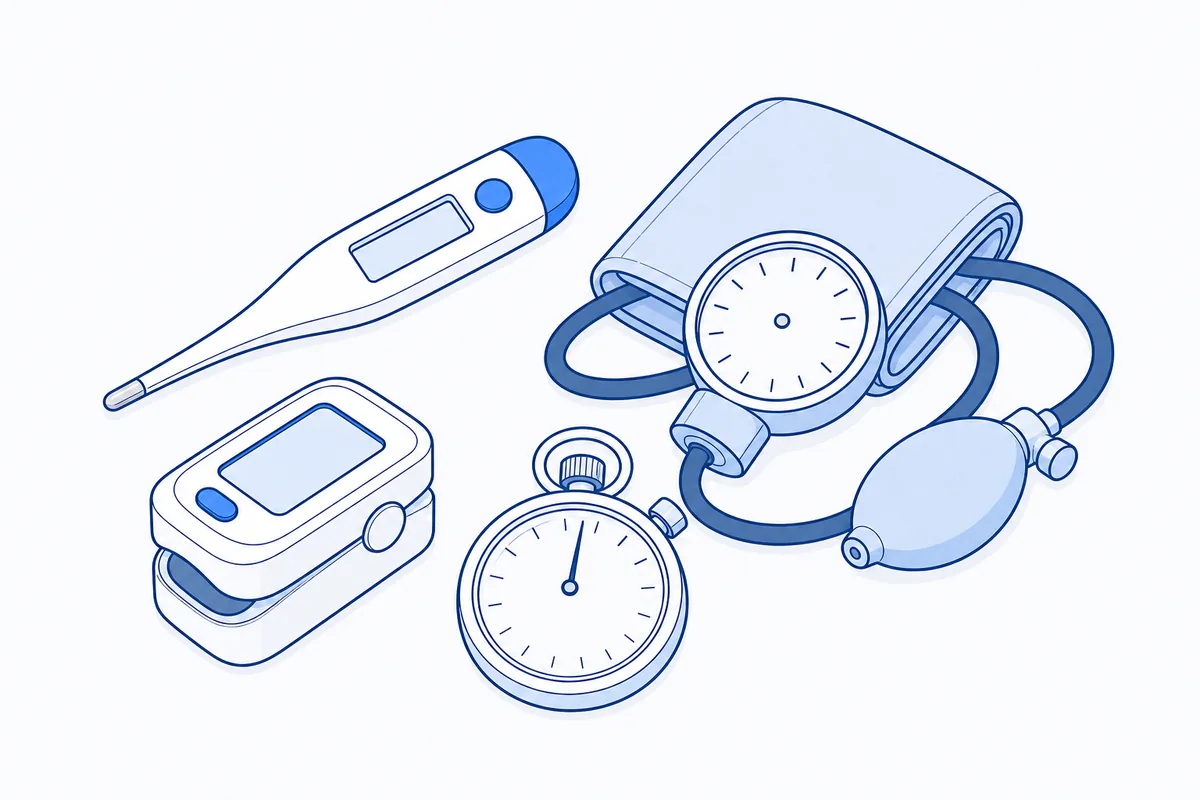
Normal adult ranges, radial pulse and counting breaths, thermometer sites and fever, blood pressure readings, pulse oximeters, pain scales and daily weights.
Infection Prevention and Control
44 questions
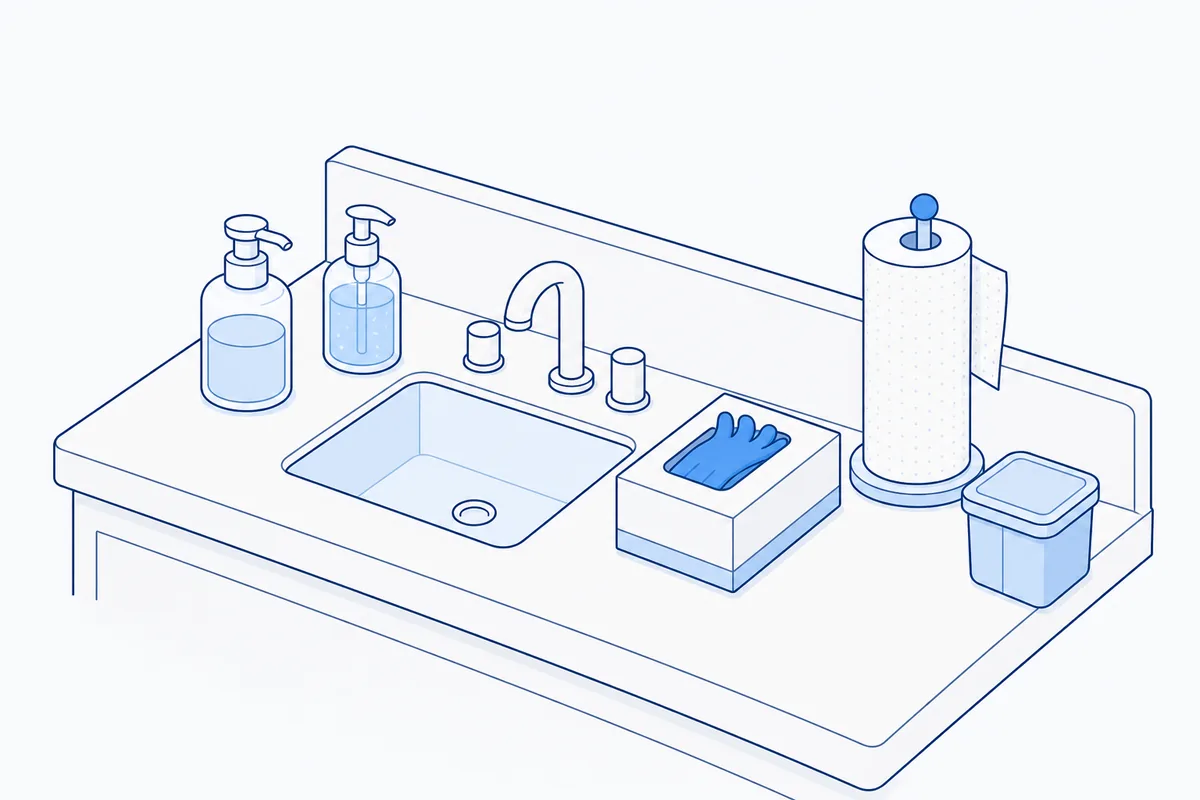
Hand hygiene, standard and transmission-based precautions, gloves and PPE order, sharps, bloodborne pathogens, laundry, the chain of infection and catheter bags.
Body Functions and Changes to Report
28 questions
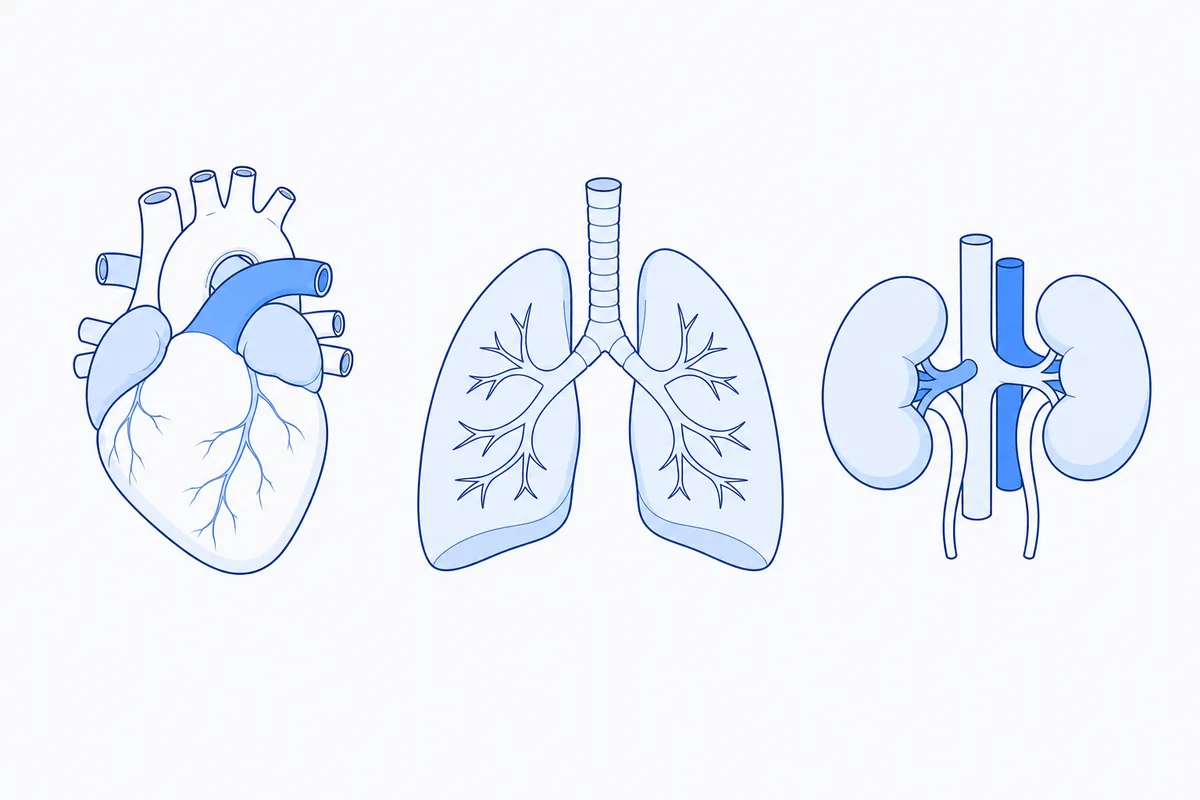
Body systems, normal aging, and the signs to report in diabetes, heart failure, COPD, stroke, Parkinson’s disease, dementia, kidney disease and blood clots.
A Clean, Safe and Healthy Home
28 questions
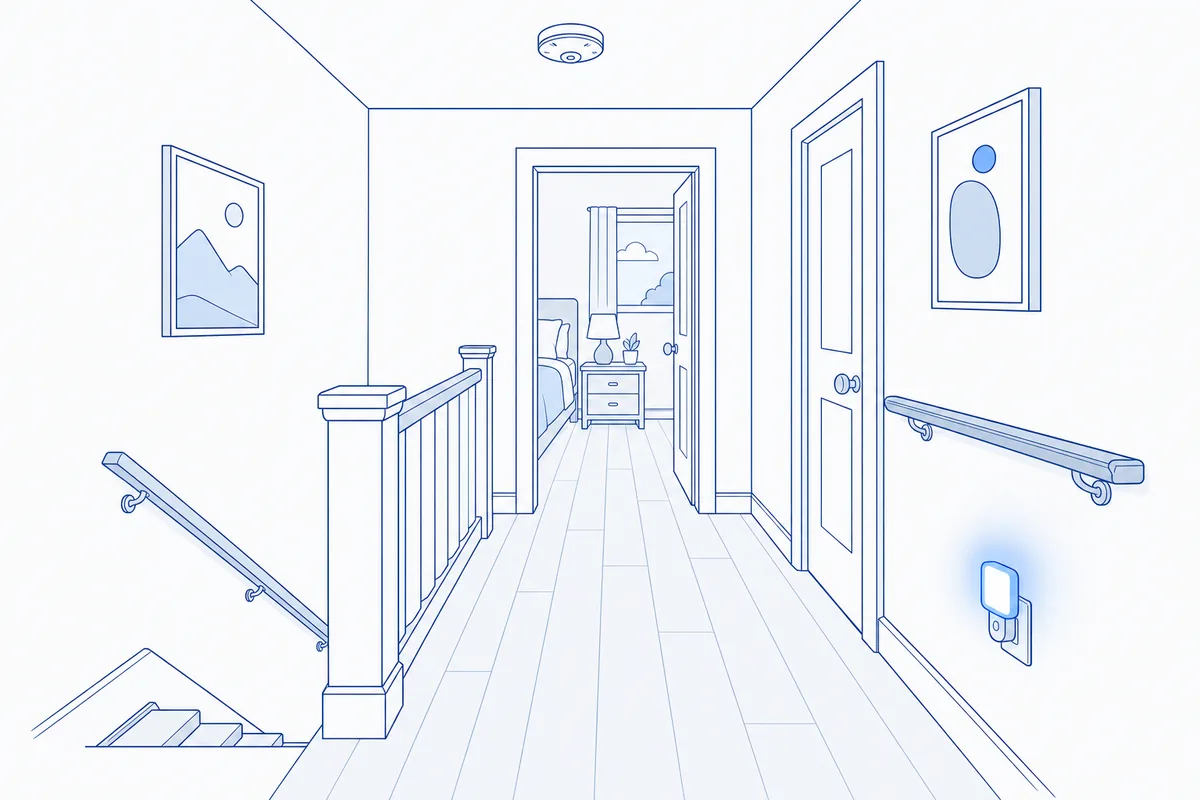
Fall hazards, grab bars and lighting, smoke and carbon monoxide alarms, oxygen and space heaters, water heater settings, chemicals, firearms, cleaning and laundry.
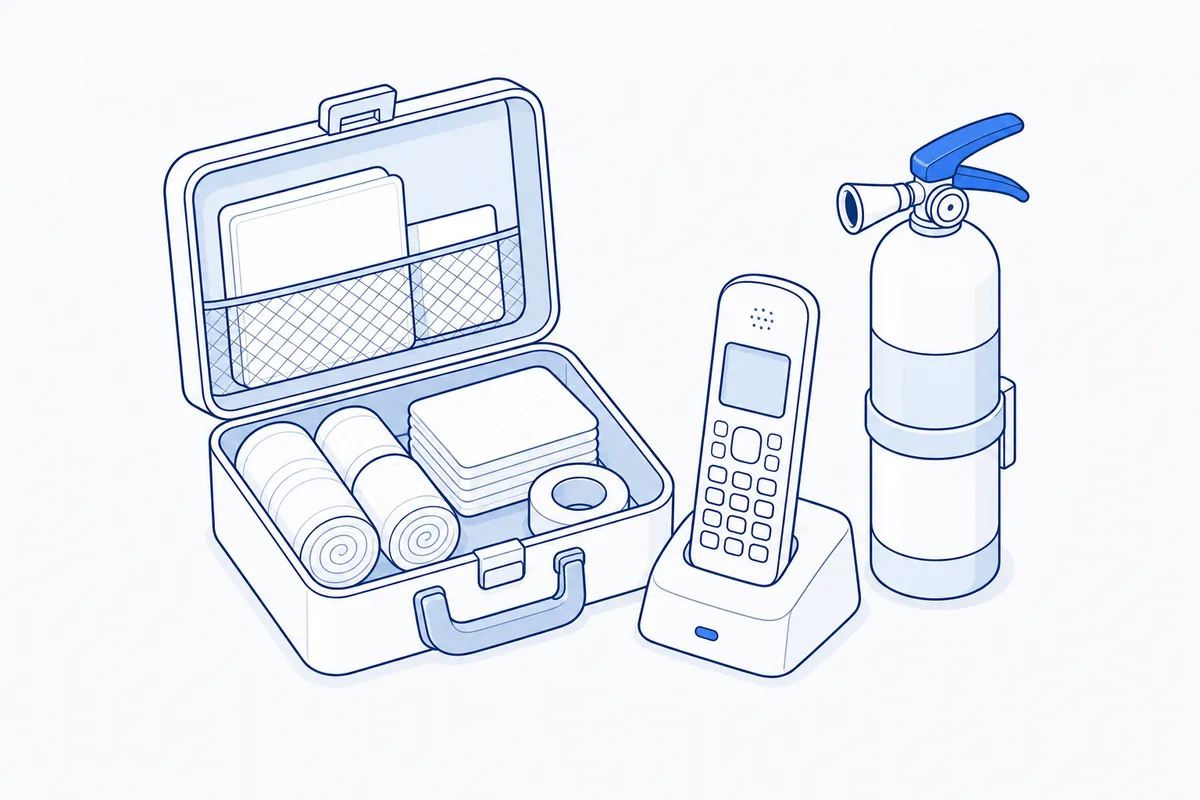
Emergencies and First Aid
26 questions
Stroke (F.A.S.T.), heart attack, choking, seizures, falls, bleeding, burns, fainting, low blood sugar, CPR basics, fire (RACE and PASS) and severe weather.
Client Needs, Dementia and End of Life
36 questions
Physical, emotional and developmental needs, dementia behaviors, depression, culture and religion, independence, grief, hospice and palliative care.
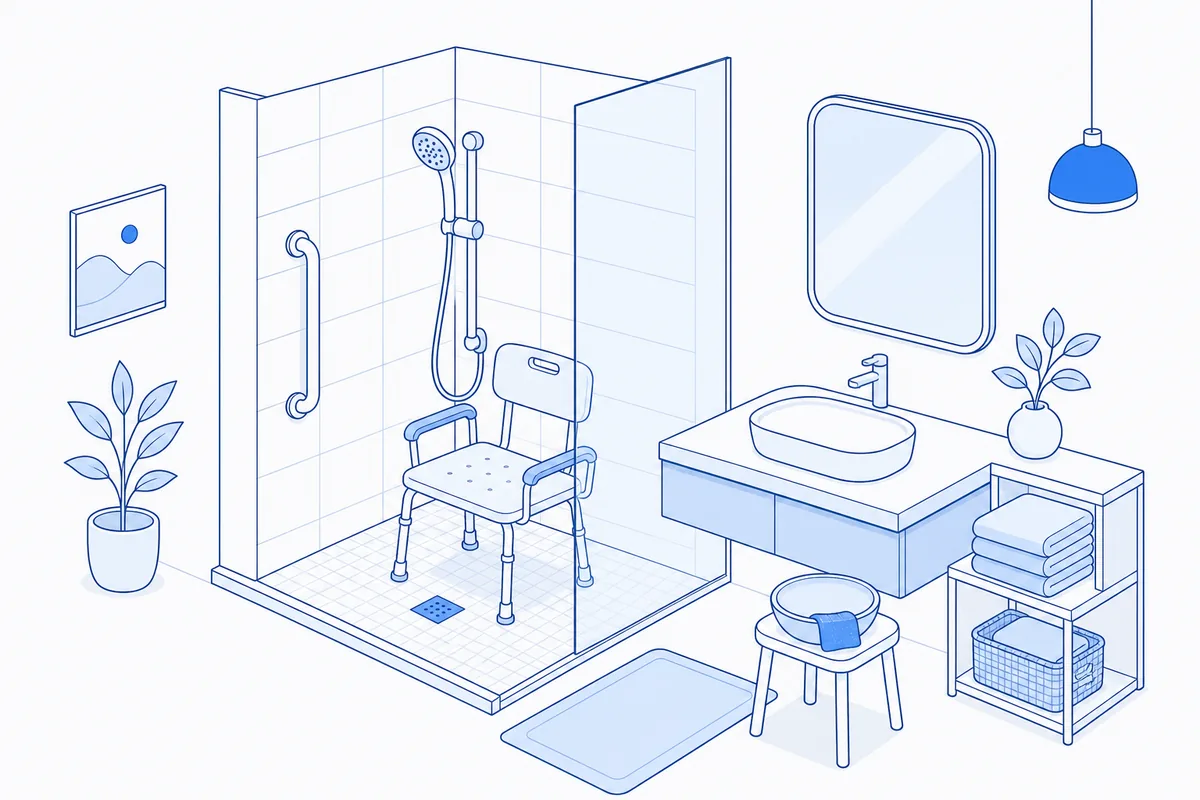
Personal Hygiene and Grooming
42 questions
Bed, tub and shower baths, shampoo in bed, perineal and catheter care, mouth and denture care, shaving, nails, dressing, toileting and elastic stockings.
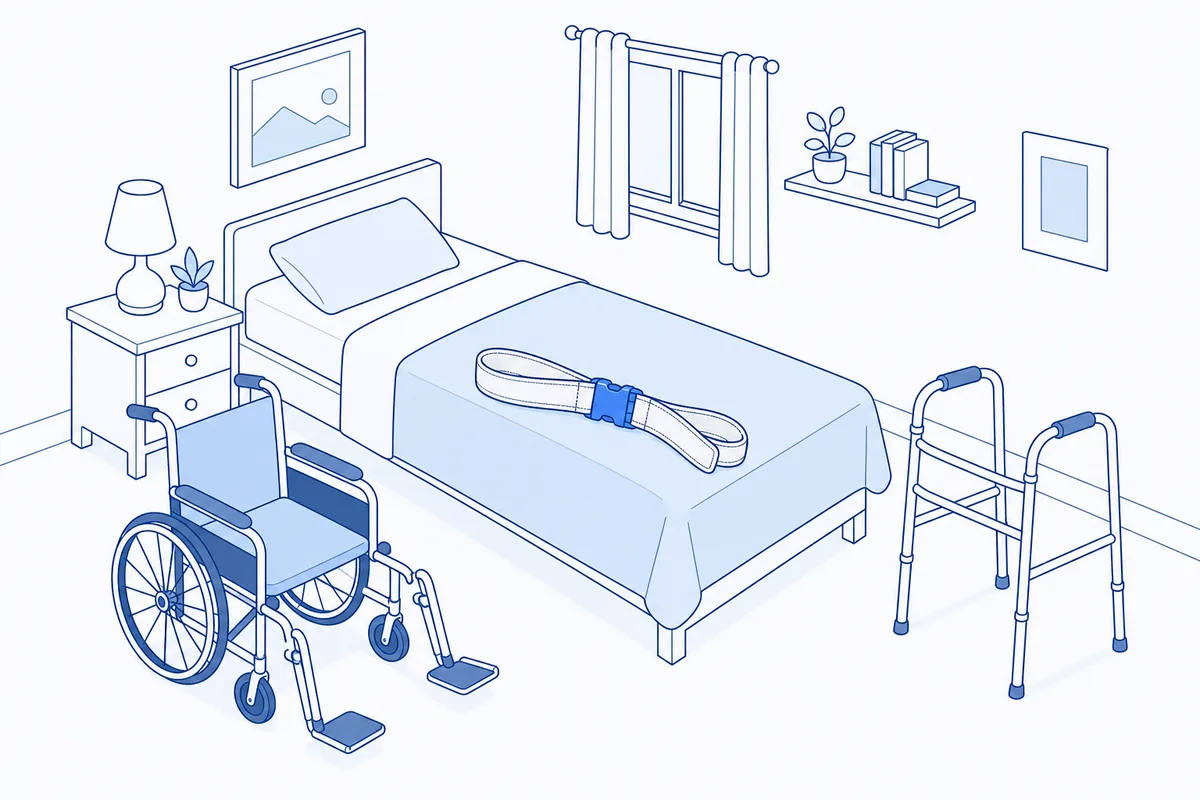
Safe Transfers and Ambulation
30 questions
Gait belts, wheelchair and pivot transfers, walkers and canes, body mechanics, slide boards and lifts, logrolling, falls during walking and car transfers.
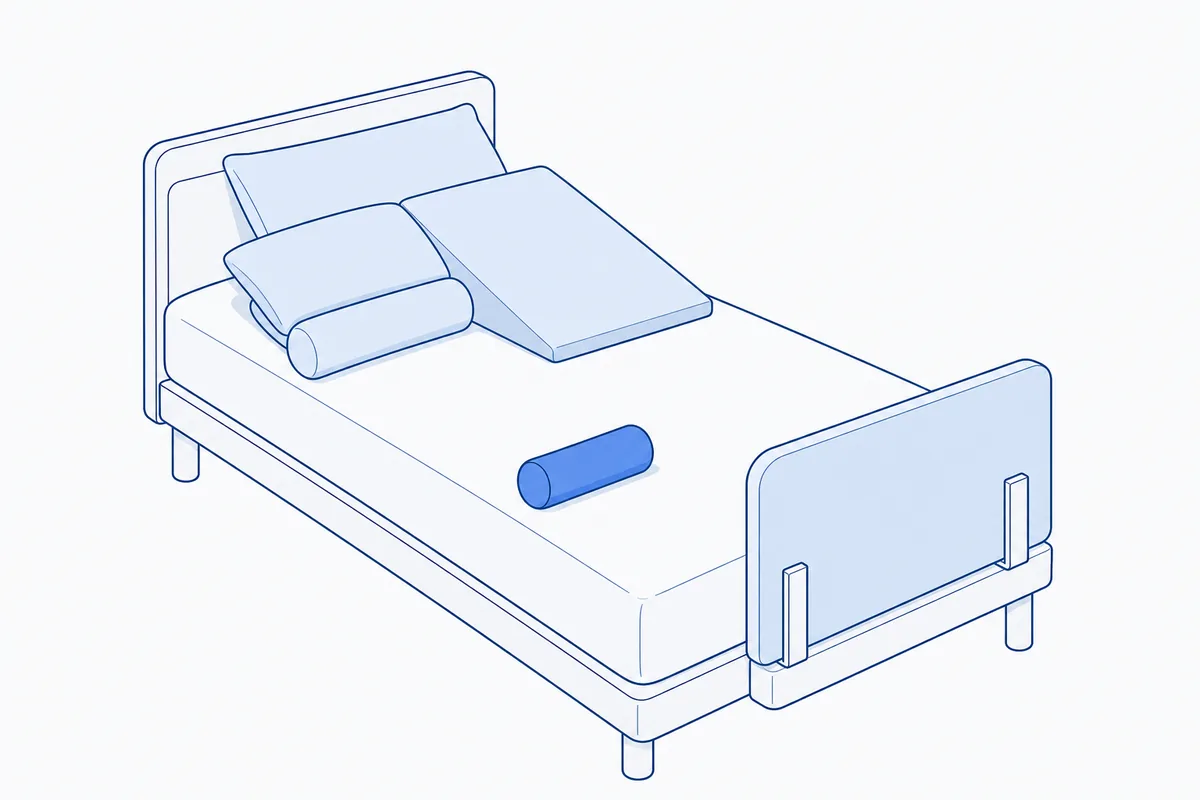
Range of Motion and Positioning
18 questions
Active and passive range of motion, movement terms, contractures and foot drop, Fowler’s, Sims’, prone and side-lying positions, and repositioning schedules.
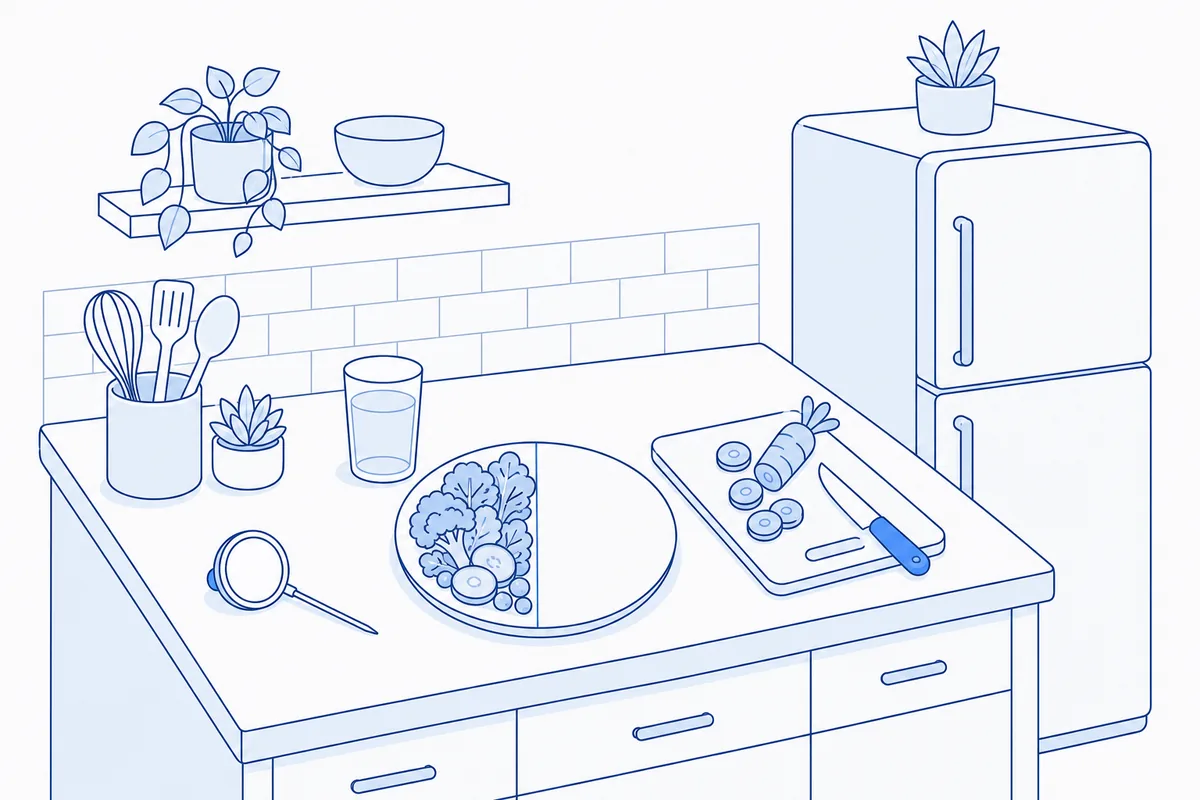
Nutrition, Fluids and Meal Preparation
30 questions
Feeding and swallowing safety, thickened liquids, special diets, fluid intake, shopping for a low-sodium diet, MyPlate, and food safety temperatures.
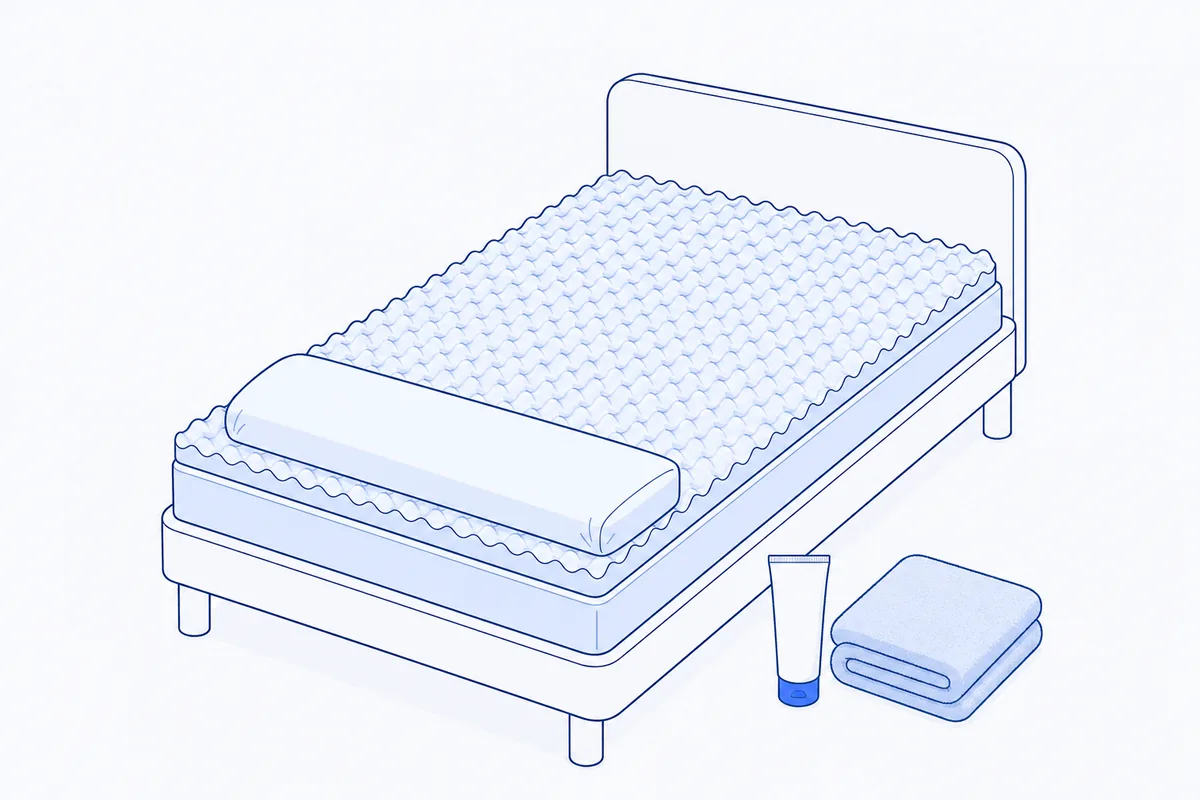
Skin Care and Changes to Report
22 questions
Pressure injury sites, stages and prevention, heels, skin tears, friction and shear, edema, jaundice, cyanosis, bruises and incontinence care.
Role, Client Rights and Ethics
46 questions
The aide’s duties and limits, care instructions and RN supervision, client rights, abuse, neglect and exploitation reporting, HIPAA, advance directives and boundaries.
Mixed: Every Topic
434 questions
Ten questions drawn from all fourteen topics, one per topic before any repeats: a quick check of where you stand.

True or False (Washington HCA)
133 questions
True/false statements on roles and rights, well-being and safety, in the style of the Washington home care aide knowledge exam.
Ready for the full exam?
Mocks for the federal competency test, the NCCT CHHA, the DC HHA exam and the Washington home care aide exam, each in its own format, with an explanation for every answer.
Or start with a free 10-question drillThe home health aide tests at a glance
A home health aide gives personal care to clients in their own homes under a registered nurse. For Medicare home health agencies, 42 CFR 484.80 requires at least 75 hours of training and a competency evaluation on 13 subjects, run by an RN; five skills are watched in person and the rest can be tested in writing or orally. These are the written tests our practice covers, with the facts each owner publishes.
| Exam | Questions | Time | Passing standard |
|---|---|---|---|
| HHA Competency TestMedicare home health agencies in every state | Set by the program | Set by the program | Set by the program or agency that gives the test |
| NCCT CHHANational (voluntary certification) | 150 (125 scored) | 3 hours | Scaled score of 575 on a 200–720 scale |
| DC HHAWashington, DC | 70 | Not published | Not published |
| Washington HCAWashington State | 60 (50 scored) | 90 minutes | An overall number correct, not published |
Many states have no separate home health aide exam. A CNA in good standing on the state nurse aide registry also qualifies under the federal rule, and in Oklahoma a long-term care aide who completes the home health training is deemed a home health aide without another test. Washington’s home care aide credential is a state certification for long-term care workers, not a federal HHA certificate.
How to use this home health aide exam prep
- Find your test above and read its guide: question count, time, passing standard and what it covers.
- Take the free mixed drill to see where you stand across every topic.
- Drill the biggest areas first: infection control, personal care, observation and reporting, and safety and transfers.
- Clear the areas with fixed facts: vital sign ranges, food safety temperatures, client rights and abuse reporting.
- Take your mock under its clock, then drill your two lowest topics and take it again. Each new sitting shows questions you have not seen first.
Taking a state nurse aide exam instead? Our CNA practice test covers the written nurse aide exams by state.
Common questions
Is there a national home health aide exam?
No single one. The federal rule for Medicare home health agencies (42 CFR 484.80) requires 75 hours of training and a competency evaluation on 13 subjects, and each program or agency gives its own. NCCT offers a voluntary national certification (CHHA), the District of Columbia runs its own HHA exam, and Washington certifies home care aides with a state exam.
What is on the home health aide test?
The 13 federal subjects: communication; observation, reporting and documentation; temperature, pulse and respiration; infection control; body functions and changes to report; a clean, safe home; emergencies; the needs of the people served; personal hygiene and grooming; transfers and walking; range of motion and positioning; nutrition and fluids; and skin changes. Written tests also cover the aide’s role, client rights and abuse reporting.
How many questions are on the HHA exam?
It depends on the test: the federal rule sets no number; the NCCT CHHA has 150 items (125 scored) in 3 hours; the DC written exam has 70 questions; the Washington home care aide knowledge exam has 60 (50 scored) in 90 minutes.
What score do you need to pass?
NCCT’s CHHA passing point is a scaled 575 (scale 200–720). Washington requires an overall number correct but does not publish it. DC does not publish a written passing score, and agency tests set their own.
Is a home health aide the same as a CNA?
They overlap. A CNA passes a state nurse aide exam and works mostly in nursing homes and hospitals; a home health aide cares for clients in their homes for a home health agency. Under 42 CFR 484.80, a CNA in good standing on the state registry can also qualify as a home health aide.
Are these real home health aide exam questions?
No. They are original practice questions written to 42 CFR 484.80, the NCCT CHHA Detailed Test Plan, the DC HHA content outline and the Washington HCA bulletin, with an explanation and a source for every answer.
Do the mocks match the real formats?
Yes, where the owner publishes one: the CHHA mock is 150 questions in 3 hours with 25 unscored, in NCCT’s category counts; the DC mock is 70 questions in the outline’s shares (2 hours, since DC publishes no time); the Washington mock is 60 true/false statements in 90 minutes with 10 unscored. The federal competency mock is 60 questions in 60 minutes across all 13 subjects, because the rule sets no format.
Ready for test day?
Mocks for the federal competency test, the NCCT CHHA, the DC HHA exam and the Washington home care aide exam, each in its own format, with an explanation for every answer.
Or start with a free 10-question drillSources
- eCFR: 42 CFR 484.80, Condition of participation: Home health aide services
- eCFR: 42 CFR 484.50, Condition of participation: Patient rights
- NCCT: CHHA Detailed Test Plan, effective November 2024 (125 scored + 25 pretest items, 3 hours)
- NCCT: Certified Home Health Aide (CHHA), exam fee $70
- Credentia (DC HHA help center): content outline, Home Health Aide (25%, 50%, 13%, 12%)
- Prometric: Washington State DOH Certified Home Care Aide Candidate Information Bulletin, effective October 12, 2026
- CDC: Standard Precautions for All Patient Care
- CDC STEADI: Check for Safety, a home fall prevention checklist
Original practice questions written to 42 CFR 484.80, the NCCT CHHA Detailed Test Plan, the DC HHA content outline and the Washington HCA candidate bulletin; they are not exam questions. Independent practice, not affiliated with or endorsed by CMS, NCCT, Credentia, Prometric, the DC Board of Nursing, the Washington State Department of Health or any state agency. Follow your agency’s policies, your state’s rules and the supervising nurse in practice.