pymetrics Games Practice — All 12 Games
Choose from 12 pymetrics games, with instructions and feedback.
Sign in to check your practice access. A pymetrics pass unlocks replays. All results are free.
4.2 · Great on Trustpilot17 reviewsBlackstone’s 2026 US Future Leaders Program requires pymetrics games and a digital interview by .
9,200+ candidates · 101,000+ practice sessions across Game Assessment Prep.
Candidates from 100+ universities and colleges











Practice games
Select a game to read the instructions and practice. Games are shown in the most commonly reported assessment order.
Review our pymetrics preparation guides before you begin, or read what game-based assessments are if the format is new.
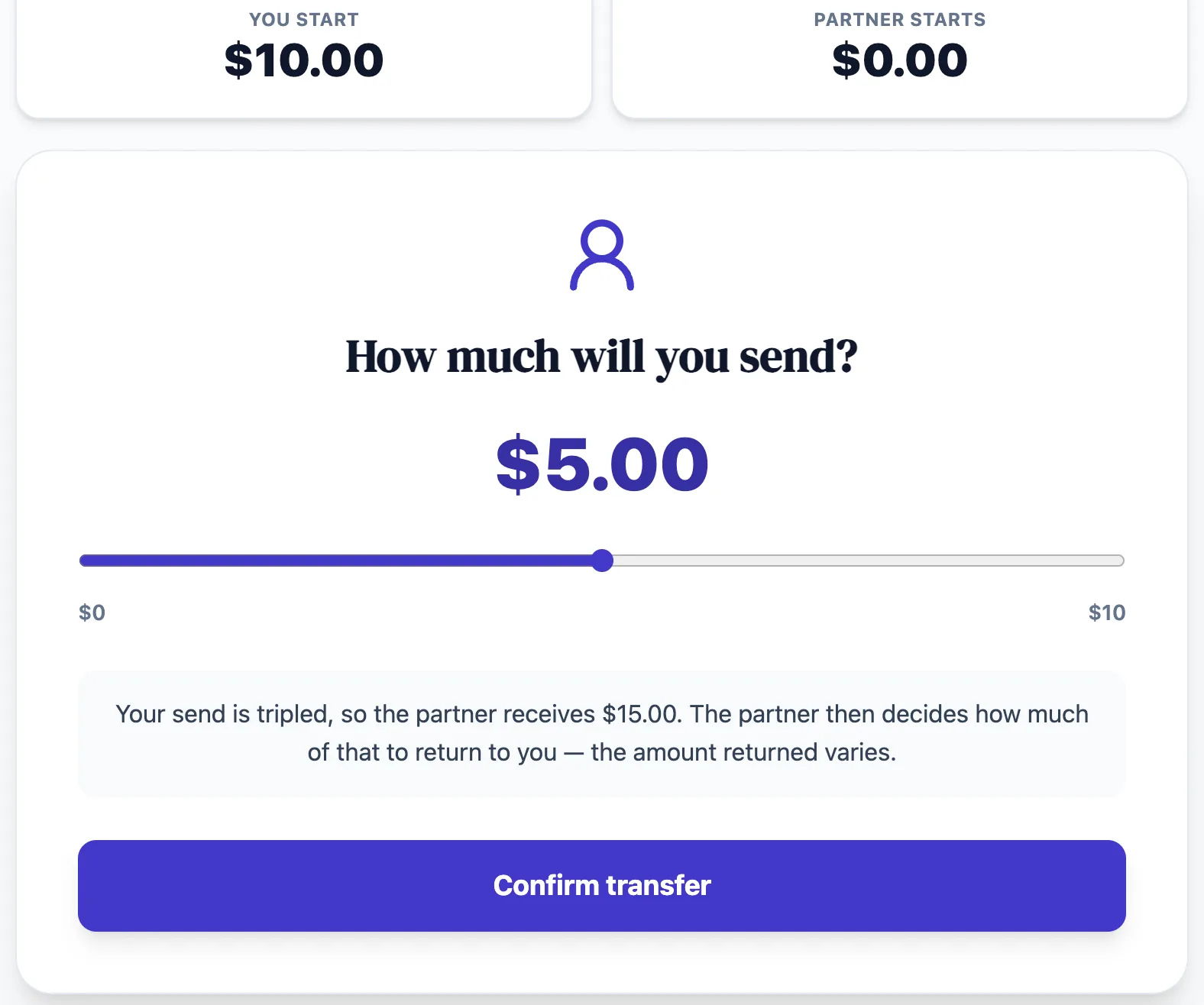
Money Exchange 1
Social Preference
Choose how much of $10 to trust to a partner, then reflect on the exchange.
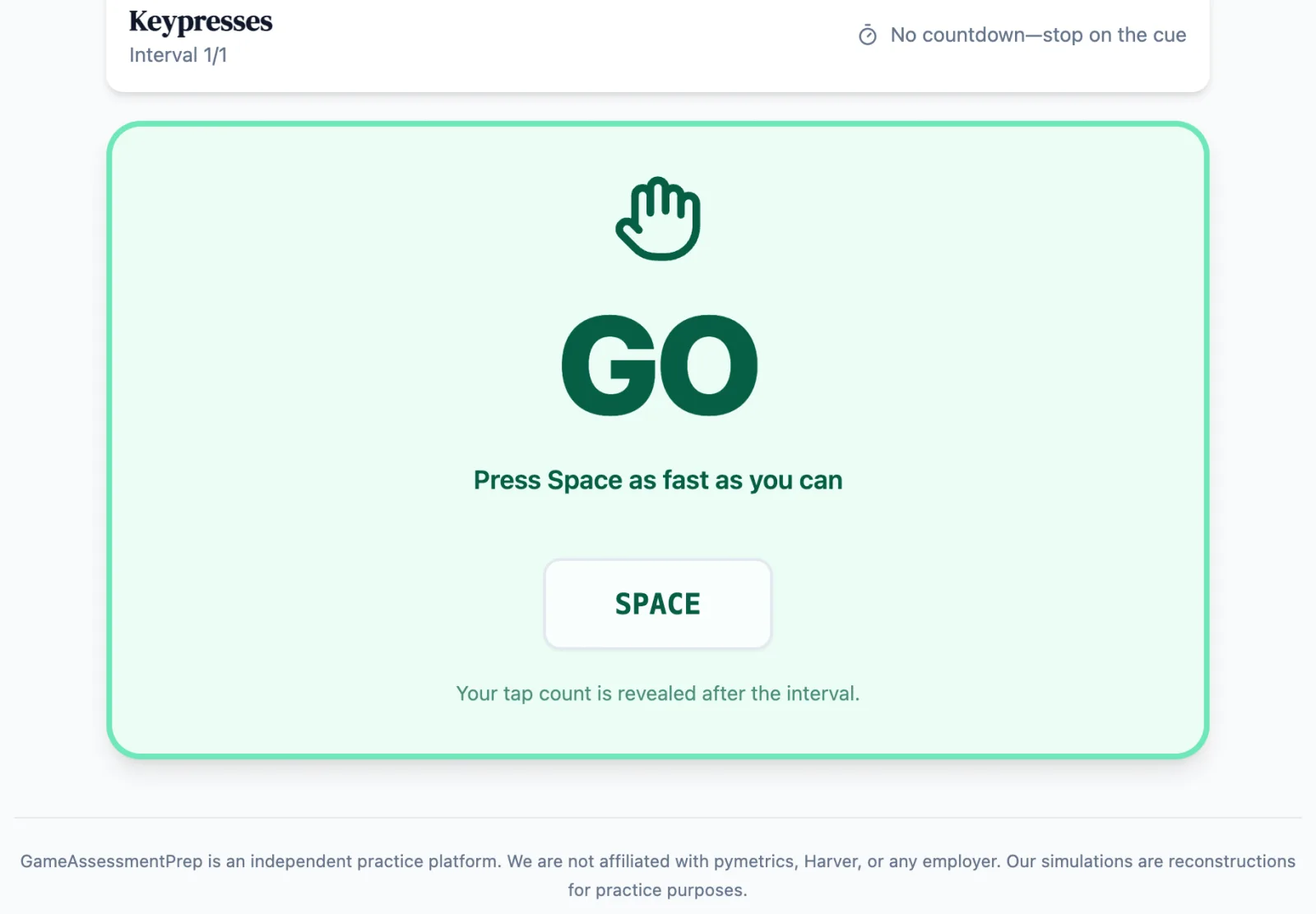
Keypresses
Motor Speed
Tap from GO to STOP as quickly as possible without starting early or continuing late.
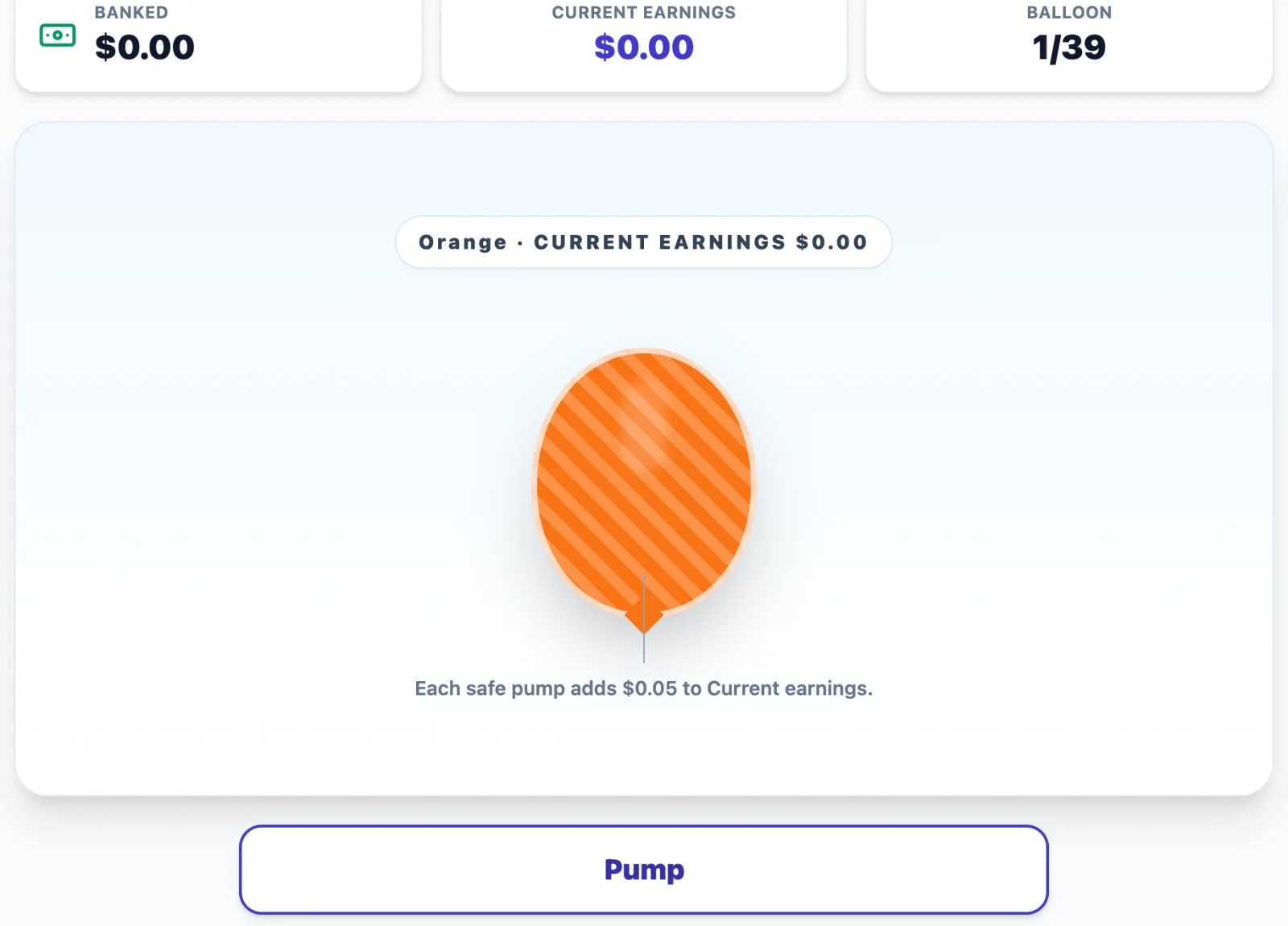

Balloons
Risk & Learning
Pump recurring colored balloons, then collect before each hidden pop point.
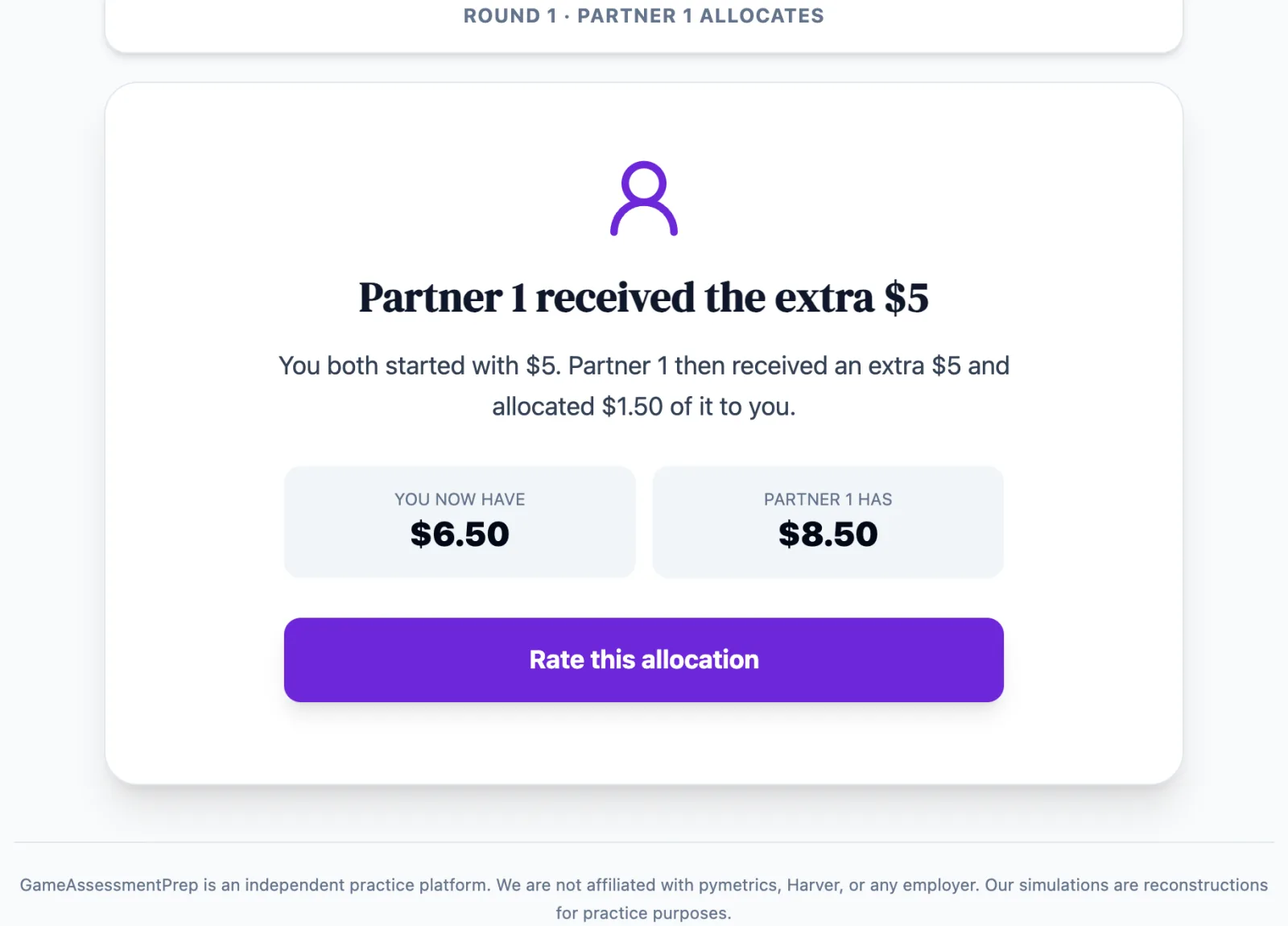
Money Exchange 2
Social Preference
Observe one allocation, then make and rate your own give-or-take decision.
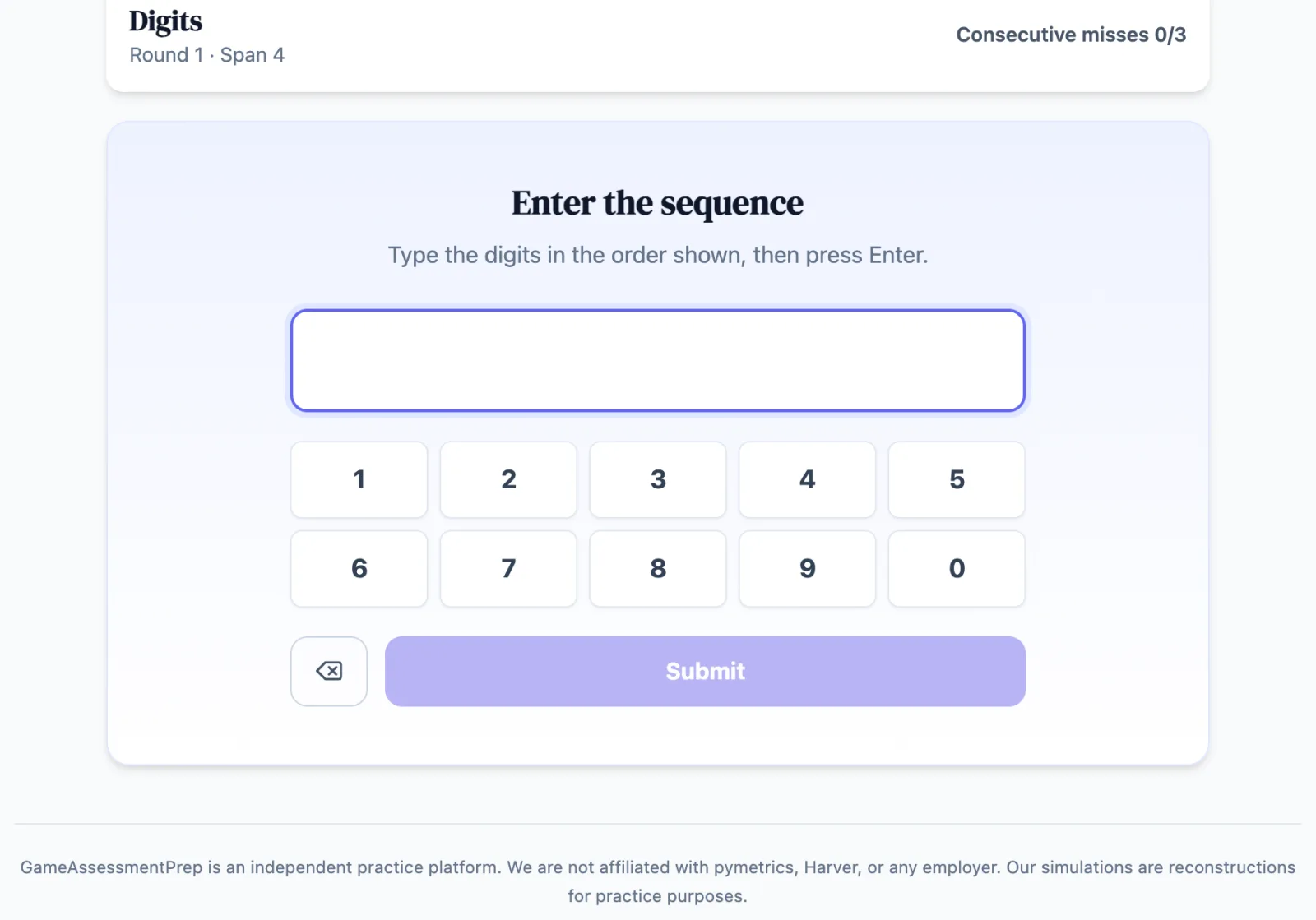
Digits
Working Memory
Recall forward digit sequences as an adaptive staircase tests your working-memory span.
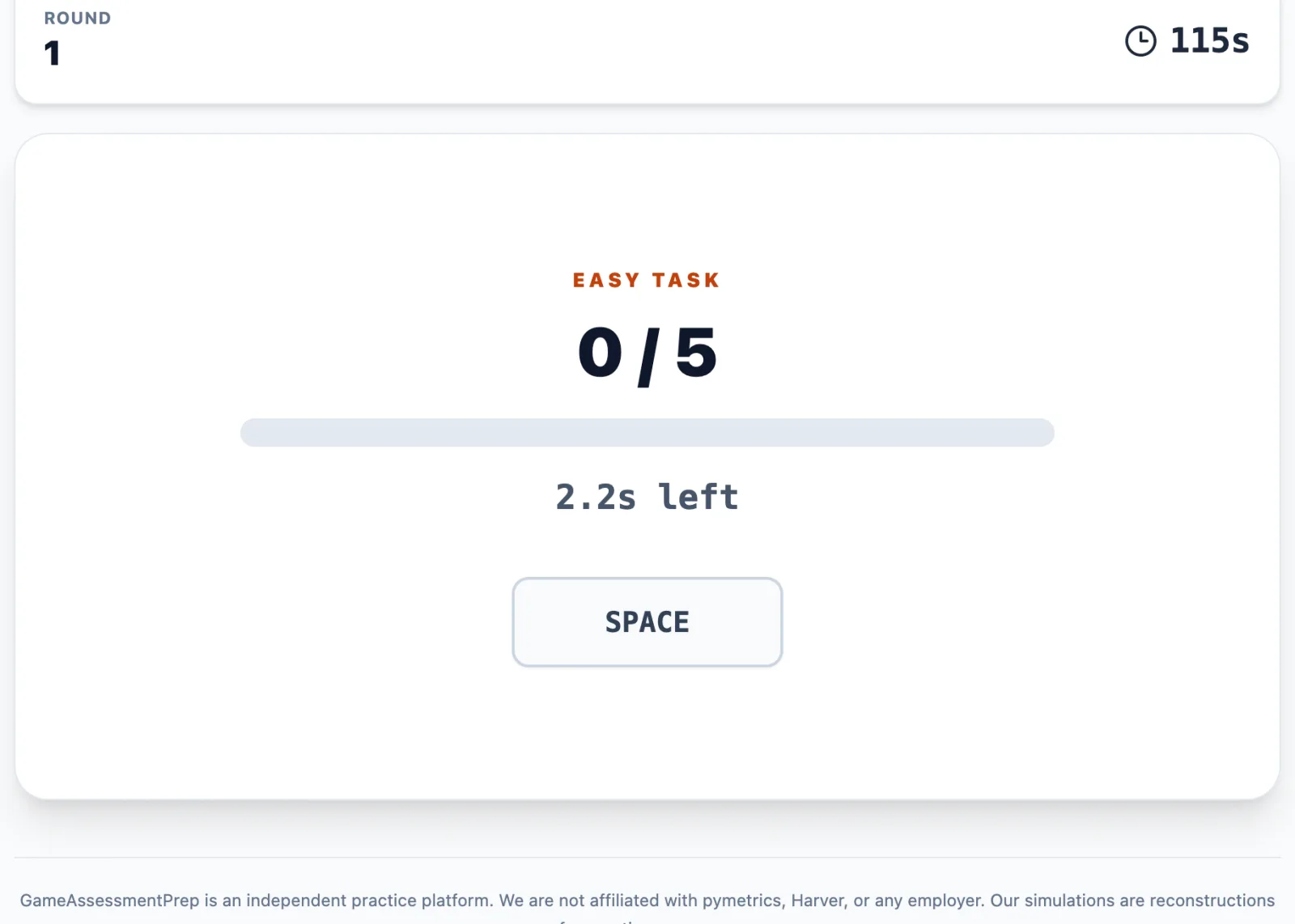
Easy or Hard
Effort & Decisions
Choose a low-effort sure reward or work harder for a larger reward with changing odds.
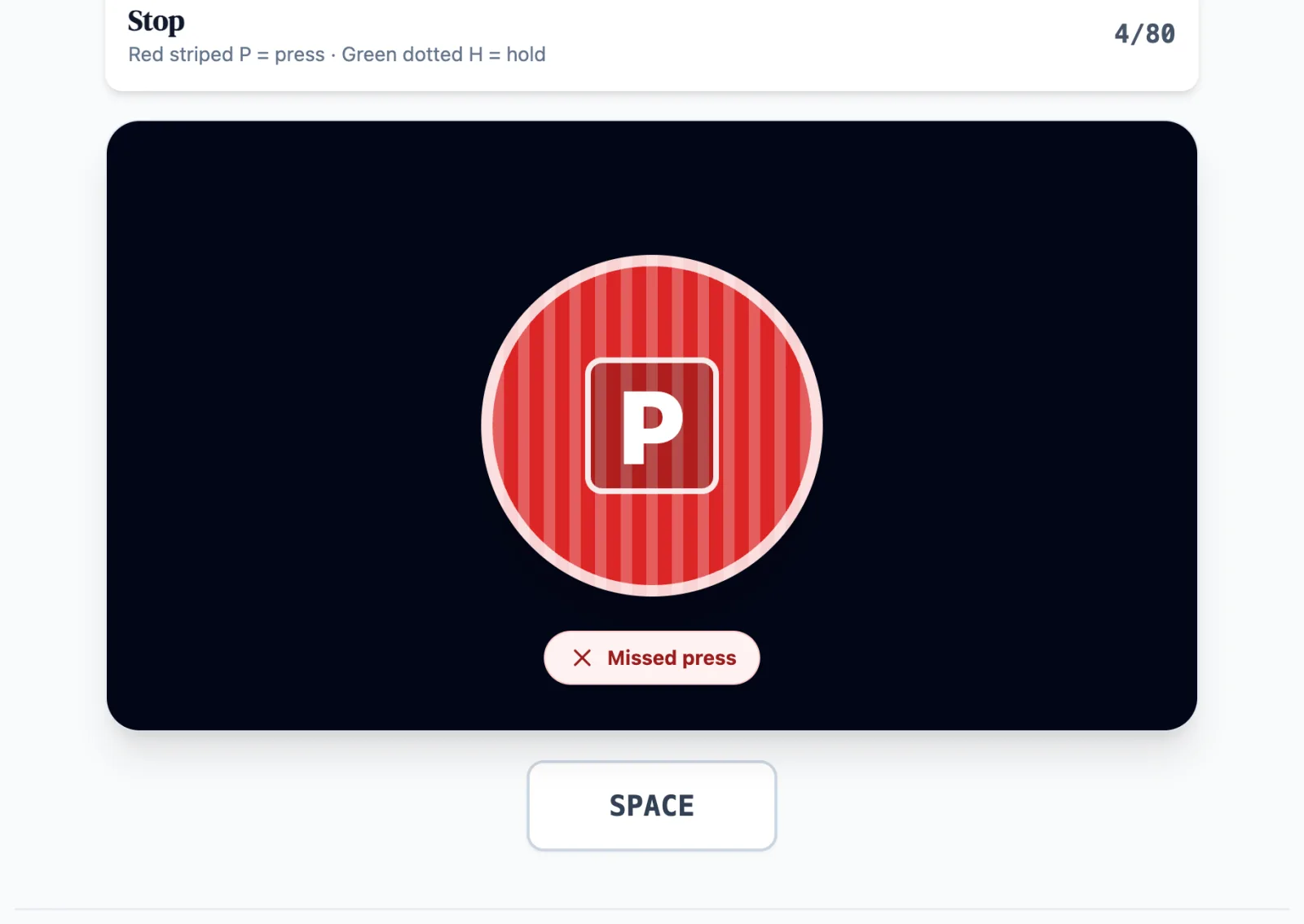
Stop
Attention & Control
Press for red circles and withhold for green in a fast, accessible go/no-go stream.
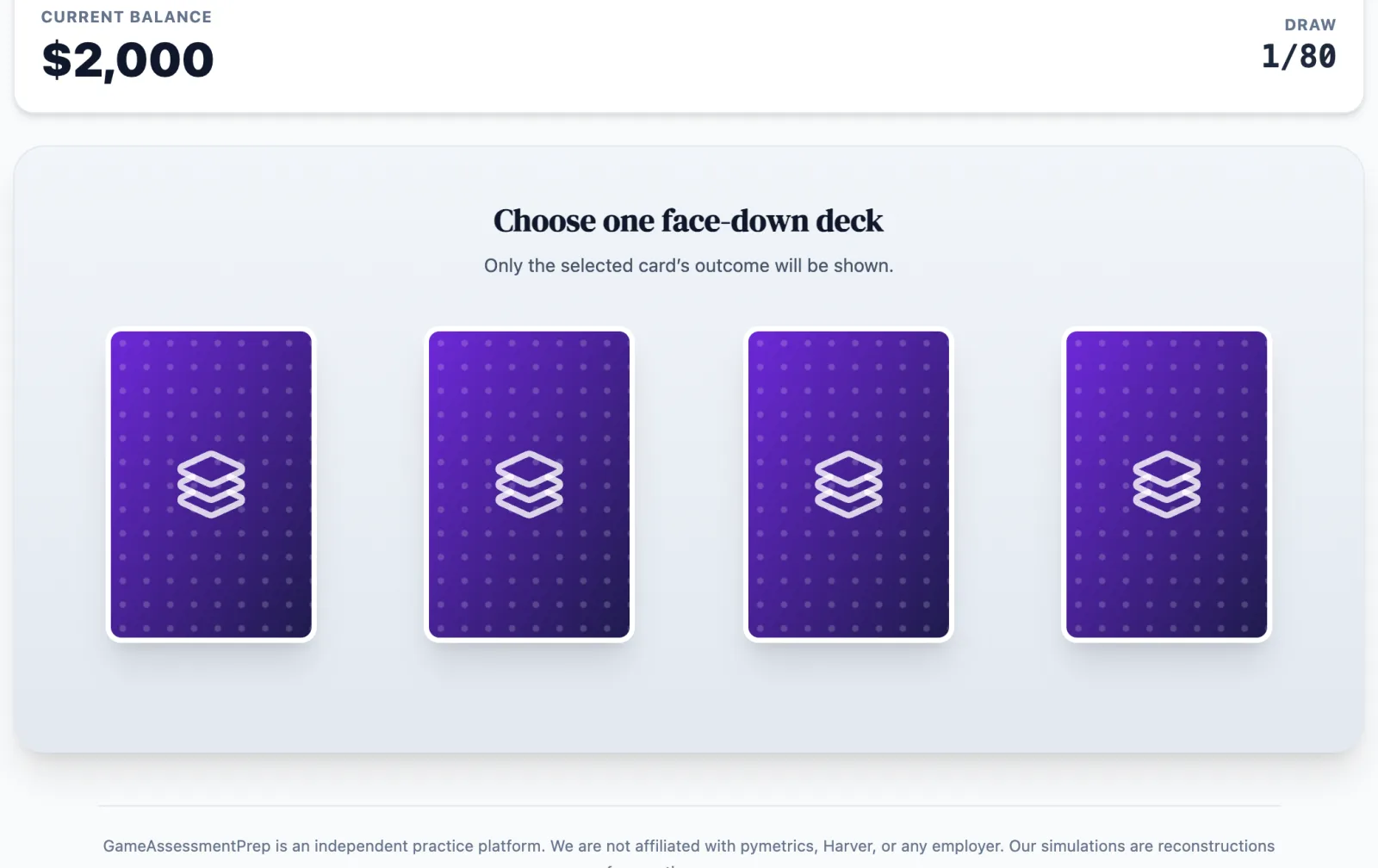
Cards
Risk & Learning
Draw from four hidden schedules and learn which positions help your balance over time.
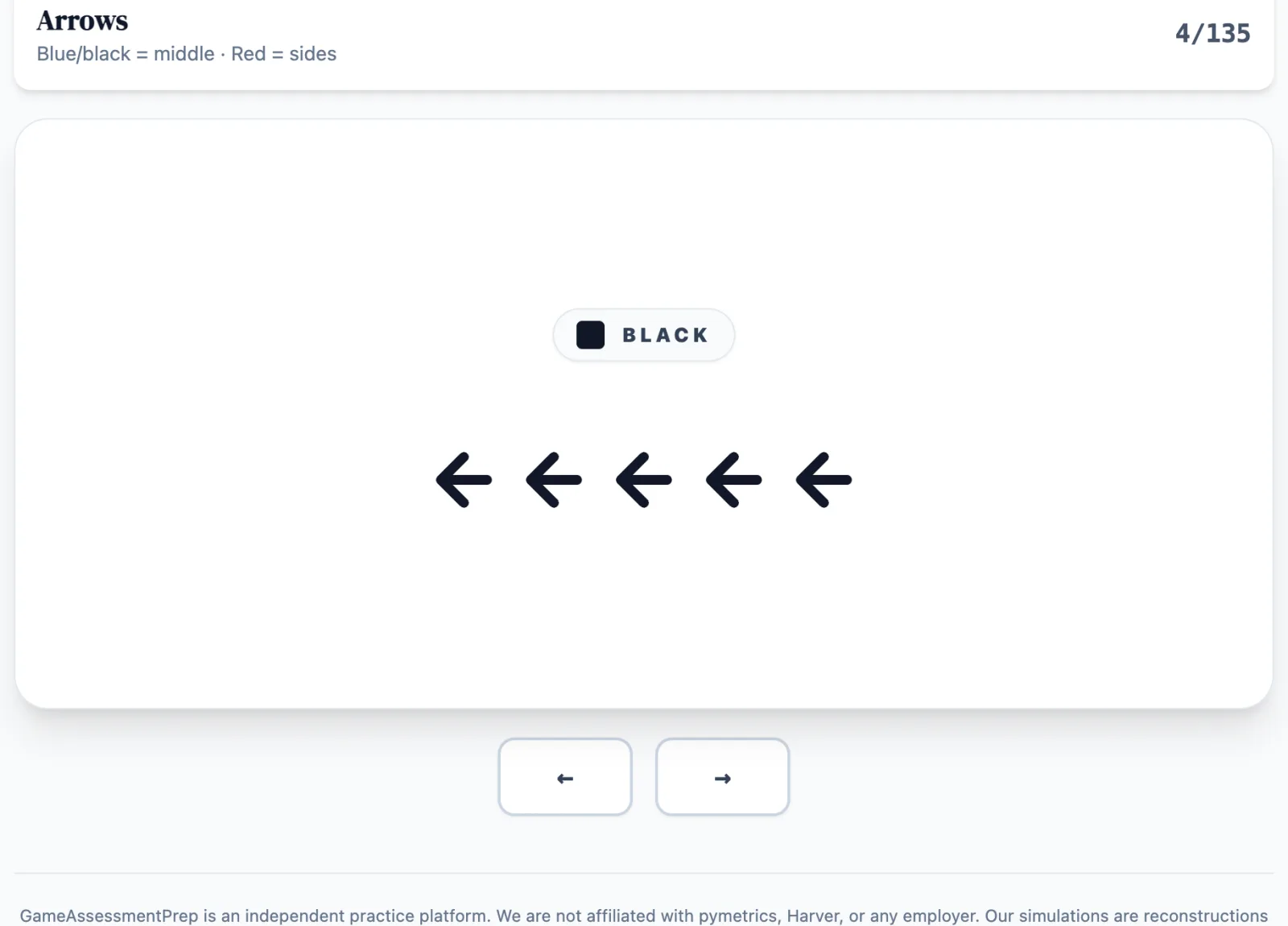
Arrows
Cognitive Flexibility
Follow middle or side arrows as an accessible color cue switches the active rule.
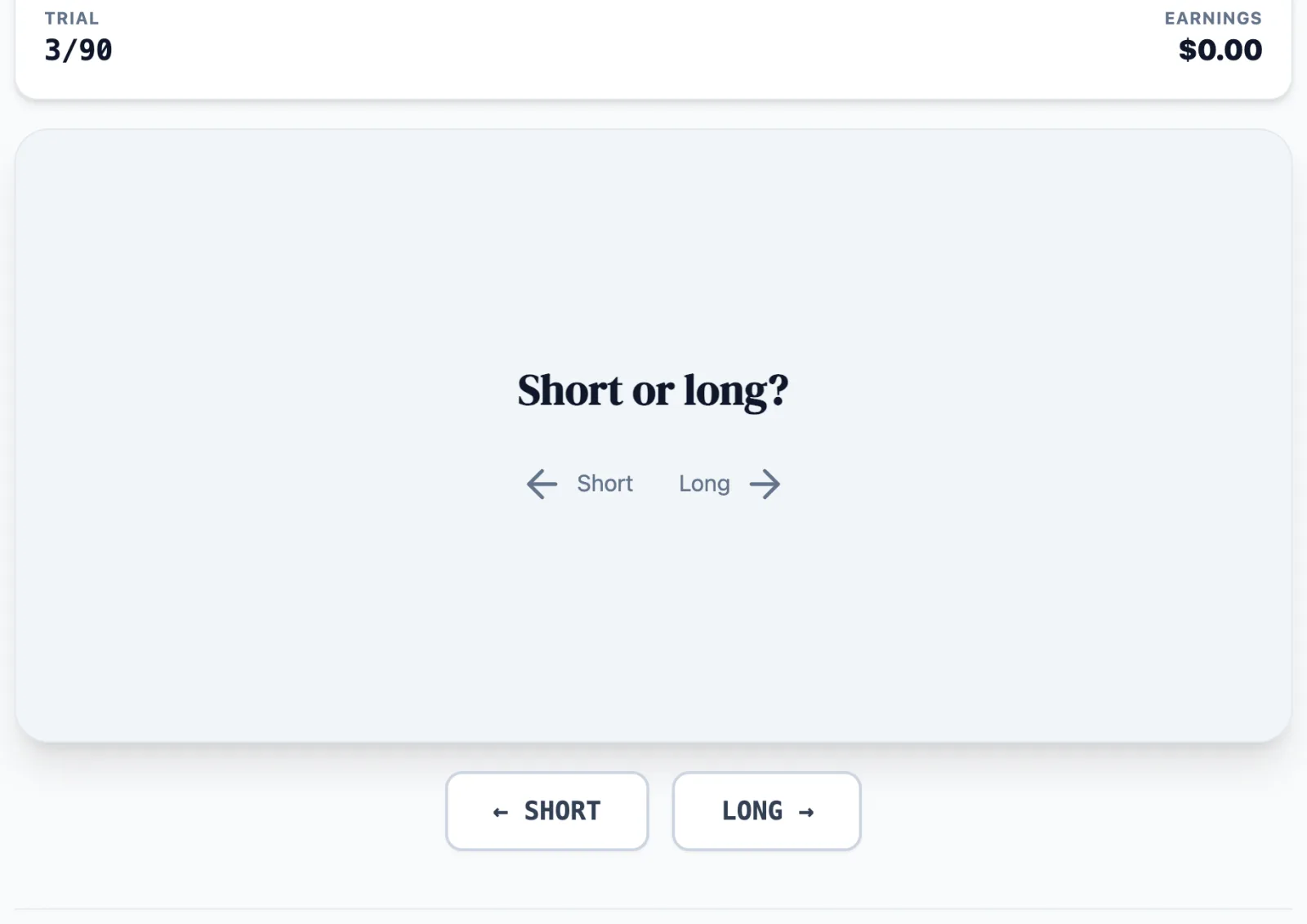
Lengths
Attention & Reward
Judge subtly short or long cartoon mouths while rewards quietly favor one response.
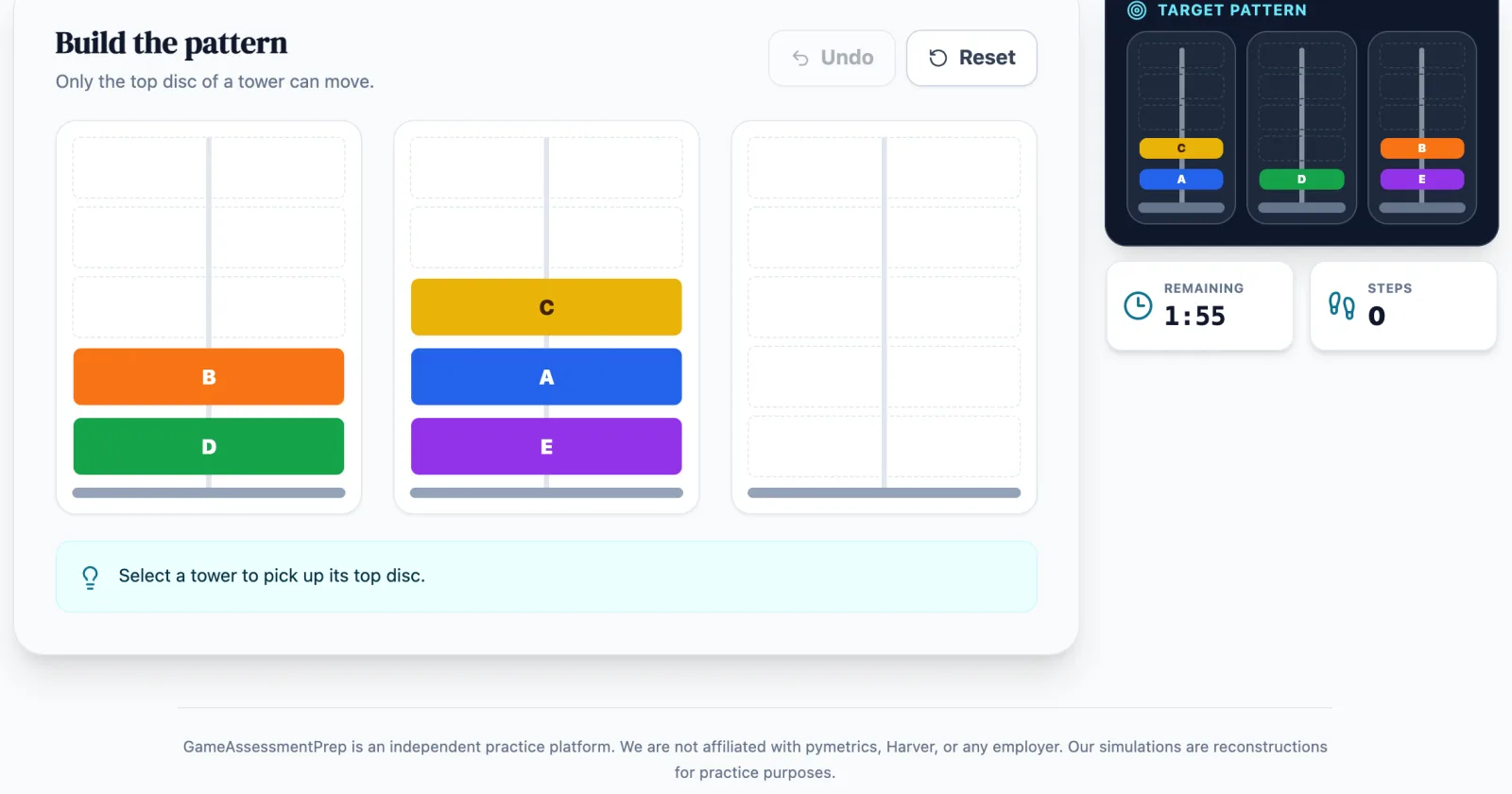
Towers
Planning
Move five labeled discs to a solvable target while an exact BFS measures efficiency.
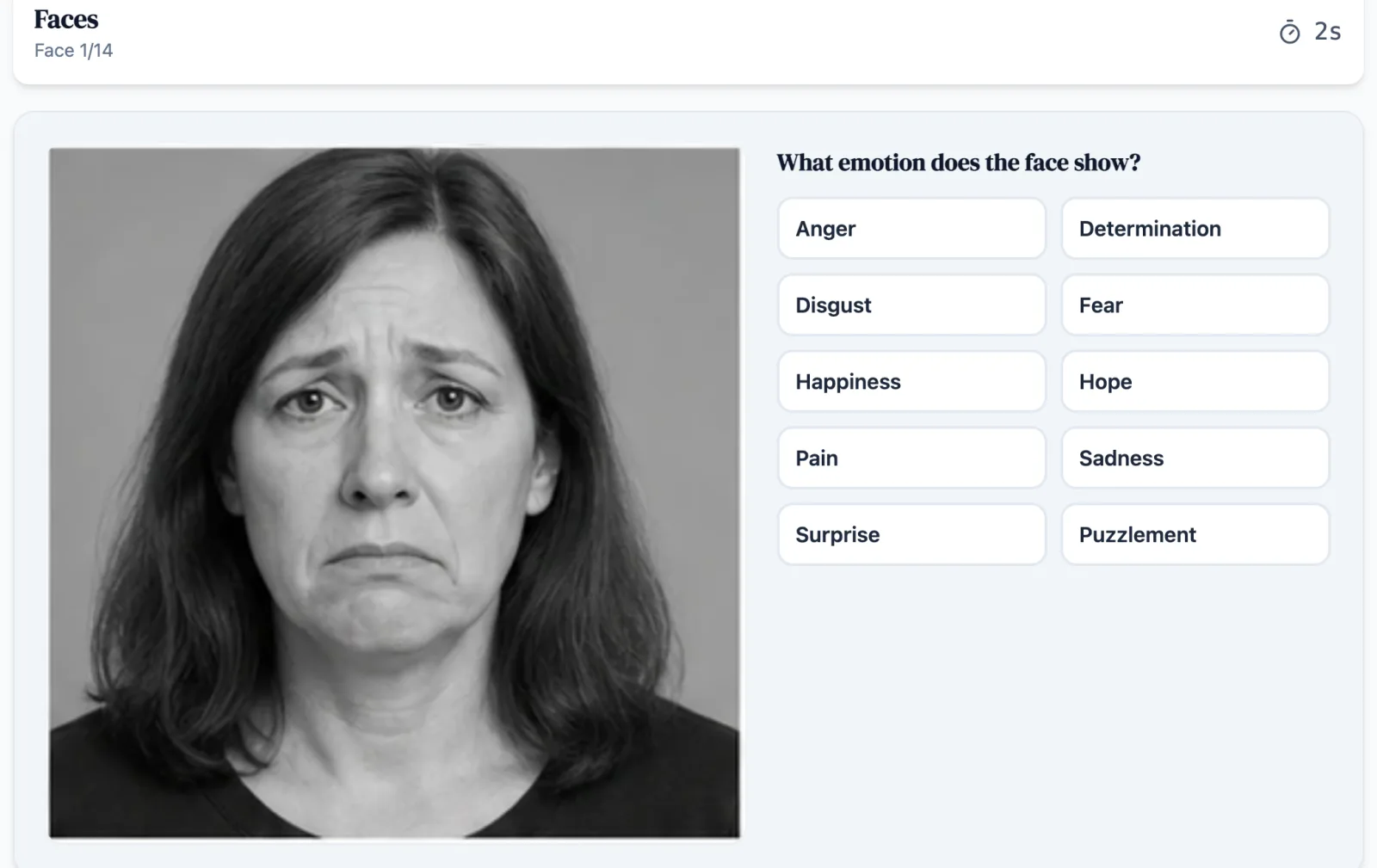
Faces
Emotional Intelligence
Read facial expressions and use short situations to resolve closely related emotions.
Preparing for HireVue instead?
We also cover all 13 HireVue games — Numerosity, Digitspan, Pathfinder and more — with realistic simulations, transparent scoring, and employer-specific guides.
Explore HireVue practiceFacing a task-based assessment instead? Explore Arctic Shores practice
Invited to a Criteria assessment? Explore Cognify and Emotify practice
pymetrics retake rules
Candidates can normally replay the real assessment once every 330 days. Inside that window, the same behavioral profile can be scored for another employer. Practice here lets you learn the controls and timing before your real assessment.
Unfamiliar mechanics
Reaction-time games measure from the first round — learning controls live costs signal
One profile, many employers
Your battery result can follow you to other pymetrics employers inside the 330-day window
pymetrics practice results over repeated attempts
On the pymetrics battery specifically, the median candidate improves their score by +14% between their first and fifth practice attempt on a game — with no employer ever seeing practice data. Measured on the 10 skill-scored games only: preference games like Money Exchange have no good/bad score by design, so they are not part of any lift claim. See which pymetrics games improve most with practice.
Median pymetrics score lift by practice attempt
Median paired change vs. first attempt on scored pymetrics practice games. Observed practice association — not a hiring-outcome guarantee.
What is the pymetrics assessment?
The pymetrics (Harver) assessment is an invite-only battery used after you apply to a partner employer. The core version contains 12 short games, takes about 25 minutes, and is designed to describe behavioral and cognitive traits rather than produce a conventional candidate score. You normally complete the games in a fixed employer-configured order and cannot replay them for 330 days.
The real platform reveals very little about individual performance. Our practice simulations are reconstructed from pymetrics patents, published research, and carefully qualified candidate reports; we show what happened in your round and explain what each behavior can signal without pretending to know a secret scoring formula.
Every pymetrics game at a glance
The full reference: all 12 games in the battery, each linking to a realistic simulation and a strategy guide.
| Game | Category | Time | What it measures | Prepare |
|---|---|---|---|---|
| Money Exchange 1 | Social Preference | 2 min | Trust, Fairness Reflection | PracticeGuide |
| Keypresses | Motor Speed | 20 sec | Motor Speed, Impulse Control | PracticeGuide |
| Balloons | Risk & Learning | 3–4 min | Risk Calibration, Outcome Learning | PracticeGuide |
| Money Exchange 2 | Social Preference | 2 min | Fairness, Generosity | PracticeGuide |
| Digits | Working Memory | 2–3 min | Working Memory, Ordered Recall | PracticeGuide |
| Easy or Hard | Effort & Decisions | 2 min | Effort Allocation, Expected Value | PracticeGuide |
| Stop | Attention & Control | 2 min | Response Inhibition, Attention | PracticeGuide |
| Cards | Risk & Learning | 3–4 min | Outcome Learning, Decision-Making | PracticeGuide |
| Arrows | Cognitive Flexibility | 3 min | Selective Attention, Rule Switching | PracticeGuide |
| Lengths | Attention & Reward | 2–3 min | Perceptual Accuracy, Reward Responsiveness | PracticeGuide |
| Towers | Planning | 2 min | Planning, Move Efficiency | PracticeGuide |
| Faces | Emotional Intelligence | 3 min | Emotion Recognition, Context Integration | PracticeGuide |
How pymetrics scoring works
There is no single “pymetrics score.” Different games produce different behavioral signals, and employers compare a combined profile with a role-specific model. The exact production formulas and thresholds are not public.
Skill games
The skill-style games have observable accuracy, speed, memory, learning, earnings, or efficiency outcomes: Digits, Keypresses, Balloons, Easy or Hard, Stop, Cards, Arrows, Lengths, Towers, and Faces. Their completion screens show an honest practice metric and, once enough sessions exist, a practice percentile. Practice them under real timing until the controls are automatic.
Preference games
Money Exchange 1 and 2 describe trust, fairness, and generosity signals. There is no universally correct choice, so those games should never show a good/bad score or percentile. Know the format, then answer honestly and consistently on the real day — inconsistent gaming of trust signals is detectable.
Which employers use pymetrics?
Sourced, office-by-office guides to the highest-profile pymetrics employers — including where the popular claims are folklore.
Historically the US default — now office- and channel-dependent
Now office- and channel-dependent: BCG’s archived campus pages describe 12 pymetrics games in ~25 minutes with 48 hours to finish. Practice all 12.
Historically yes — 2026 candidates report video only
What JPMorgan’s 12-game pymetrics stage was, why 2026 candidates no longer report it, and what to prepare for instead.
Yes — analyst & associate pipelines
First gate before video: Blackstone’s 12-game pymetrics process, the Future Leaders Program (pymetrics required, deadline Oct 9 2026), reported ~0.3% analyst acceptance — explore practice for every game.
Yes — required, per Blackstone’s own posting
The 2026 US sophomore program requires pymetrics games and a digital interview by October 9, 2026. Eligibility, timeline, and practice.
Historically yes — current vendor unconfirmed
Current vendor unconfirmed: Unilever’s 2026 process names no provider and disclaims AI screening. See what changed, what may appear, and explore practice options.
Limited — Germany (reported); Sova is the default
Sova and TestGorilla are Bain’s official platforms; pymetrics reports are limited to older German-office accounts. Compare formats and explore practice options.
Yes — named by Alfa Laval itself
Swedish heat transfer, separation and fluid handling group. Alfa Laval names pymetrics on its own "How we hire" page and in postings across Sweden, the UK, the US and China.
Yes outside the US — named in the employer’s own postings
Named outright in the UK, Netherlands, Australia/New Zealand and Costa Rica trainee postings. US and Canada postings describe the same first stage only as a “Games-Based Assessment,” and Brazil uses a different vendor entirely.
Video interview practice
Employers can pair the pymetrics games with a separate Harver video interview. The employer chooses the questions, so our preparation is based on your company and role — not a made-up universal list of “pymetrics questions.” Your first mock question is free, AI-scored.
Choose a pymetrics game
All 12 pymetrics simulations, realistic mechanics, transparent feedback.
pymetrics FAQ
What is the pymetrics assessment?
pymetrics (now part of Harver) is a game-based behavioral assessment used by employers such as BCG, JPMorgan, and Blackstone. Instead of a question-and-answer test, it measures traits like risk tolerance, attention, memory, and fairness through 12 short neuroscience-based games played in about 25 minutes.
Does a pymetrics pass include other assessments?
A pymetrics pass covers the 12 pymetrics games on this page for the period you choose. HireVue, Arctic Shores and other assessment categories have separate passes. Choose the category named in your assessment invitation before buying.
Can I practice pymetrics games for free?
The guides are free to read. Create a free account and choose a game to check your trial access and available pass prices before starting. All results are free. A pymetrics pass includes unlimited replays of all 12 pymetrics games for your chosen period, with no automatic renewal. Other assessment categories have separate passes.
Is pymetrics the same as Harver?
Harver acquired pymetrics in 2022. Employers and recruiters use both names for the same 12-game behavioral battery, and invitations may come from either brand. The games themselves are unchanged.
Can I retake the pymetrics assessment?
Candidates can normally replay once every 330 days. Inside that window, an existing behavioral profile can be re-scored for another employer rather than replayed.
Which employers use pymetrics?
Reported users include BCG, JPMorgan, Blackstone, Unilever, and Bain. McKinsey and Goldman Sachs do not use pymetrics, so do not assume every large employer uses the same vendor.
Is there a pass mark?
No public universal pass mark exists. Employers compare a behavioral profile with the model configured for a role; pymetrics does not publish a candidate score or threshold.
Can you fail pymetrics?
An employer can decide that a profile is not a match for a role, but that is not the same as failing a conventional test. Preference signals are not universally good or bad, while skill games can still benefit from familiarity and practice.
What device should I use?
Use a desktop or laptop with a physical keyboard when possible. Mobile and tablet practice is supported here, but several real games rely on fast spacebar or arrow-key input.
pymetrics game practice
All 12 pymetrics games, realistic mechanics, transparent feedback — and the median candidate improves +14% by their fifth practice attempt.
GameAssessmentPrep is an independent practice platform. We are not affiliated with pymetrics, Harver, or any employer. Our simulations are reconstructions for practice purposes.