Pipe Materials and Joints Practice Questions
Copper types K, L and M, soldering and brazing, PVC solvent cementing, threaded steel, no-hub and hub cast iron, PEX fittings, dielectric fittings and lead-free rules.
100 questions in 2 hours, scored against the 70% pass mark, with a score for materials and joints so you know where you stand.
Free materials and joints drillWhat is the correct order for making a solvent-cemented PVC joint?
Pipe Materials and Joints on the journeyman plumber exam
TSBPE expects journeyman candidates to know the manufacturer instructions for solvent-cemented PVC, threaded steel, soldered and brazed copper and compression-band cast iron joints, the same joints its practical tests by hand. Materials are also part of ICC’s Administration and General Regulations area.
- On our mocks
- Texas: 8 of 100 on our Texas mock · ICC G25: 8 of 70 on our ICC G25 mock
- Our drill
- 10 questions from 34 materials and joints questions, untimed, an explanation and code reference after every answer; one free attempt, unlimited with a pass
What materials and joints questions test
- Copper tube types and wall thickness, color codes, and which tube may carry pressure
- Soldering steps, flux, lead-free solder, and brazing with a nitrogen purge
- Solvent cementing: cut, deburr, dry fit, prime, cement, insert with a quarter turn and hold; cure time in cold weather
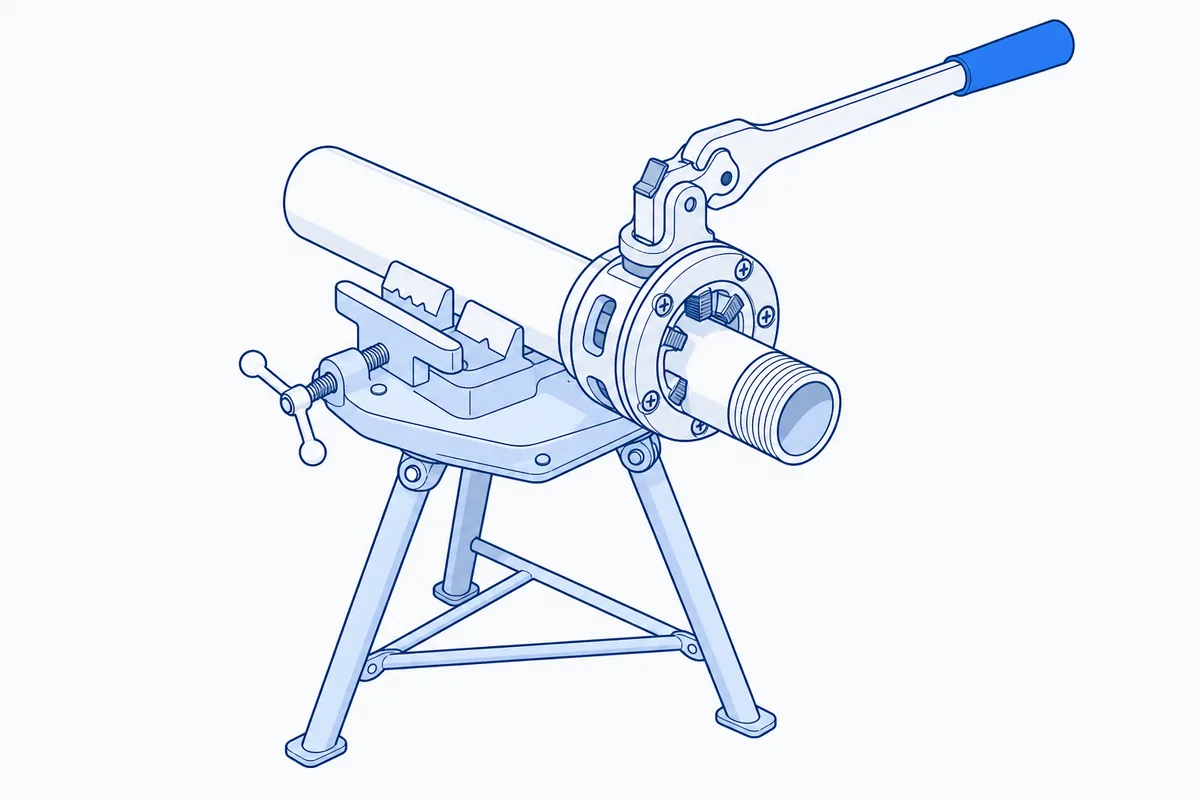
- Threaded steel: reaming, tapered threads and joint compound on male threads only
- Cast iron: no-hub shielded couplings and their torque, compression gaskets, lead and oakum
- PEX fittings, dielectric fittings between copper and steel, prohibited joints and lead-free limits
Sit the full exam under the real clock
100 questions in 2 hours, scored against the 70% pass mark, with a score for materials and joints so you know where you stand.
Free materials and joints drillHow to study it
- Read the labels on a can of PVC primer and cement, a tube of joint compound and a tin of flux; TSBPE points to them.
- Practise each joint on scrap pipe before the practical if you are taking it.
- Memorize which materials are listed for water, for DWV and for gas.
Common questions
Does the exam ask about manufacturer instructions?
Yes, for Texas. TSBPE’s review course says candidates need to know the manufacturer recommendations for solvent-cemented PVC, threaded steel, soldered and brazed copper and compression-band cast iron joints.
What is the difference between soldering and brazing?
Brazing uses a filler metal that melts above 840°F; soldering uses one that melts below 840°F. Both draw the filler into the joint by capillary action.
100 questions in 2 hours, scored against the 70% pass mark, with a score for materials and joints so you know where you stand.
Free materials and joints drillThe other sections
- Code Definitions and Plan Reading
- General Regulations, Testing and Plumbing Math
- Plumbing Fixtures
- Water Heaters
- Water Supply and Distribution
- Sanitary Drainage
- Vents
- Traps, Interceptors and Separators
- Storm Drainage
- Fuel Gas Piping
- Texas Plumbing License Law and Board Rules
- Texas practice exam (100 questions, 2 hours)
- ICC G25 practice exam (70 questions, 4 hours)
- Free Texas mixed drill
Sources
- Pearson VUE: Texas State Board of Plumbing Examiners (retake waits, practical, five attempts)
- TSBPE Candidate Handbook, August 2025 (exam table, fees, 70% passing score, test-center rules)
- TSBPE Journeyman Plumber Examination Review Course, rev 09/2025 (format, codes, chapters, sample questions)
- TSBPE Administrative Rules, March 2026 (22 TAC §§363.5, 363.22, 365.1, 367.2)
- TSBPE proposed amendment to §367.2 (2021 IPC and UPC), Texas Register, August 14, 2026
- TSBPE Strategic Plan 2025-2029 (examination statistics, p. 14)
- ICC National Contractor/Trades Examination Information Bulletin, published June 30, 2026 (G25 Journeyman Plumber)
- ICC Support: What is a passing score?
Original practice questions written to the TSBPE Journeyman Plumber Examination Review Course, ICC’s G25 content outline and the 2018 International Plumbing Code and Uniform Plumbing Code; they are not exam questions and quote no code text. Independent practice, not affiliated with or endorsed by the Texas State Board of Plumbing Examiners, the International Code Council, IAPMO or Pearson VUE.