TExES 904 Science Instruction, Inquiry and Safety

Competencies 001–006 of the Core Subjects EC–6: Science (904). The competencies TEA lists, how they are tested and practice questions with explanations.

45 questions on the real 55-minute clock, with a score by competency group and an explanation for every answer.

Or start the free Science Instruction, Inquiry and Safety drill

What the TEA framework lists

  • Competency 001: lab processes, equipment and safety, measurement and the metric system
  • Competency 002: the history and nature of science, inquiry and investigation design
  • Competency 003: the impact of science on personal and societal decisions
  • Competency 004: unifying concepts and processes (systems, models, change, form and function)
  • Competency 005: students as learners, misconceptions and hands-on science instruction
  • Competency 006: science assessment

Summarized from the TExES Core Subjects EC–6 (391) preparation manual, Section 3: exam framework, Competencies 001–006. The grouping of competencies into drill sets is ours.

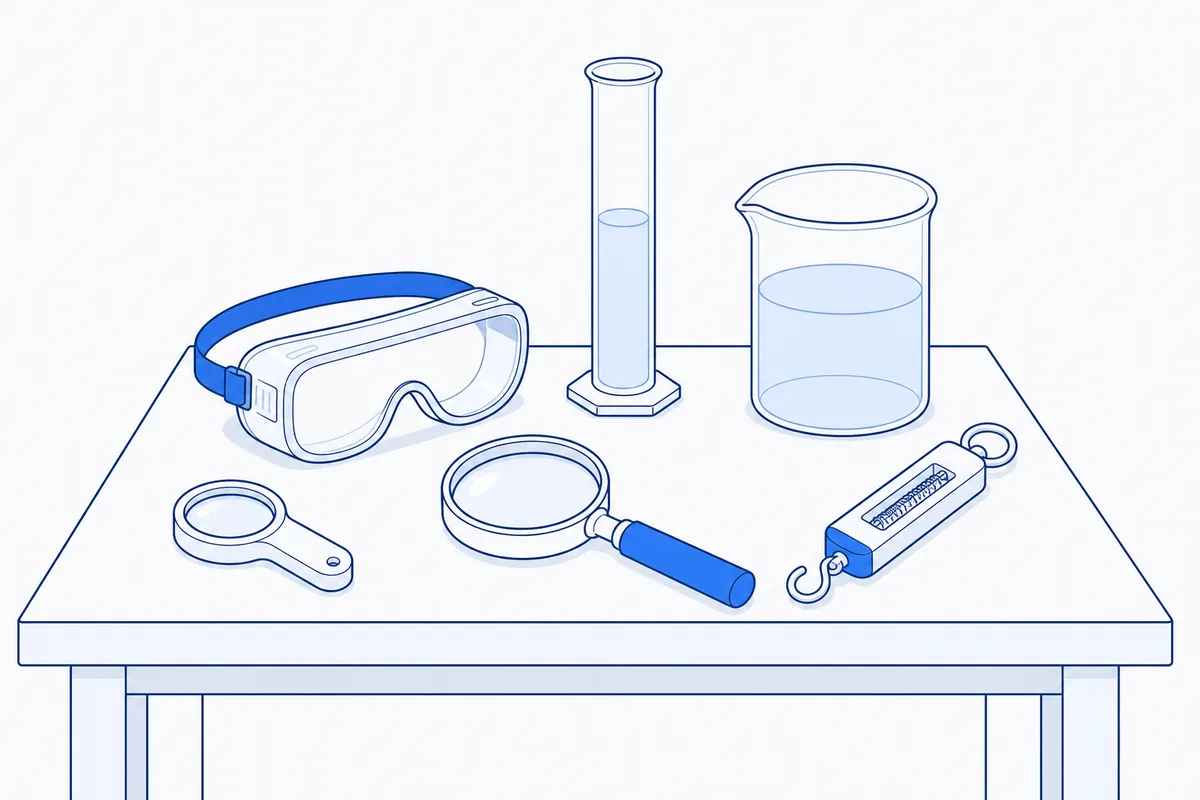
Line drawing of safety goggles, a graduated cylinder, a beaker, a hand lens and a spring scale

How Science Instruction, Inquiry and Safety is tested

Questions ask how to run a safe investigation, which variable is controlled, what makes a fair test, how to respond to a misconception and how to assess inquiry. TEA lists the competencies without weights, so our practice test spreads its questions evenly across them. The 18 science competencies are grouped into four drill sets: these six, then physical, life, and earth and space science.

TExES 904 Science Instruction, Inquiry and Safety practice questions

Answer each question, then open the explanation.

Question 1

Which approach best supports young children’s learning in science?

  1. A.Hands-on exploration of real objects followed by discussion
  2. B.Copying definitions from the textbook
  3. C.Long lectures on scientific vocabulary
  4. D.Watching several science videos in a row without stopping to ask or answer questions
Show the answer and explanation

Answer: A: Hands-on exploration of real objects followed by discussion

Young children learn science best through direct experience with real materials and talk that helps them make sense of what they observe.

Question 2

In the plant experiment, why should all plants get the same amount of water?

  1. A.So that the plants grow as tall as possible by the end
  2. B.So that the experiment takes less time to finish in class
  3. C.So that any difference in growth can be linked to sunlight
  4. D.So that students can share one watering can during the lab
Show the answer and explanation

Answer: C: So that any difference in growth can be linked to sunlight

Keeping other variables constant (controls) makes it a fair test, so differences in growth can be attributed to the variable being tested.

Question 3

Which rubric criterion best measures inquiry skills in a science fair project?

  1. A.The number of colors used on the poster
  2. B.Whether conclusions are supported by the data collected
  3. C.Whether parents helped with the project
  4. D.Neatness of the display board
Show the answer and explanation

Answer: B: Whether conclusions are supported by the data collected

Inquiry is assessed by how well students design investigations and support conclusions with evidence, not by the appearance of the display.

Question 4

A teacher explains that a forest, a pond and the human body can each be studied as a set of interacting parts. This idea is called

  1. A.a variable.
  2. B.a hypothesis.
  3. C.a system.
  4. D.a constant.
Show the answer and explanation

Answer: C: a system.

A system is a group of interacting parts that work together. Thinking in systems is a unifying concept across the sciences.

Take the full test under the real clock

45 questions on the real 55-minute clock, with a score by competency group and an explanation for every answer.

Or start the free Science Instruction, Inquiry and Safety drill

Common questions

How many Science Instruction, Inquiry and Safety questions are on the TExES 904?

TEA lists the competencies of the TExES 904 without weights or question counts. Our 45-question practice test spreads its questions evenly across the competencies, which gives Science Instruction, Inquiry and Safety 15 questions.

What does Science Instruction, Inquiry and Safety cover on the TExES 904?

Competency 001: lab processes, equipment and safety, measurement and the metric system; Competency 002: the history and nature of science, inquiry and investigation design; Competency 003: the impact of science on personal and societal decisions; Competency 004: unifying concepts and processes (systems, models, change, form and function); Competency 005: students as learners, misconceptions and hands-on science instruction; Competency 006: science assessment.

How should I study Science Instruction, Inquiry and Safety for the TExES 904?

Questions ask how to run a safe investigation, which variable is controlled, what makes a fair test, how to respond to a misconception and how to assess inquiry. TEA lists the competencies without weights, so our practice test spreads its questions evenly across them. The 18 science competencies are grouped into four drill sets: these six, then physical, life, and earth and space science.

TExES is a trademark of the Texas Education Agency. Original independent practice questions written to the published TExES exam frameworks; not affiliated with or endorsed by the Texas Education Agency or Pearson.