TExES PPR Classroom Environment

Domain II: Creating a Positive, Productive Classroom Environment of the Pedagogy and Professional Responsibilities EC–12 (160), about 13% of the exam. The competencies TEA lists, how they are tested and practice questions with explanations.

100 questions on the real 4-hour-45-minute clock, with a score by domain and an explanation for every answer.

Or start the free Classroom Environment drill

What the TEA framework lists

  • Competency 005: a safe, respectful, high-expectation classroom climate and the physical arrangement of the room
  • Competency 006: routines and procedures, transitions, cooperative groups, schedules for young children, volunteers and paraprofessionals, and behavior management

Summarized from the TExES PPR EC–12 (160) preparation manual, Section 3: exam framework, Domain II: Creating a Positive, Productive Classroom Environment.

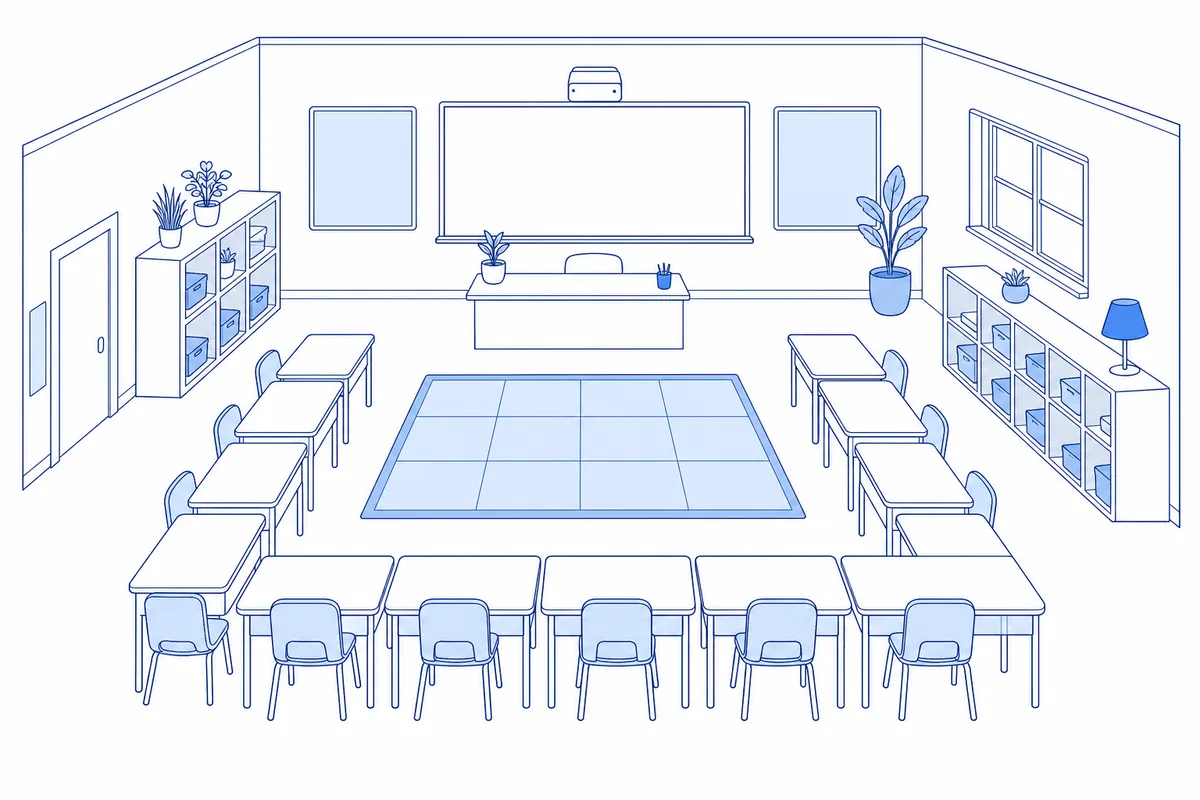
Line drawing of a classroom with desks in a U shape, a carpet area, cubbies and clear walkways

How Classroom Environment is tested

The smallest domain. Questions put you in a classroom with a management problem: a slow transition, a group where one student does all the work, a seating plan that blocks movement, a student who keeps calling out. The best answer usually teaches and practices a clear expectation, keeps students accountable and protects learning time and dignity.

TExES PPR Classroom Environment practice questions

Answer each question, then open the explanation.

Question 1

A middle school teacher applies classroom consequences differently depending on which student misbehaves. What is the most likely result?

  1. A.The teacher will have fewer behavior problems over time.
  2. B.Students will see the system as unfair and trust in the teacher will decline.
  3. C.Students will learn to manage their own behavior more quickly.
  4. D.Students will behave better because they cannot predict the consequences.
Show the answer and explanation

Answer: B: Students will see the system as unfair and trust in the teacher will decline.

Consistent consequences are essential to an effective management system. Inconsistency signals unfairness, undermines trust and tends to increase behavior problems.

Question 2

Which teacher action best creates a classroom climate in which students feel safe to take academic risks?

  1. A.Correcting every error immediately in front of the class
  2. B.Keeping the classroom silent at all times during instruction
  3. C.Calling on only the students who are likely to know the answer
  4. D.Treating mistakes as part of learning and modeling respect
Show the answer and explanation

Answer: D: Treating mistakes as part of learning and modeling respect

Students take risks when mistakes are treated as normal steps in learning and when the teacher and classmates respond respectfully. Public correction of every error and calling only on likely-correct students discourage participation.

Question 3

A middle school teacher loses several minutes at the start of each class while students settle. Which procedure best uses this time?

  1. A.Taking attendance aloud by calling every student’s name before the lesson begins
  2. B.Telling students to talk quietly until the bell has finished ringing
  3. C.Waiting quietly at the front until every student is seated and silent before beginning
  4. D.A short warm-up task posted every day that students start on arrival
Show the answer and explanation

Answer: D: A short warm-up task posted every day that students start on arrival

A consistent bell-ringer task gives students something purposeful to do immediately, which reduces lost time and lets the teacher handle attendance quietly. Waiting or calling roll aloud wastes instructional minutes.

Question 4

A teacher greets students by name at the door each morning, notices when they are absent and asks about their interests. These actions mainly help to

  1. A.reduce the time needed to take attendance at the start of class.
  2. B.replace the need for classroom rules and procedures.
  3. C.build positive teacher-student relationships that support learning.
  4. D.make sure students arrive on time to class every day.
Show the answer and explanation

Answer: C: build positive teacher-student relationships that support learning.

Personal attention and genuine interest build relationships, which create a positive climate and encourage engagement. These actions support, but do not replace, clear procedures.

Take the full test under the real clock

100 questions on the real 4-hour-45-minute clock, with a score by domain and an explanation for every answer.

Or start the free Classroom Environment drill

Common questions

How many Classroom Environment questions are on the TExES PPR?

TEA’s framework puts Classroom Environment (Domain II: Creating a Positive, Productive Classroom Environment) at about 13% of the exam. TEA publishes percentages, not question counts; our 100-question practice test gives it 13 questions.

What does Classroom Environment cover on the TExES PPR?

Competency 005: a safe, respectful, high-expectation classroom climate and the physical arrangement of the room; Competency 006: routines and procedures, transitions, cooperative groups, schedules for young children, volunteers and paraprofessionals, and behavior management.

How should I study Classroom Environment for the TExES PPR?

The smallest domain. Questions put you in a classroom with a management problem: a slow transition, a group where one student does all the work, a seating plan that blocks movement, a student who keeps calling out. The best answer usually teaches and practices a clear expectation, keeps students accountable and protects learning time and dignity.

TExES is a trademark of the Texas Education Agency. Original independent practice questions written to the published TExES exam frameworks; not affiliated with or endorsed by the Texas Education Agency or Pearson.