ARRT Head, Spine and Pelvis Procedures Practice Questions
Procedures · 18 of the 200 scored questions in ARRT’s content specifications
230 questions across all eight subcategories in 230 minutes, with a score for Head, Spine and Pelvis so you know where you stand.
Free Head, Spine and Pelvis drillDuring myelography, why is the patient's head kept extended when the table is tilted head down?
Head, Spine and Pelvis Procedures on the ARRT radiography exam
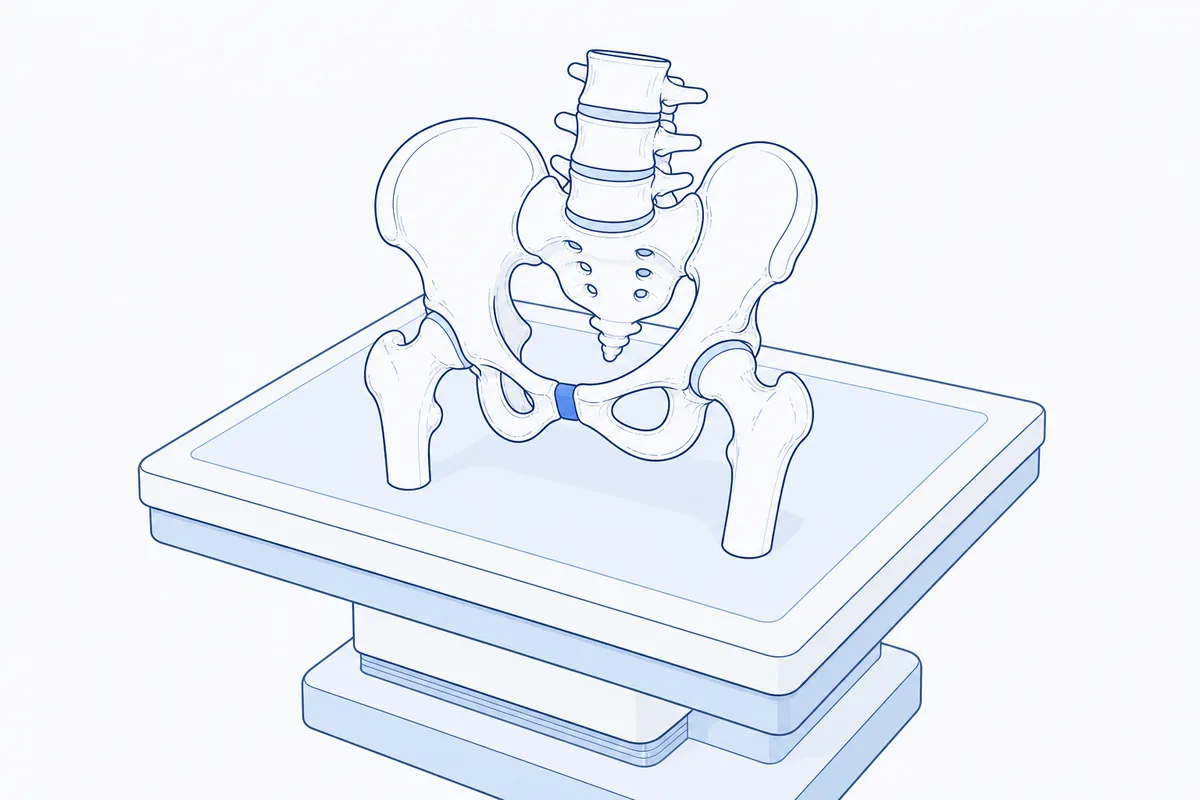
Head, Spine and Pelvis Procedures has 18 of the 200 scored questions in the Procedures category. Questions cover positioning, anatomy, adapting the exam for trauma and limited mobility, and judging the displayed anatomy for the skull, facial bones, sinuses, spine, pelvis and hip, plus myelography and GU contrast studies.
- Share of the exam
- 18 of the 200 scored questions now; 20 from March 1, 2027
- Our drill
- 10 questions from 50 Head, Spine and Pelvis questions, untimed, an explanation after every answer; one free attempt, unlimited with a pass
What Head, Spine and Pelvis Procedures questions test
- Head: skull, facial bones, mandible, TMJs, nasal bones, orbits and paranasal sinuses (Caldwell, Waters, Towne, SMV and trauma projections)
- Spine: cervical (open mouth, obliques, swimmer’s, flexion and extension), thoracic, scoliosis series, lumbar (obliques and the Scottie dog), sacrum and coccyx, and SI joints
- Pelvis and hip: AP pelvis, frog-leg, cross-table lateral hip, inlet and outlet, and Judet views
- Myelography and GU studies: cystography, voiding cystourethrography, retrograde urography and hysterosalpingography
- Image evaluation: rotation, tilt and the anatomy each projection must show
Sit the full exam under the real clock
230 questions across all eight subcategories in 230 minutes, with a score for Head, Spine and Pelvis so you know where you stand.
Free Head, Spine and Pelvis drillHow to study it
- Learn the skull baselines: OML, IOML and the 7 to 8 degree difference between them, and which line is perpendicular for each projection.
- Know which side each oblique shows: cervical anterior obliques show the foramina closest to the receptor, posterior obliques the side farthest from it.
- For lumbar obliques, remember that posterior obliques show the zygapophyseal joints closest to the receptor.
- Take the head, spine and pelvis drill and the positioning drill.
Common questions
Is IV urography still on the ARRT radiography exam?
Through February 28, 2027, yes: intravenous urography is listed under GU studies. The specifications effective March 1, 2027 remove it and add lumbar puncture and epidural injections to the myelography section.
How many head, spine and pelvis questions are on the exam?
Eighteen scored questions under the current specifications and 20 from March 1, 2027.
230 questions across all eight subcategories in 230 minutes, with a score for Head, Spine and Pelvis so you know where you stand.
Free Head, Spine and Pelvis drillThe other ARRT radiography content areas
Sources
- ARRT: Radiography Examination Content Specifications, in force through February 28, 2027 (PDF)
- ARRT: Radiography Examination Content Specifications, effective March 1, 2027 (PDF)
- ARRT: 2026 Primary Eligibility Pathway Handbook: exam format, scoring, exam window and attempts (PDF)
- ARRT: Fees
- ARRT: Annual Exam Report 2025: passing score and approximate percent correct (PDF)
- ARRT: Updated Radiography documents (May 1, 2026), changes effective March 1, 2027
- NCRP Report No. 116, Limitation of Exposure to Ionizing Radiation
Original practice questions for exam preparation, written to the ARRT Radiography Examination Content Specifications, not ARRT exam questions. Independent practice, not affiliated with or endorsed by The American Registry of Radiologic Technologists (ARRT) or Pearson VUE. ARRT and R.T. are trademarks of the ARRT.