TExES 905 Music

Competency 002 of the Core Subjects EC–6: Fine Arts, Health and Physical Education (905). The competencies TEA lists, how they are tested and practice questions with explanations.

40 questions on the real 35-minute clock, with a score by competency group and an explanation for every answer.

Or start the free Music drill

What the TEA framework lists

  • Musical terms and notation
  • Genres, cultures and the role of music in society, including Texas and U.S. heritage
  • Evaluating performances

Summarized from the TExES Core Subjects EC–6 (391) preparation manual, Section 3: exam framework, Competency 002. The grouping of competencies into drill sets is ours.

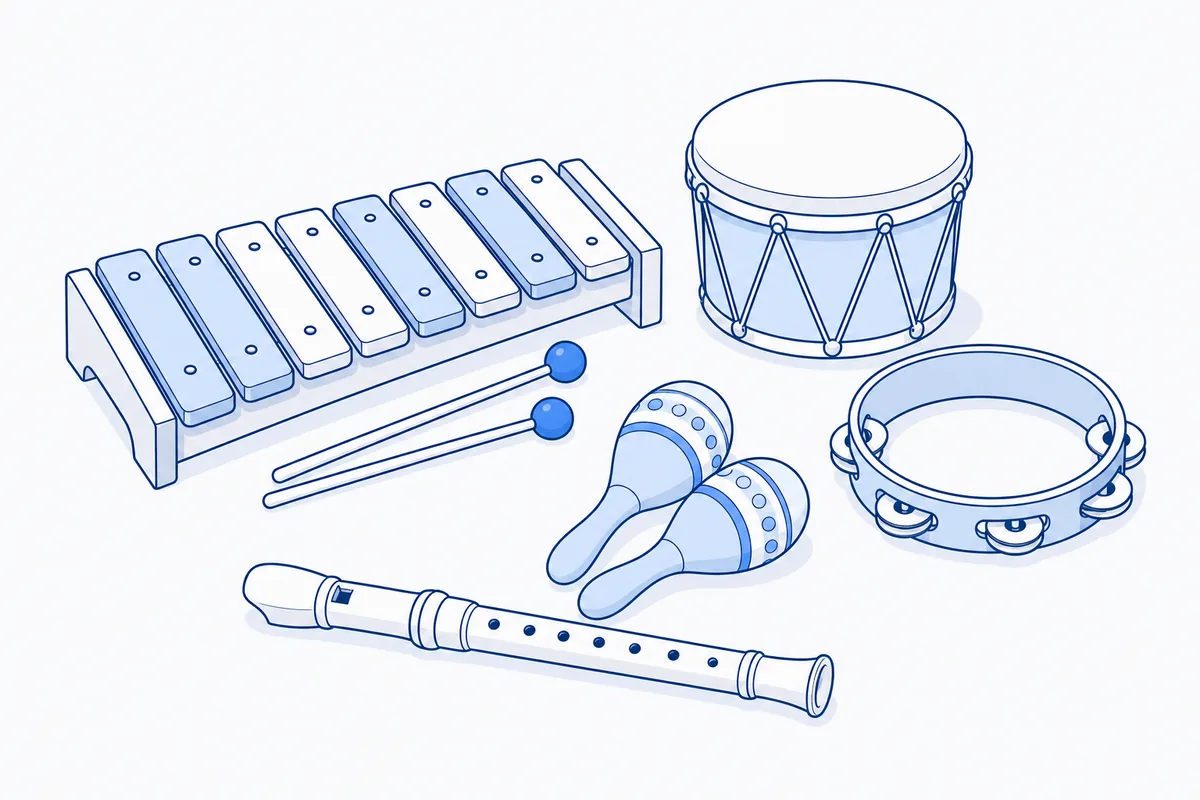
Line drawing of a xylophone with mallets, a hand drum, a tambourine, maracas and a recorder

How Music is tested

Questions cover rhythm, beat, tempo, dynamics, pitch and form, instrument families, note values and how children develop singing and rhythm skills. TEA lists the competencies without weights, so our practice test spreads its questions evenly across them.

TExES 905 Music practice questions

Answer each question, then open the explanation.

Question 1

Which statement best describes the role of music in many cultures?

  1. A.Music is used in celebrations, ceremonies, storytelling and work.
  2. B.Music is used only for entertainment at concerts.
  3. C.Music has the same style in every culture.
  4. D.Music is important only in modern societies.
Show the answer and explanation

Answer: A: Music is used in celebrations, ceremonies, storytelling and work.

Across cultures, music serves many purposes, including celebrations, religious ceremonies, storytelling and work songs.

Question 2

A song has a verse, a chorus, the verse again and the chorus again. Which musical element does this describe?

  1. A.Form
  2. B.Pitch
  3. C.Tempo
  4. D.Dynamics
Show the answer and explanation

Answer: A: Form

Form is the structure of a piece, the way sections repeat or contrast, such as verse and chorus (or ABAB).

Question 3

In music, "forte" means

  1. A.quickly.
  2. B.very softly.
  3. C.slowly.
  4. D.loudly.
Show the answer and explanation

Answer: D: loudly.

Forte (f) is a dynamic marking meaning loud. Piano (p) means soft.

Question 4

Which instrument belongs to the brass family?

  1. A.Xylophone
  2. B.Violin
  3. C.Trumpet
  4. D.Clarinet
Show the answer and explanation

Answer: C: Trumpet

The trumpet is a brass instrument; sound is made by buzzing the lips into a mouthpiece. The clarinet is a woodwind, the violin a string instrument and the xylophone a percussion instrument.

Take the full test under the real clock

40 questions on the real 35-minute clock, with a score by competency group and an explanation for every answer.

Or start the free Music drill

Common questions

How many Music questions are on the TExES 905?

TEA lists the competencies of the TExES 905 without weights or question counts. Our 40-question practice test spreads its questions evenly across the competencies, which gives Music 8 questions.

What does Music cover on the TExES 905?

Musical terms and notation; Genres, cultures and the role of music in society, including Texas and U.S. heritage; Evaluating performances.

How should I study Music for the TExES 905?

Questions cover rhythm, beat, tempo, dynamics, pitch and form, instrument families, note values and how children develop singing and rhythm skills. TEA lists the competencies without weights, so our practice test spreads its questions evenly across them.

TExES is a trademark of the Texas Education Agency. Original independent practice questions written to the published TExES exam frameworks; not affiliated with or endorsed by the Texas Education Agency or Pearson.