TExES 901 Oral Language, Word Analysis and Fluency

Competencies 001–003 of the Core Subjects EC–6: English Language Arts and Reading (901). The competencies TEA lists, how they are tested and practice questions with explanations.

45 questions on the real 70-minute clock, with a score by competency group and an explanation for every answer.

Or start the free Oral Language, Word Analysis and Fluency drill

What the TEA framework lists

  • Competency 001, oral language: stages of oral language development, speaking and listening, and evaluating spoken messages
  • Competency 002, word analysis and identification: phonics, morphology, high-frequency words and decoding strategies
  • Competency 003, reading fluency: accuracy, rate and prosody, and the link between fluency and comprehension

Summarized from the TExES Core Subjects EC–6 (391) preparation manual, Section 3: exam framework, Competencies 001–003. The grouping of competencies into drill sets is ours.

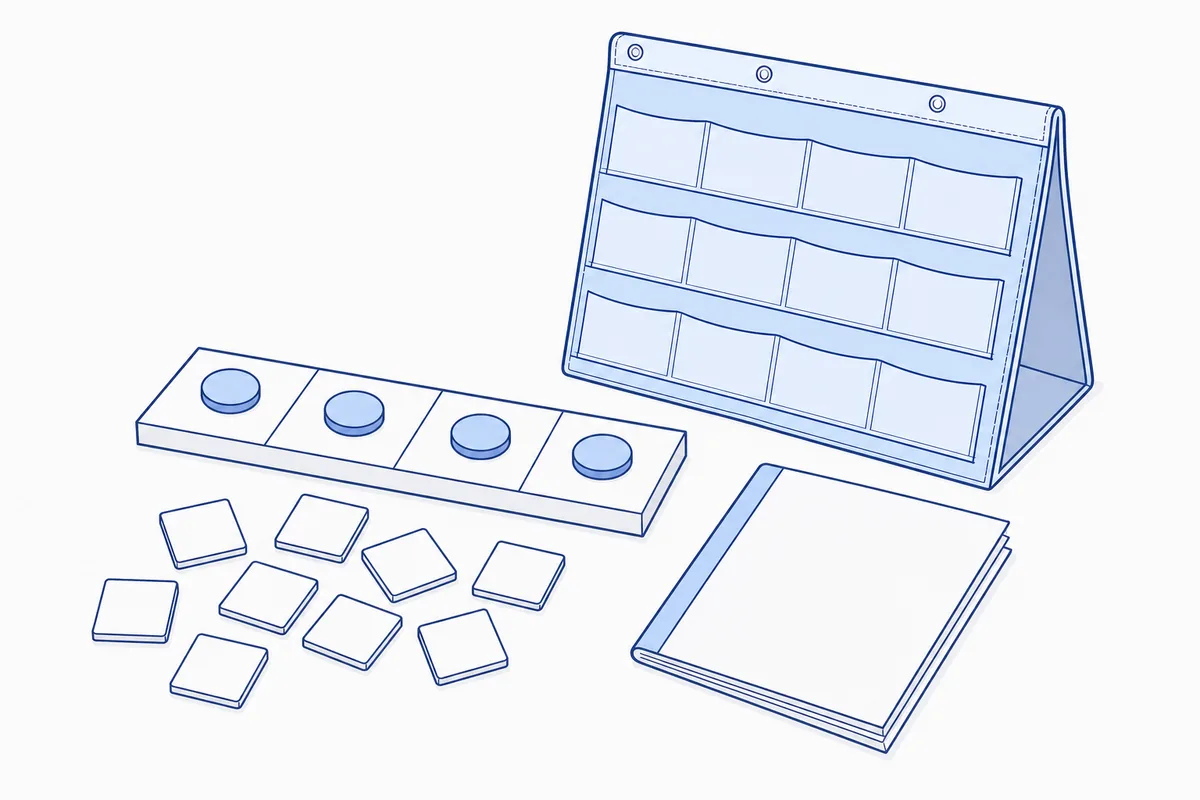
Line drawing of reading-intervention materials: sound boxes with counters, blank letter tiles, a pocket chart and a small booklet

How Oral Language, Word Analysis and Fluency is tested

Questions describe a young reader and ask what the behavior shows or what to teach next: a child who sounds out every word slowly, a student who reads accurately but without expression, a kindergartner who cannot yet blend sounds. Know the order in which phonics skills are taught and what each fluency measure tells you. TEA lists the competencies without weights, so our practice test spreads its questions evenly across them.

TExES 901 Oral Language, Word Analysis and Fluency practice questions

Answer each question, then open the explanation.

Question 1

A kindergarten student can say the first sound in spoken words but cannot yet say the last sound. Which skill should the teacher work on next?

  1. A.Reading two-syllable words with a closed first syllable
  2. B.Isolating the final sound in spoken words
  3. C.Writing complete sentences with capital letters and periods
  4. D.Blending a written word’s letter sounds together after decoding each one
Show the answer and explanation

Answer: B: Isolating the final sound in spoken words

Phonemic awareness skills develop in a sequence: isolating initial sounds usually comes before isolating final and then medial sounds. The next step is isolating final sounds in spoken words.

Question 2

A fourth grader reads at an appropriate rate but makes many errors that change the meaning of the text. What is the student’s main need?

  1. A.Reading with more expression and dramatic voice
  2. B.Choosing longer books for independent reading
  3. C.Reading faster every day to build automaticity with longer grade-level texts and chapter books
  4. D.Improving accuracy through decoding instruction and self-monitoring
Show the answer and explanation

Answer: D: Improving accuracy through decoding instruction and self-monitoring

Errors that change meaning point to an accuracy problem. The student needs decoding support and strategies to notice when reading does not make sense. Increasing speed would make the errors worse.

Question 3

A teacher notices that an English learner in first grade is in a "silent period," listening but rarely speaking. What should the teacher do?

  1. A.Require the student to speak in complete sentences before joining activities
  2. B.Seat the student away from peers so the student is not embarrassed
  3. C.Allow nonverbal responses and keep giving rich language input
  4. D.Refer the student for a speech evaluation immediately
Show the answer and explanation

Answer: C: Allow nonverbal responses and keep giving rich language input

Many new language learners go through a silent period while they build understanding. Teachers can accept gestures, pointing and drawing while providing comprehensible input and inviting participation. It is not by itself a sign of a disability.

Question 4

A third grader cannot read the word "unhelpful." Which strategy would best help the student decode it?

  1. A.Memorizing the word as a whole by looking at its shape
  2. B.Breaking the word into the prefix un-, the base help and the suffix -ful
  3. C.Sounding out each letter from left to right, one at a time, without looking for any larger chunks
  4. D.Skipping the word and guessing from the picture on the page
Show the answer and explanation

Answer: B: Breaking the word into the prefix un-, the base help and the suffix -ful

Recognizing morphemes, the prefix, base word and suffix, lets the student decode a long word in meaningful chunks and understand its meaning. Letter-by-letter decoding is slow in long words, and guessing from pictures or word shape is unreliable.

Take the full test under the real clock

45 questions on the real 70-minute clock, with a score by competency group and an explanation for every answer.

Or start the free Oral Language, Word Analysis and Fluency drill

Common questions

How many Oral Language, Word Analysis and Fluency questions are on the TExES 901?

TEA lists the competencies of the TExES 901 without weights or question counts. Our 45-question practice test spreads its questions evenly across the competencies, which gives Oral Language, Word Analysis and Fluency 14 questions.

What does Oral Language, Word Analysis and Fluency cover on the TExES 901?

Competency 001, oral language: stages of oral language development, speaking and listening, and evaluating spoken messages; Competency 002, word analysis and identification: phonics, morphology, high-frequency words and decoding strategies; Competency 003, reading fluency: accuracy, rate and prosody, and the link between fluency and comprehension.

How should I study Oral Language, Word Analysis and Fluency for the TExES 901?

Questions describe a young reader and ask what the behavior shows or what to teach next: a child who sounds out every word slowly, a student who reads accurately but without expression, a kindergartner who cannot yet blend sounds. Know the order in which phonics skills are taught and what each fluency measure tells you. TEA lists the competencies without weights, so our practice test spreads its questions evenly across them.

TExES is a trademark of the Texas Education Agency. Original independent practice questions written to the published TExES exam frameworks; not affiliated with or endorsed by the Texas Education Agency or Pearson.