CCHT Technical Practice Questions
Area II of 4 in NNCC’s CCHT blueprint · 21–25% of the exam
150 questions across all four areas in 3 hours, with a score for Technical so you know where you stand.
Free Technical drillBefore each treatment, why is the dialysate conductivity and pH checked with an independent device?
Technical on the CCHT exam
Technical is 21–25% of the CCHT exam, 32 to 38 of the 150 questions. NNCC lists 12 technical activities: testing the machine, checking the dialysate, taking part in water treatment, applying the science of dialysis, mixing concentrates, troubleshooting and processing lab samples.
- Share of the exam
- 21–25% in NNCC’s blueprint; our mock exam draws 29 of its 125 scored questions from this area
- Our drill
- 10 questions from 90 Technical questions, untimed, an explanation after every answer; one free attempt, unlimited with a pass
What Technical questions test
- Principles of dialysis: diffusion, ultrafiltration, convection and osmosis, countercurrent flow, and what changes clearance
- The machine: pressure and alarm tests, the air detector, transducer protectors, bypass, disinfection and residual testing, and tagging faulty equipment
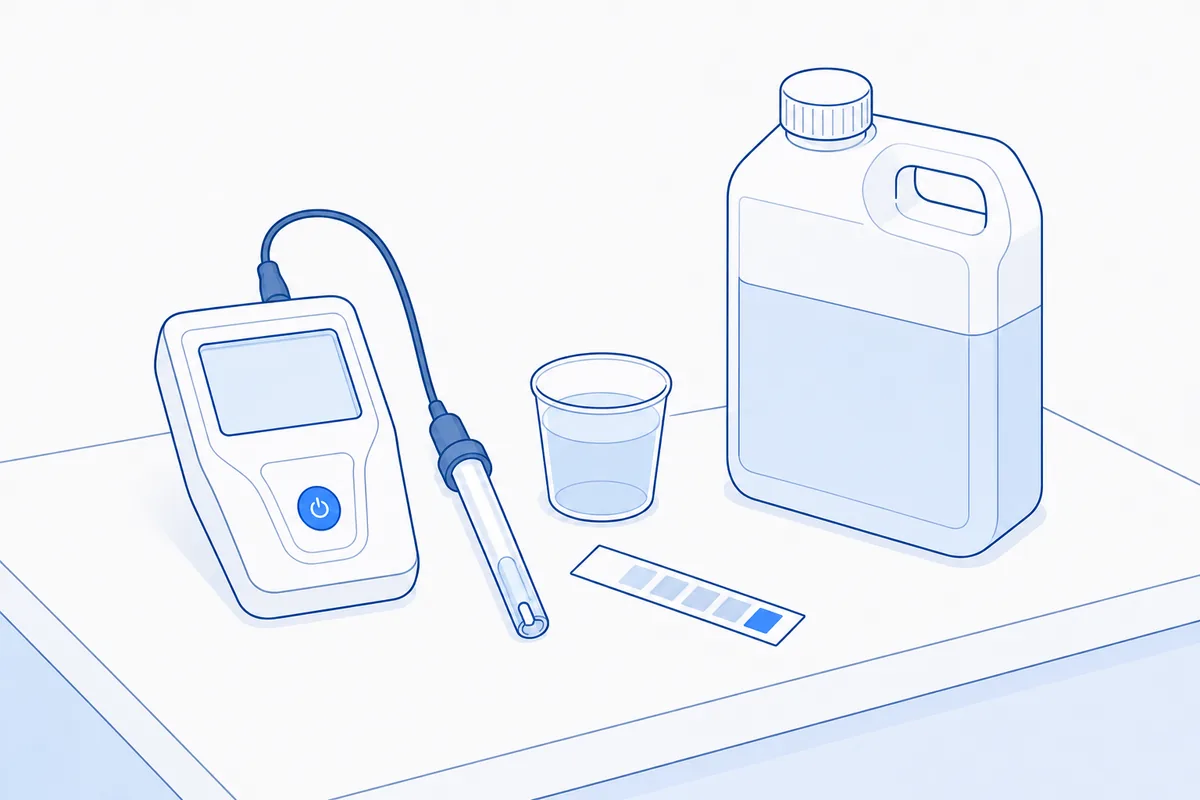
- Dialysate: conductivity and pH checked with an independent device, temperature to the prescription, acid and bicarbonate concentrates and mixing bicarbonate from powder
- Water treatment: carbon tanks and total chlorine testing, softeners, reverse osmosis and percent rejection, deionization and resistivity, and contaminants
- Quality control and labs: control tests for meters and test strips, processing and labeling samples, and reporting adverse events such as power failures
Sit the full exam under the real clock
150 questions across all four areas in 3 hours, with a score for Technical so you know where you stand.
Free Technical drillHow to study it
- Know what each water component removes: carbon removes chlorine and chloramines, the softener removes calcium and magnesium, the RO removes most dissolved ions, bacteria and endotoxin.
- Learn the numbers NNCC’s references use: total chlorine no more than 0.1 mg/L, DI resistivity at least 1 megohm-cm.
- For any machine that fails a test or reads out of range, the answer is not to start, to tag it out and to report it.
- Take the water treatment drill until you score 80% or better, then the technical drill.
Common questions
How many technical questions are on the CCHT?
NNCC’s blueprint puts Technical at 21–25% of the test, which is 32 to 38 of the 150 questions.
Is water treatment on the CCHT exam?
Yes. NNCC’s technical activities include taking part in monitoring the water treatment system and recognizing water treatment principles, and NNCC lists its guide Water for Dialysis: What You Need to Know among its references.
150 questions across all four areas in 3 hours, with a score for Technical so you know where you stand.
Free Technical drillThe other CCHT areas
Sources
- NNCC: Certified Clinical Hemodialysis Technician (CCHT): eligibility, exam length, passing score, fees, references
- NNCC: CCHT Test Blueprint (ideal distribution of 150 items)
- NNCC: CCHT Weights for Blueprint Categories and Activities by Blueprint Area
- NNCC: How the CCHT Examination is Developed (pilot questions, passing score)
- NNCC: Certification Examination Application booklet (revised 7/2026): PSI testing, 90-day window, results, reapplication, recertification
- NNCC: 2025–2026 Annual Report (CCHT exams administered in 2025)
- CMS ESRD Conditions for Coverage, 42 CFR 494.140(e): patient care dialysis technician qualifications
- BONENT: Eligibility and fees (CHT certification)
Original practice questions for exam preparation, written to the NNCC CCHT test blueprint and activity statements, not NNCC exam questions. Independent practice, not affiliated with or endorsed by the Nephrology Nursing Certification Commission (NNCC), C-NET or PSI. CCHT is an NNCC certification.