VTNE Emergency Medicine/Critical Care Practice Questions
Domain 8 of the VTNE · 10 of the 150 scored questions (7%)
170 questions across all ten domains in 3 hours, with a score for emergency and critical care so you know where you stand.
Free emergency and critical care drillDuring rounds, the technician finds that the connector on a dog's thoracostomy tube has come apart and the tube is open to room air. What is the first action?
Emergency Medicine/Critical Care on the VTNE
Emergency Medicine/Critical Care is 10 of the 150 scored questions. It tests the first minutes with an emergency patient and the hours after: triage, recognizing shock and common toxicities, CPR and first aid, and critical care nursing such as transfusions, fluid resuscitation and oxygen therapy.
- Share of the exam
- 10 of 150 scored questions (7%) on every exam form
- Task statements
- 5 (8A, 8B, 8C, 8D, 8E)
- Our drill
- 10 questions from 32 emergency and critical care questions, untimed, an explanation after every answer; one free attempt, unlimited with a pass
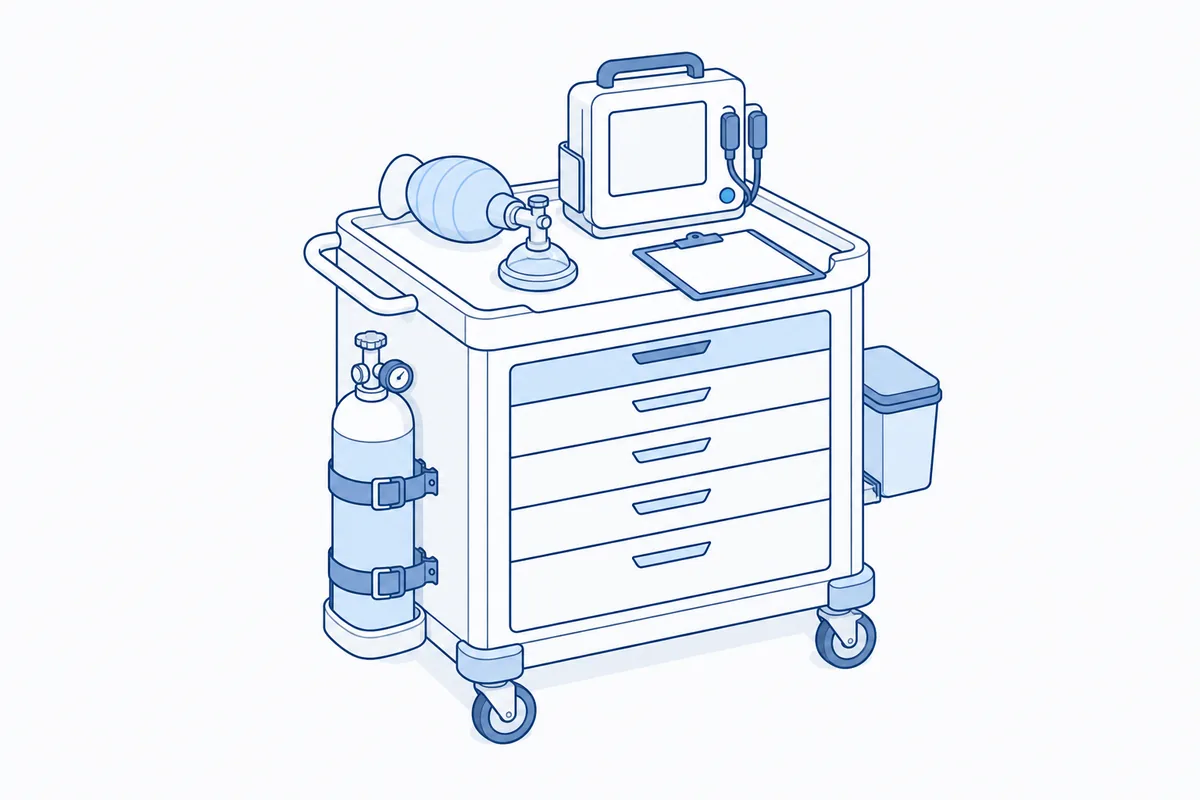
What emergency and critical care questions test
- Triage: the primary survey, airway, breathing and circulation, and which patient is seen first (task 8B)
- Shock, gastric dilatation-volvulus, urethral obstruction and common toxicities in dogs and cats (task 8A)
- CPR to the RECOVER guidelines: compression rate and technique, ventilation, and two-minute cycles (task 8C)
- Controlling acute blood loss and stabilizing fractures (task 8C)
- Blood typing, crossmatching and transfusion reactions, fluid resuscitation and oxygen supplementation (task 8D)
- Ongoing evaluation of critical patients: urine output, vital-sign trends, nutrition and recumbent care (task 8E)
Sit the full exam under the real clock
170 questions across all ten domains in 3 hours, with a score for emergency and critical care so you know where you stand.
Free emergency and critical care drillHow to study it
- Learn triage as a sequence you can say out loud: airway, breathing, circulation, then everything else.
- Learn the RECOVER CPR numbers until you do not have to think about them.
- Make a short list of the toxicities that come up again and again (xylitol, ethylene glycol, anticoagulant rodenticides, chocolate, lilies in cats, NSAIDs) with the sign that gives each away.
- For transfusions, know the reaction signs and what the technician does first.
Common questions
Which CPR guidelines does the VTNE use?
The RECOVER Initiative guidelines. AAVSB’s reference list links the 2024 RECOVER guidelines, and its emergency texts are Small Animal Emergency and Critical Care for Veterinary Technicians and the Veterinary Technician’s Manual for Small Animal Emergency and Critical Care.
How many emergency and critical care questions are on the VTNE?
Ten of the 150 scored questions, 7% of the exam, spread over five task statements: pathophysiology, triage, emergency procedures, critical care procedures and ongoing evaluation.
170 questions across all ten domains in 3 hours, with a score for emergency and critical care so you know where you stand.
Free emergency and critical care drillThe other VTNE domains
Sources
Original practice questions for exam preparation, written to the VTNE content outline approved by the AAVSB Board of Directors in March 2023. Independent practice, not affiliated with or endorsed by the American Association of Veterinary State Boards (AAVSB). VTNE is a registered trademark of AAVSB.