VTNE Anesthesia Practice Questions
Domain 7 of the VTNE · 20 of the 150 scored questions (13%)
170 questions across all ten domains in 3 hours, with a score for anesthesia so you know where you stand.
Free anesthesia drillA 2-year-old English bulldog is scheduled for anesthesia. Why is this dog at higher risk of upper airway obstruction after sedation and again after extubation than a mixed-breed dog of similar size?
Anesthesia on the VTNE
Anesthesia is 20 of the 150 scored questions. It follows a patient through an anesthetic event: the pre-anesthetic assessment and plan, premedication and induction, the machine and breathing system, intubation, and monitoring and troubleshooting until the patient has recovered.
- Share of the exam
- 20 of 150 scored questions (13%) on every exam form
- Task statements
- 6 (7A, 7B, 7C, 7D, 7E, 7F)
- Our drill
- 10 questions from 66 anesthesia questions, untimed, an explanation after every answer; one free attempt, unlimited with a pass
What anesthesia questions test
- The anesthetic plan: patient assessment, physical status classification, fasting and the pre-anesthetic workup (task 7B)
- Premedication, induction and maintenance drugs: anticholinergics, sedatives and tranquilizers, opioids, injectable induction agents and inhalants, with their effects and reversal agents (knowledge area 43)
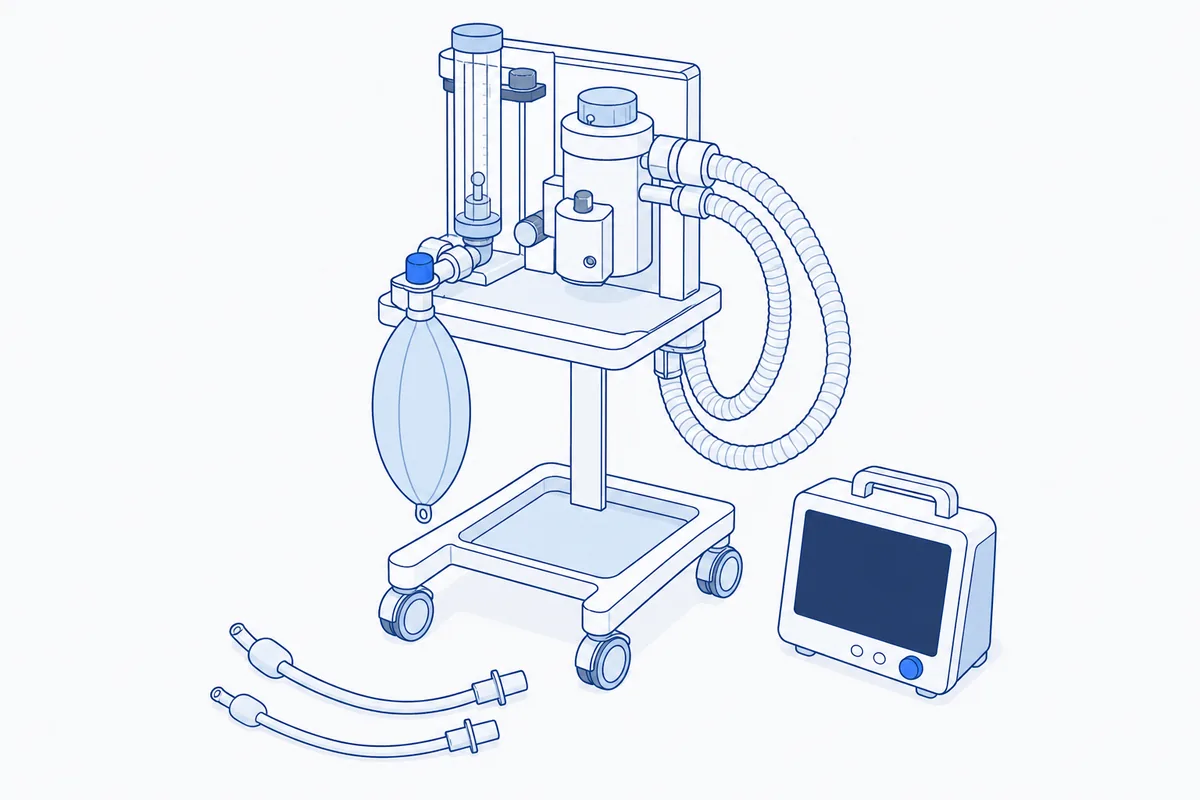
- The anesthetic machine: rebreathing and non-rebreathing systems, oxygen flow rates, reservoir bags, vaporizers, scavenging and leak checks (tasks 7C and 7D)
- Endotracheal intubation: tube selection, cuff inflation and confirming placement, including cats, rabbits, ruminants and horses (task 7E)
- Monitoring: stages and planes of anesthesia, reflexes, heart and respiratory rate, pulse oximetry, capnography, blood pressure, temperature and ECG (task 7F)
- Recovery: extubation timing, hypothermia and the patients who need extra care, such as brachycephalic dogs (task 7F)
Sit the full exam under the real clock
170 questions across all ten domains in 3 hours, with a score for anesthesia so you know where you stand.
Free anesthesia drillHow to study it
- Learn the anesthetic machine by following a molecule of oxygen from the tank to the patient and back to the scavenger.
- For each drug class, know one cardiovascular effect, one respiratory effect and whether it can be reversed.
- Learn the normal monitoring values and the first thing to check when one goes wrong: depth, then equipment, then the patient.
- Practice the flow-rate and reservoir-bag calculations; they are fast points once the formula is familiar.
Common questions
What anesthesia references does the VTNE use?
AAVSB’s reference list includes Anesthesia and Analgesia for Veterinary Technicians (Thomas and Lerche), Anesthesia and Pain Management for Veterinary Nurses and Technicians, and Anesthesia, Analgesia, and Pain Management for Vet Techs.
Is pain management part of the anesthesia domain?
No. Pain Management/Analgesia is its own domain with 10 scored questions. The anesthesia domain covers analgesic drugs only as part of premedication and the anesthetic plan.
170 questions across all ten domains in 3 hours, with a score for anesthesia so you know where you stand.
Free anesthesia drillThe other VTNE domains
Sources
Original practice questions for exam preparation, written to the VTNE content outline approved by the AAVSB Board of Directors in March 2023. Independent practice, not affiliated with or endorsed by the American Association of Veterinary State Boards (AAVSB). VTNE is a registered trademark of AAVSB.