Vulnerable Road Users Theory Test Practice Questions
One of the fourteen DVSA theory test topics · 45 practice questions with answers
50 questions from all fourteen topics in 57 minutes, with a score for vulnerable road users so you know where you stand.
Free vulnerable road users drillYou're on a roundabout. A cyclist in the left-hand lane is signalling right. What does this tell you?
Vulnerable Road Users on the theory test
Vulnerable road users are the people most at risk in a collision: pedestrians, cyclists, motorcyclists and horse riders, especially children, older and disabled people. Since the 2022 Highway Code changes, questions also test the hierarchy of road users and the new priorities at junctions.
- On the real test
- Part of the 50 multiple-choice questions; DVSA does not publish a count per topic
- On our mock
- 4 of 50 questions, with your score for this topic in the result
- Our drill
- 10 questions from 45 vulnerable road users questions, untimed, an explanation after every answer; one free attempt, unlimited with a pass
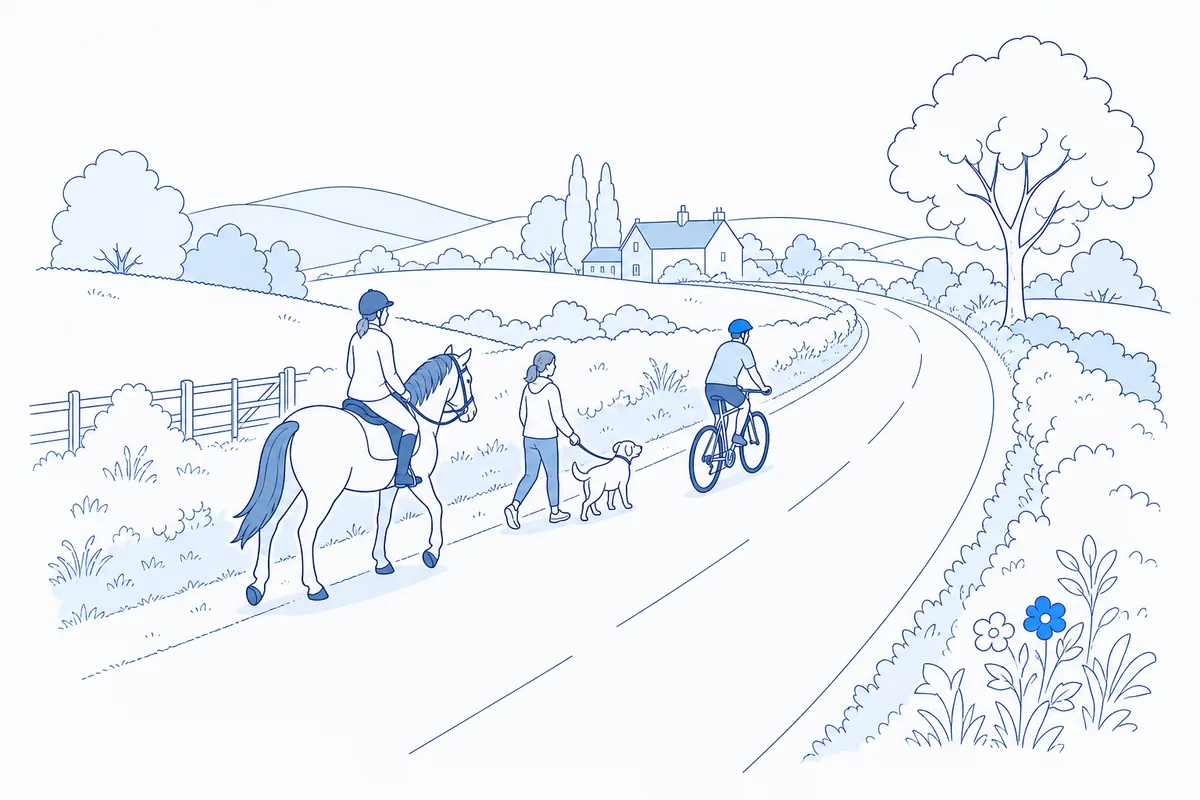
What vulnerable road users questions test
- The hierarchy of road users (rule H1) and the responsibility of drivers of larger vehicles
- Giving way to pedestrians crossing or waiting to cross at a junction (rule H2)
- Not cutting across cyclists, horse riders or other riders going ahead (rule H3)
- Passing distances: at least 1.5 metres for cyclists at up to 30 mph, and 2 metres at no more than 10 mph for horses
- Children, older people, people with a white cane or guide dog, and school crossing patrols
- Motorcyclists at junctions, and pedestrians on roads without pavements
Take all 50 questions under the real clock
50 questions from all fourteen topics in 57 minutes, with a score for vulnerable road users so you know where you stand.
Free vulnerable road users drillHow to revise it
- Read the three new introduction rules H1, H2 and H3 and rules 204–225 on road users requiring extra care.
- Learn the passing-distance numbers in rule 163.
- When unsure, choose the option that gives the vulnerable person more time and more room.
Common questions
What are rules H1, H2 and H3?
They were added to the Highway Code in January 2022. H1 is the hierarchy of road users: those who can do the greatest harm have the greatest responsibility. H2 says drivers should give way to pedestrians crossing or waiting to cross at a junction. H3 says you should not cut across cyclists, horse riders or horse-drawn vehicles going ahead when you turn.
How much room should I give a cyclist when overtaking?
At least 1.5 metres at speeds up to 30 mph, and more at higher speeds, as rule 163 sets out. Wait behind if you cannot pass safely.
50 questions from all fourteen topics in 57 minutes, with a score for vulnerable road users so you know where you stand.
Free vulnerable road users drillThe other theory test topics
Sources
- GOV.UK: Theory test: cars (multiple-choice questions, 50 in 57 minutes, video questions)
- GOV.UK: Theory test: hazard perception test (14 clips, up to 5 points per hazard)
- GOV.UK: Theory test pass mark and result (43/50, 44/75, certificate valid 2 years)
- GOV.UK: Theory test revision and practice (the three DVSA books)
- GOV.UK: Book your theory test (£23)
- GOV.UK: Support for a reading difficulty, disability or health condition
- GOV.UK: The Highway Code
- GOV.UK: Driving test and theory test data: cars (DRT111A pass rates)
Original practice questions written to The Highway Code, Know Your Traffic Signs and DVSA’s published theory test topics. They are not the official DVSA revision questions and not questions from the real test. Independent practice, not affiliated with or endorsed by the Driver and Vehicle Standards Agency (DVSA).