Alertness Theory Test Practice Questions
One of the fourteen DVSA theory test topics · 35 practice questions with answers
50 questions from all fourteen topics in 57 minutes, with a score for alertness so you know where you stand.
Free alertness drillIn good daylight, from what distance must you be able to read a modern-style vehicle number plate?
Alertness on the theory test
Alertness questions check that you look properly, plan ahead and keep your mind on driving. They put you in ordinary situations, such as pulling away from the kerb, turning at a junction or following a bus, and ask what you should check or do first.
- On the real test
- Part of the 50 multiple-choice questions; DVSA does not publish a count per topic
- On our mock
- 3 of 50 questions, with your score for this topic in the result
- Our drill
- 10 questions from 35 alertness questions, untimed, an explanation after every answer; one free attempt, unlimited with a pass
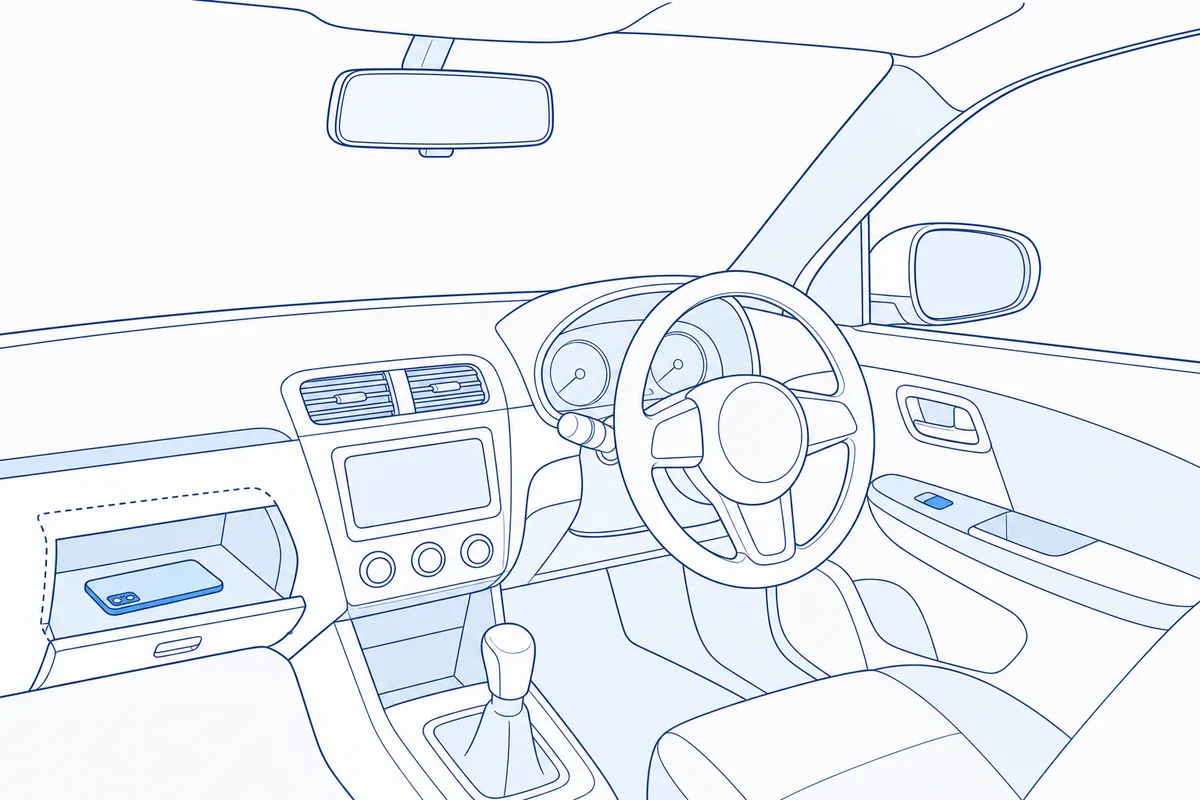
What alertness questions test
- Mirrors, signals and blind spots before you move off, change lanes, turn or slow down
- Using the mirrors-signal-manoeuvre routine and checking over your shoulder where mirrors cannot see
- Distractions: mobile phones and the law on hand-held devices, sat navs, loud music and passengers
- Tiredness: planning breaks on long journeys and what to do if you start to feel sleepy
- Anticipation: reading brake lights, indicators, parked cars and the road layout ahead
Take all 50 questions under the real clock
50 questions from all fourteen topics in 57 minutes, with a score for alertness so you know where you stand.
Free alertness drillHow to revise it
- Learn the mirrors-signal-manoeuvre routine from Highway Code rule 161 and the blind spot check from rule 159.
- Read rule 149 on mobile phones word for word; questions turn on the difference between hand-held use and a hands-free device.
- For each wrong answer, write down the rule number the explanation gives and reread that rule.
Common questions
Can I use my phone as a sat nav on the theory test questions?
The Highway Code says you must not hold and use a phone or similar device while driving, including when stopped in traffic. A phone used as a sat nav must be secured in a holder and set before you drive. Questions on this topic test that difference.
How many alertness questions are on the theory test?
DVSA does not publish how many questions come from each topic. Alertness is one of the fourteen topics the questions are grouped into; our mock includes three alertness questions.
50 questions from all fourteen topics in 57 minutes, with a score for alertness so you know where you stand.
Free alertness drillThe other theory test topics
- Attitude
- Safety and Your Vehicle
- Safety Margins
- Hazard Awareness
- Vulnerable Road Users
- Other Types of Vehicle
- Vehicle Handling
- Motorway Rules
- Rules of the Road
- Road and Traffic Signs
- Essential Documents
- Incidents, Accidents and Emergencies
- Vehicle Loading
- Hazard perception test guide
- Mock theory test (50 questions)
Sources
- GOV.UK: Theory test: cars (multiple-choice questions, 50 in 57 minutes, video questions)
- GOV.UK: Theory test: hazard perception test (14 clips, up to 5 points per hazard)
- GOV.UK: Theory test pass mark and result (43/50, 44/75, certificate valid 2 years)
- GOV.UK: Theory test revision and practice (the three DVSA books)
- GOV.UK: Book your theory test (£23)
- GOV.UK: Support for a reading difficulty, disability or health condition
- GOV.UK: The Highway Code
- GOV.UK: Driving test and theory test data: cars (DRT111A pass rates)
Original practice questions written to The Highway Code, Know Your Traffic Signs and DVSA’s published theory test topics. They are not the official DVSA revision questions and not questions from the real test. Independent practice, not affiliated with or endorsed by the Driver and Vehicle Standards Agency (DVSA).