Hazard Perception Test: How It Is Scored and How to Pass
14 clips · 15 developing hazards · 44 out of 75 to pass
The multiple-choice part in the real format: 50 questions in 57 minutes, marked against the 43/50 pass mark.
Free hazard awareness drillYou have a cold and want to take an over-the-counter remedy before driving. What does the Safety code for new drivers advise?
How the hazard perception test works
- It is the second part of the theory test, straight after the 50 multiple-choice questions (you can take a break of up to 3 minutes first). A short video explains how it works before you start.
- You watch 14 video clips of everyday road scenes. Each clip has at least one developing hazard, and one clip has two: 15 in total.
- A developing hazard is something that would make you take action, such as changing speed or direction: a pedestrian about to step out, a car pulling out of a side road, a cyclist moving out round a parked car.
- Click as soon as you see a hazard starting to develop. The earlier you respond, the more points you score, up to 5 for each developing hazard, so the maximum is 75.
- The pass mark is 44 out of 75. You must pass both this part and the multiple-choice part on the same visit.
- Clicks with no developing hazard cost nothing, but clicking continuously or in a pattern scores zero for that clip.
- You get one attempt at each clip and cannot review or change your responses.
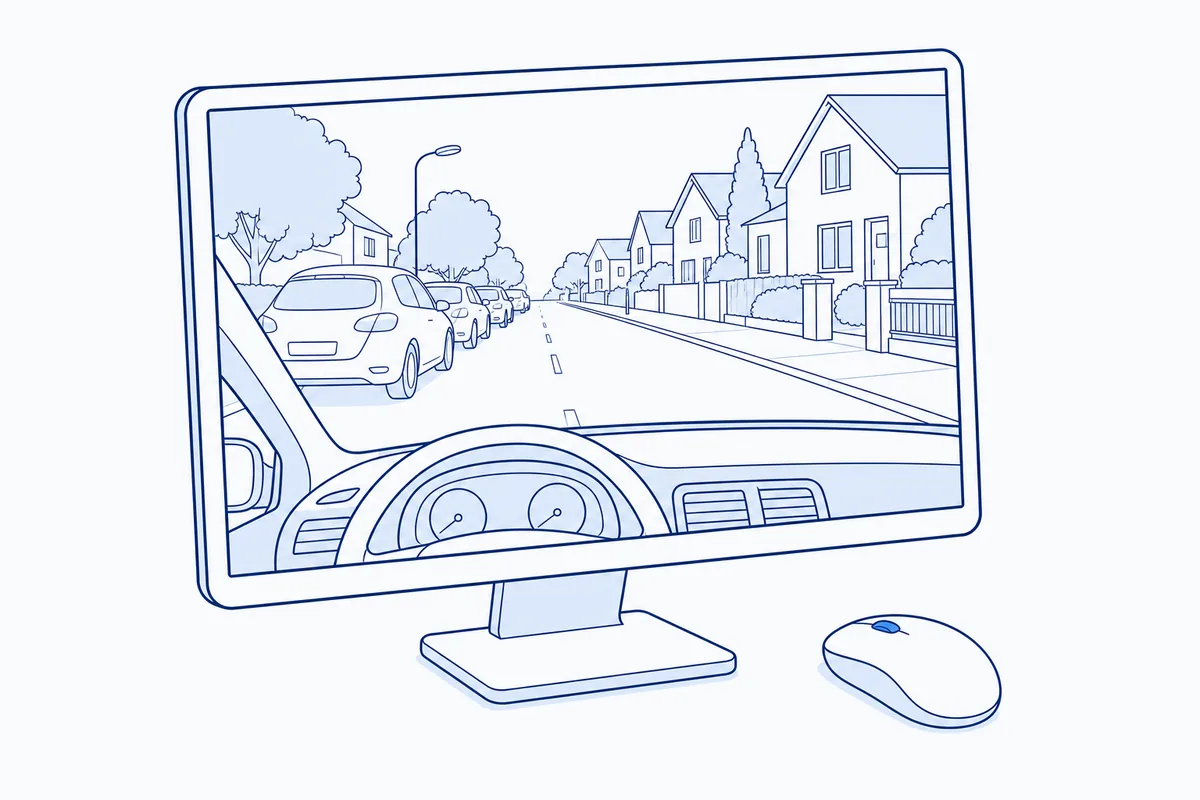
What our practice covers, and what it does not
Our mock theory test and drills cover the multiple-choice part in full. They do not include filmed hazard perception clips, and nothing on this site scores your clicks on video. The skill behind both parts is the same: noticing the clue that a hazard is about to develop. The hazard awareness drill asks you to read those clues in words, which trains the habit you need for the clips.
- Practise real clips: DVSA offers three free practice clips on GOV.UK, and more in its official apps and Theory Test Kit.
- Click when the hazard starts to develop, not when you first see a person or vehicle. A pedestrian on the pavement is not yet a hazard; the same pedestrian stepping towards the kerb is.
- Watch for the classic clues: brake lights ahead, a ball in the road, a vehicle edging out, an open car door, a bus at a stop, a cyclist glancing over their shoulder.
Take all 50 multiple-choice questions in 57 minutes
The multiple-choice part in the real format: 50 questions in 57 minutes, marked against the 43/50 pass mark.
Free hazard awareness drillCommon questions
How is the hazard perception test scored?
Each developing hazard is worth up to 5 points. The earlier you click once the hazard starts to develop, the more points you get. There are 14 clips and 15 developing hazards (one clip has two), so the maximum is 75 and the pass mark is 44.
Do wrong clicks lose points?
No. Clicking when there is no developing hazard does not cost points. But if you click continuously or in a pattern, you score nothing for that clip.
Can I review a hazard perception clip?
No. You get one attempt at each clip and cannot review or change your responses.
Where can I practice hazard perception clips?
DVSA offers three free practice clips on GOV.UK, and its official apps and the DVSA Theory Test Kit contain more. Our pages cover the multiple-choice part, including the hazard awareness topic, and do not include filmed clips.
Sources
- GOV.UK: Theory test: cars (multiple-choice questions, 50 in 57 minutes, video questions)
- GOV.UK: Theory test: hazard perception test (14 clips, up to 5 points per hazard)
- GOV.UK: Theory test pass mark and result (43/50, 44/75, certificate valid 2 years)
- GOV.UK: Theory test revision and practice (the three DVSA books)
- GOV.UK: Book your theory test (£23)
- GOV.UK: Support for a reading difficulty, disability or health condition
- GOV.UK: The Highway Code
- GOV.UK: Driving test and theory test data: cars (DRT111A pass rates)
Original practice questions written to The Highway Code, Know Your Traffic Signs and DVSA’s published theory test topics. They are not the official DVSA revision questions and not questions from the real test. Independent practice, not affiliated with or endorsed by the Driver and Vehicle Standards Agency (DVSA).