NCLEX-PN Reduction of Risk Potential Practice Questions
Reduction of Risk Potential · 9–15% of the NCLEX-PN · Physiological Integrity
85 questions weighted to every client-needs category, three case studies, and a score for Reduction of Risk Potential so you know where you stand.
Free reduction of risk potential drillA nurse is reinforcing incentive spirometer use. Which statement by the client shows correct technique?
Reduction of Risk Potential on the 2026 PN test plan
Reduction of Risk Potential is 9–15% of the NCLEX-PN. It asks whether you can see a complication coming and act on it within your scope: vital signs and lab results, specimens, point-of-care and glucose testing, ECGs, urinary catheters, NG tubes, IV and central line care, and care before and after surgery and procedures.
- Share of the exam
- 9–15% of scored stand-alone items (we weight our mock exams at 12%)
- Client Needs category
- Physiological Integrity
- Our drill
- 10 questions, untimed, a rationale for every option; one free attempt, unlimited with a pass
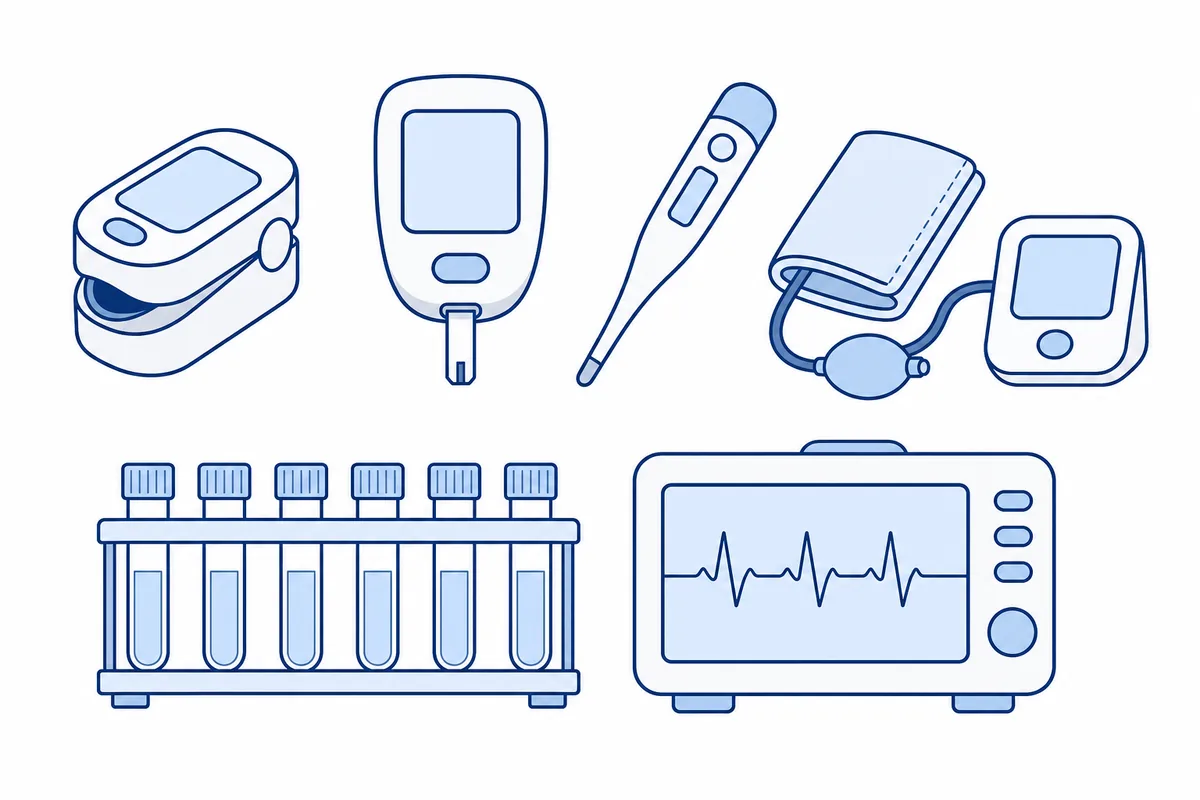
What Reduction of Risk Potential questions test
- Monitoring vital signs and oxygen saturation, and lab and diagnostic results that need reporting
- Collecting blood, urine, stool and sputum specimens; venipuncture and point-of-care testing
- Blood glucose monitoring and performing an ECG
- Inserting, maintaining and removing urinary catheters and NG tubes; monitoring NG suction
- Maintaining central venous catheters and maintaining and removing peripheral IVs
- Checking for urinary retention, compression stockings and sequential compression devices
- Care before and after surgery and invasive procedures
- Focused data collection: neurological and circulatory checks
- Recognizing prenatal complications and reinforcing teaching about procedures and equipment
Sit the full exam under the real clock
85 questions weighted to every client-needs category, three case studies, and a score for Reduction of Risk Potential so you know where you stand.
Free reduction of risk potential drillHow to study it
- Learn the values that change care at once: potassium outside 3.5–5.0 mEq/L, sodium outside 135–145 mEq/L, glucose below 70 mg/dL, platelets below 50,000/mm³.
- Every procedure has one key precaution: void before a paracentesis, keep the leg straight and check pulses after a femoral cardiac catheterization, check the gag reflex after a bronchoscopy.
- Infiltration is cool, pale and swollen; phlebitis is warm, red and tender along the vein. Both mean the IV is stopped.
- When a finding falls outside the expected range, the practical nurse acts within scope (stop, position, recheck) and reports it with the data.
Common questions
What are signs of infiltration at an IV site?
Swelling, coolness, pallor, tightness and discomfort around the site, with a slowing infusion. The nurse stops the infusion, removes the catheter, elevates the arm and reports. Warmth, redness and tenderness along the vein point to phlebitis instead.
How is a clean-catch urine specimen collected?
The client cleans the urinary meatus front to back (or from the tip outward), starts voiding into the toilet, collects the midstream portion in the sterile cup without touching the inside, and finishes voiding in the toilet. The specimen is labeled and sent promptly.
What does the nurse check after a cardiac catheterization?
The insertion site for bleeding or a hematoma, the pulses, color, temperature and sensation of the affected limb, and vital signs on schedule. After a femoral approach the leg stays straight for the ordered time. A cool, pale limb or a missing pulse is reported at once.
85 questions weighted to every client-needs category, three case studies, and a score for Reduction of Risk Potential so you know where you stand.
Free reduction of risk potential drillMore NCLEX-PN guides
- NCLEX-PN Coordinated Care Practice Questions
- NCLEX-PN Safety and Infection Control Practice Questions
- NCLEX-PN Health Promotion Practice Questions
- NCLEX-PN Psychosocial Integrity Practice Questions
- NCLEX-PN Basic Care and Comfort Practice Questions
- NCLEX-PN Pharmacology Practice Questions
- NCLEX-PN Physiological Adaptation Practice Questions
- NCLEX-PN Next Generation case studies
- NCLEX-PN vs NCLEX-RN
- Retaking the NCLEX-PN
- Studying for the NCLEX-RN instead? RN practice test
- NCLEX-PN practice exam (85 items)
Sources
- NCSBN: 2026 NCLEX-PN Test Plan (effective April 1, 2026)
- NCLEX.com: Test plans
- NCSBN: NCLEX Candidate Bulletin (October 2025): fees, retake policy, exam length and breaks
- NCSBN: NCLEX registration fee change effective February 1, 2027
- NCSBN: 2025 NCLEX Examination Statistics (NCLEX-PN volumes, pass rates and test length)
- NCLEX.com FAQs: partial-credit scoring (plus/minus, zero/one, rationale)
- NCSBN: Candidate Performance Report
Original practice questions for exam preparation, written to the 2026 NCLEX-PN Test Plan. Independent practice, not affiliated with or endorsed by the National Council of State Boards of Nursing (NCSBN) or Pearson VUE. NCLEX and NCLEX-PN are registered trademarks of NCSBN.