NCLEX-PN Physiological Adaptation Practice Questions
Physiological Adaptation · 7–13% of the NCLEX-PN · Physiological Integrity
85 questions weighted to every client-needs category, three case studies, and a score for Physiological Adaptation so you know where you stand.
Free physiological adaptation drillA nurse is changing the pouch of a client with a new colostomy. Which finding should the nurse report immediately?
Physiological Adaptation on the 2026 PN test plan
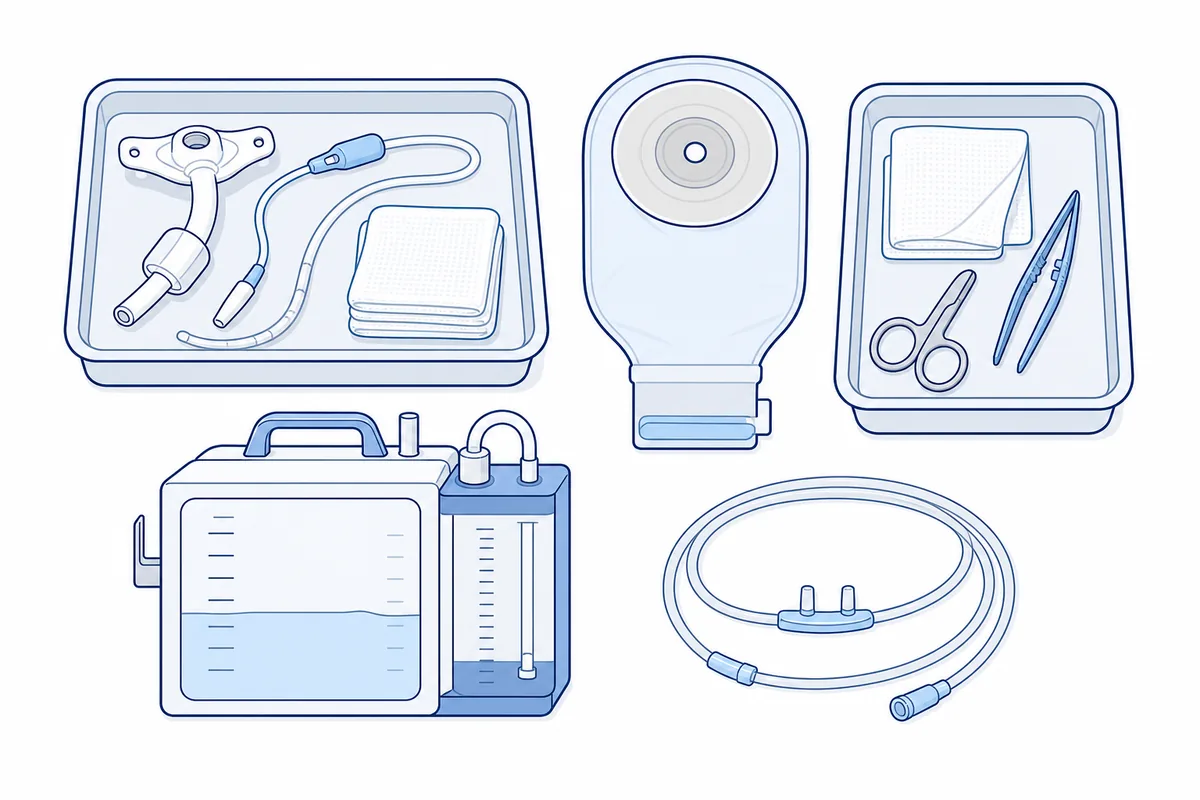
Physiological Adaptation is 7–13% of the NCLEX-PN. It covers the client with an acute, chronic or life-threatening condition, and above all recognizing and reporting a change: fluid and electrolyte imbalances, emergencies and CPR, respiratory care, tracheostomies, ventilators, drains, wounds, ostomies, pacing devices and dialysis.
- Share of the exam
- 7–13% of scored stand-alone items (we weight our mock exams at 10%)
- Client Needs category
- Physiological Integrity
- Our drill
- 10 questions, untimed, a rationale for every option; one free attempt, unlimited with a pass
What Physiological Adaptation questions test
- Recognizing and reporting a change in condition, and signs of acute and chronic illness
- Responding to life-threatening situations: CPR, choking and anaphylaxis
- Improving respiratory status: positioning, breathing treatments and suctioning
- Tracheostomy care and care of a client on a ventilator
- Wound care, dressing changes, drains and chest tubes, and removing sutures or staples
- Ostomy care: colostomy, ileostomy and urostomy
- Fluid and electrolyte imbalances, and peritoneal dialysis and hemodialysis care
- Cooling and warming measures, pacing devices and basic abnormalities on a cardiac monitor strip
- Reinforcing teaching about the client’s condition and care
Sit the full exam under the real clock
85 questions weighted to every client-needs category, three case studies, and a score for Physiological Adaptation so you know where you stand.
Free physiological adaptation drillHow to study it
- Pair each electrolyte with its signature finding: hypokalemia with weakness and an irregular pulse, hypocalcemia with tingling and muscle cramps, hyponatremia with confusion.
- Chest tube rules: tidaling in the water seal is expected, continuous bubbling is an air leak, and a tube pulled out of the chest is covered at once with a dressing and reported.
- Suction a tracheostomy for no more than 10 to 15 seconds per pass, with oxygen before and after.
- A healthy stoma is moist and pink to red; a pale, dusky or black stoma is reported at once.
Common questions
What should the nurse do if a chest tube comes out?
Cover the insertion site at once with a sterile dressing, stay with the client, check breathing and oxygen saturation and call for help. If the tube disconnects from the drainage unit instead, the end of the tube is placed in sterile water to restore the water seal.
What does a healthy stoma look like?
Moist and pink to beefy red, slightly raised above the skin. A pale, dark red-purple, dusky or black stoma suggests poor blood supply and is reported right away. Some bleeding with cleaning is expected because the tissue is vascular.
What are the signs of hypokalemia?
Muscle weakness and cramps, fatigue, constipation, decreased reflexes and an irregular pulse; the ECG may show flattened T waves and U waves. A potassium below 3.5 mEq/L is reported, especially in a client taking digoxin or a loop diuretic.
85 questions weighted to every client-needs category, three case studies, and a score for Physiological Adaptation so you know where you stand.
Free physiological adaptation drillMore NCLEX-PN guides
- NCLEX-PN Coordinated Care Practice Questions
- NCLEX-PN Safety and Infection Control Practice Questions
- NCLEX-PN Health Promotion Practice Questions
- NCLEX-PN Psychosocial Integrity Practice Questions
- NCLEX-PN Basic Care and Comfort Practice Questions
- NCLEX-PN Pharmacology Practice Questions
- NCLEX-PN Reduction of Risk Potential Practice Questions
- NCLEX-PN Next Generation case studies
- NCLEX-PN vs NCLEX-RN
- Retaking the NCLEX-PN
- Studying for the NCLEX-RN instead? RN practice test
- NCLEX-PN practice exam (85 items)
Sources
- NCSBN: 2026 NCLEX-PN Test Plan (effective April 1, 2026)
- NCLEX.com: Test plans
- NCSBN: NCLEX Candidate Bulletin (October 2025): fees, retake policy, exam length and breaks
- NCSBN: NCLEX registration fee change effective February 1, 2027
- NCSBN: 2025 NCLEX Examination Statistics (NCLEX-PN volumes, pass rates and test length)
- NCLEX.com FAQs: partial-credit scoring (plus/minus, zero/one, rationale)
- NCSBN: Candidate Performance Report
Original practice questions for exam preparation, written to the 2026 NCLEX-PN Test Plan. Independent practice, not affiliated with or endorsed by the National Council of State Boards of Nursing (NCSBN) or Pearson VUE. NCLEX and NCLEX-PN are registered trademarks of NCSBN.