MBLEx Benefits & Effects Practice Questions
Content area 4 of the MBLEx · about 15 of the 100 questions (15%)
100 questions across all seven content areas in 110 minutes, with a score for benefits & effects so you know where you stand.
Free benefits & effects drillA massage therapist visits a client receiving hospice care at home. What is the primary goal of massage for this client?
Benefits and Effects of Soft Tissue Manipulation on the MBLEx
Benefits and Effects of Soft Tissue Manipulation is about 15 of the 100 questions. It covers why massage works and how to deliver it: the physiological and psychological effects, how effects differ for specific populations, the Swedish strokes and the order they are used in, hot and cold applications, and the main massage and bodywork modalities.
- Share of the exam
- 15% of the content outline, about 15 of the 100 questions
- Outline subtopics
- 6 (parts A, B, C, D, E, F)
- Our drill
- 10 questions from 68 benefits & effects questions, untimed, an explanation after every answer; one free attempt, unlimited with a pass
What benefits & effects questions test
- Physiological effects: circulation, lymph flow, the parasympathetic relaxation response, muscle tone, fascia and pain (4A)
- Psychological effects: reduced anxiety, improved mood and body awareness (4B)
- Effects for specific client populations, such as athletes, older adults and pregnant clients (4C)
- Soft tissue techniques: effleurage, petrissage, friction, tapotement, vibration and their purposes, and the sequence of application (4D)
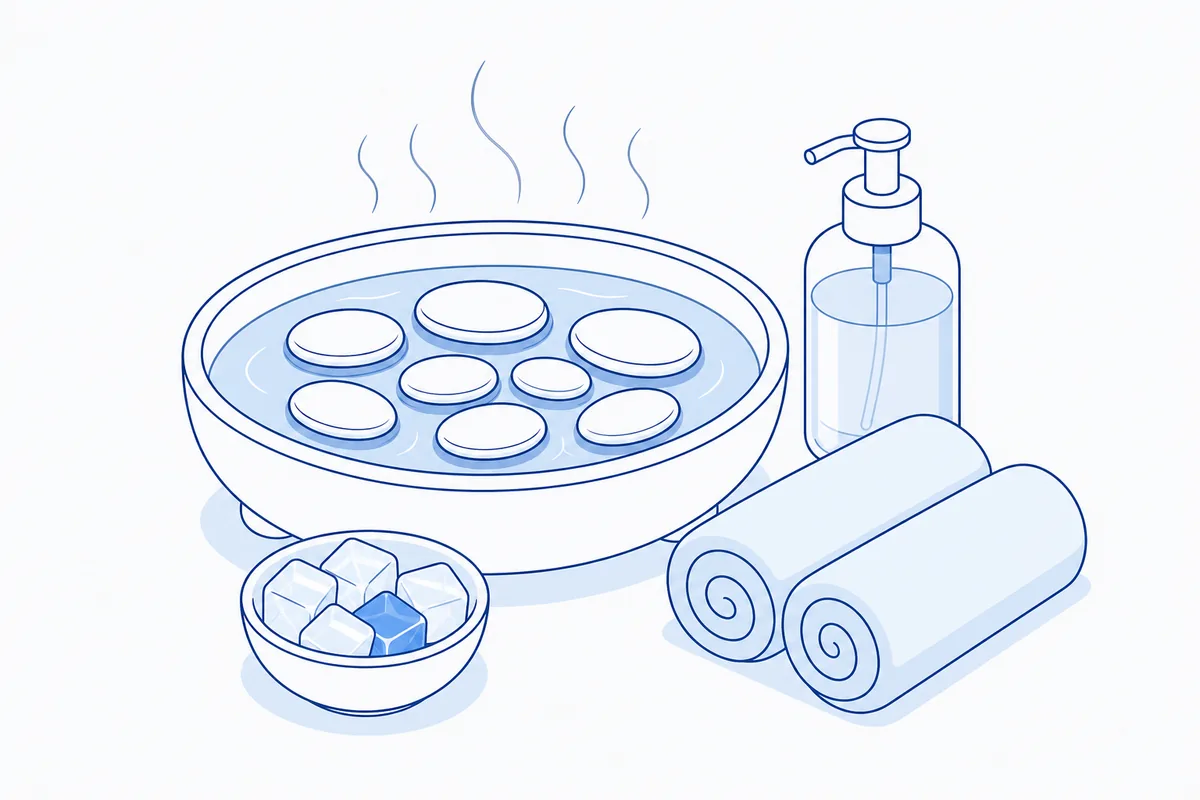
- Hot and cold applications: the effects of heat and cold, when each is used and when each is contraindicated (4E)
- An overview of modalities: Swedish massage, deep tissue, myofascial release, neuromuscular therapy, lymphatic drainage, Shiatsu, Thai massage, reflexology, craniosacral therapy, Reiki, sports massage and more (4F)
Sit the full exam under the real clock
100 questions across all seven content areas in 110 minutes, with a score for benefits & effects so you know where you stand.
Free benefits & effects drillHow to study it
- Learn each Swedish stroke with one purpose and one place in the session: effleurage to begin and end, petrissage to knead, friction for focused work, tapotement to stimulate.
- Pair every hot and cold question with the stage of injury: cold for acute inflammation, heat for chronic tightness.
- Make a one-line card for each modality: who developed it or what tradition it comes from, and what the therapist does.
- Learn the parasympathetic effects as a set (lower heart rate and blood pressure, slower breathing, digestion), since several questions turn on them.
Common questions
Which massage strokes are on the MBLEx?
The Swedish strokes (effleurage, petrissage, friction, tapotement and vibration), plus their sequence in a session. Part D of this area is soft tissue techniques, types of strokes and sequence of application.
How many modalities do I need to know?
Part F is an overview of massage and bodywork modalities, so you need the basics of the common ones: what each does and where it comes from. FSMTB says it includes the various forms of massage and bodywork practiced in the United States.
100 questions across all seven content areas in 110 minutes, with a score for benefits & effects so you know where you stand.
Free benefits & effects drillThe other MBLEx content areas
Sources
Original practice questions for exam preparation, written to the FSMTB MBLEx content outline. Independent practice, not affiliated with or endorsed by the Federation of State Massage Therapy Boards (FSMTB). MBLEx is a registered trademark of FSMTB.