Property disclosures and environmental issues
Pearson VUE area VI has 9 questions: 5 on property conditions and environmental issues and 4 on disclosure obligations; PSI gives property disclosures 7%. The federal lead-based paint rule is the most tested fact in this area.
80 questions in 2 hours 30 minutes, 56 to pass. 9 of the 80 questions come from property disclosures and environmental issues, and every answer is explained.
Or try the free property disclosures and environmental issues drillA written study of the likely effects of a major federal project on the environment is a
What to know about property disclosures and environmental issues
- Lead-based paint: for housing built before 1978, sellers and landlords must give the EPA pamphlet, disclose known lead hazards and reports, and give buyers a 10-day opportunity to test (which the buyer may waive). The rule covers sales and leases; agents must make sure the parties comply.
- Asbestos was used in insulation and flooring until the late 1970s; it is most dangerous when friable (crumbling) and disturbed. Encapsulation is often safer than removal.
- Radon is a colorless, odorless radioactive gas from soil decay; it enters through foundations and is measured in picocuries per liter; EPA recommends action at 4 pCi/L or more. Mold grows with moisture and is a disclosure concern; carbon monoxide comes from faulty combustion appliances.
- Groundwater can be contaminated by leaking underground storage tanks (regulated by EPA), septic systems and waste sites. Brownfields are former industrial sites with suspected contamination.
- Flood zones: FEMA maps special flood hazard areas (zones A and V); lenders require flood insurance under the National Flood Insurance Program for federally related loans on property in those zones.
- CERCLA (Superfund, 1980) imposes strict, joint and several, and retroactive liability for cleanup on current and past owners and operators, generators and transporters, whether or not they caused the contamination. SARA (1986) added the innocent landowner defense for buyers who made all appropriate inquiry before purchase.
- A Phase I environmental site assessment reviews records and inspects the site without sampling; a Phase II tests soil and water. An environmental impact statement is required for major federal actions.
- Material facts are facts that affect value or desirability; the seller and the licensee must disclose material facts they know, including latent defects a buyer could not discover. Patent defects are visible and need no disclosure. An "as is" clause does not excuse fraud or concealment of known defects.
- Most states require a seller property condition disclosure form; its details vary by state, and this site’s state drills cover California, Texas and Florida. Stigmatized property rules (a death or crime on the premises) also vary by state.
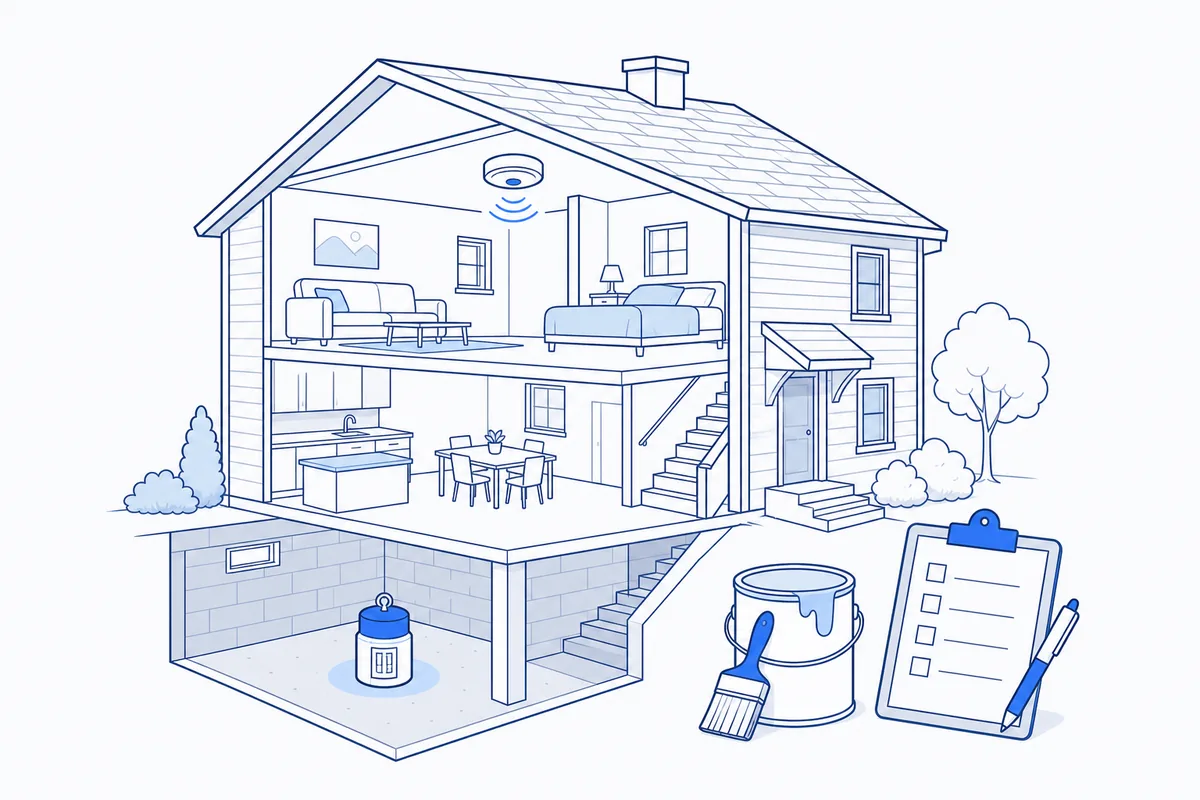
Pearson VUE outline area VI: 9 of the 80 scored national questions in our mock come from this topic. The notes state principles that hold in every state; state-specific rules are in the California, Texas and Florida guides.
Drill property disclosures and environmental issues, then sit the full exam
80 questions in 2 hours 30 minutes, 56 to pass. 9 of the 80 questions come from property disclosures and environmental issues, and every answer is explained.
Or try the free property disclosures and environmental issues drillCommon questions
What does the federal lead-based paint rule require?
For target housing built before 1978, the seller or landlord gives the EPA pamphlet, discloses known lead-based paint hazards and available reports, attaches a disclosure to the contract or lease, and gives a buyer a 10-day period to inspect, which the buyer may waive or shorten.
Who is liable for cleanup under CERCLA?
Current owners and operators, owners at the time of disposal, generators and transporters of the hazardous waste. Liability is strict (no fault needed), joint and several (any one party can be made to pay all) and retroactive. A buyer who performed all appropriate inquiry before purchase may claim the innocent landowner defense.
80 questions in 2 hours 30 minutes, 56 to pass. 9 of the 80 questions come from property disclosures and environmental issues, and every answer is explained.
Or try the free property disclosures and environmental issues drillMore real estate exam topics
- Property ownership and estates · 9 of 80
- Legal descriptions and land use controls · 6 of 80
- Valuation and appraisal · 11 of 80
- Contracts · 9 of 80
- Agency · 7 of 80
- Practice of real estate and fair housing · 10 of 80
- Financing and settlement · 7 of 80
- Transfer of title · 5 of 80
- Real estate math · 7 of 80
Free property disclosures and environmental issues drill · National mock exam · California exam · Texas exam · Florida exam
Original independent practice. Not affiliated with or endorsed by Pearson VUE, PSI or any state real estate commission.