Paramedic practice test · 6–10% of the exam
Paramedic Trauma
Trauma is 6–10% of the paramedic exam. The domain is smaller than it was under the old test plan, but its items are dense: a mechanism, a set of vital signs and a few physical findings that point to one life threat and one next action.
150 questions in 3 hours 30 minutes, weighted to the six official domains, with a score report by domain and topic and an explanation for every answer.
Or start with a free domain drillA 42-year-old lineman contacted a 7,200-volt line and fell from a bucket lift; the power is now off. He has a small charred wound on his right palm and another on his left foot, is alert, and the skin between the wounds looks normal. Which concern should guide the paramedic's care?
What the Trauma domain tests
Expect the kinematics behind an injury, hemorrhage control and shock, head and spinal injury, chest and abdominal trauma, musculoskeletal injuries, burns, environmental emergencies and the field triage decision about where the patient should go.
- Kinematics and mechanism: what a given crash, fall or penetrating injury predicts.
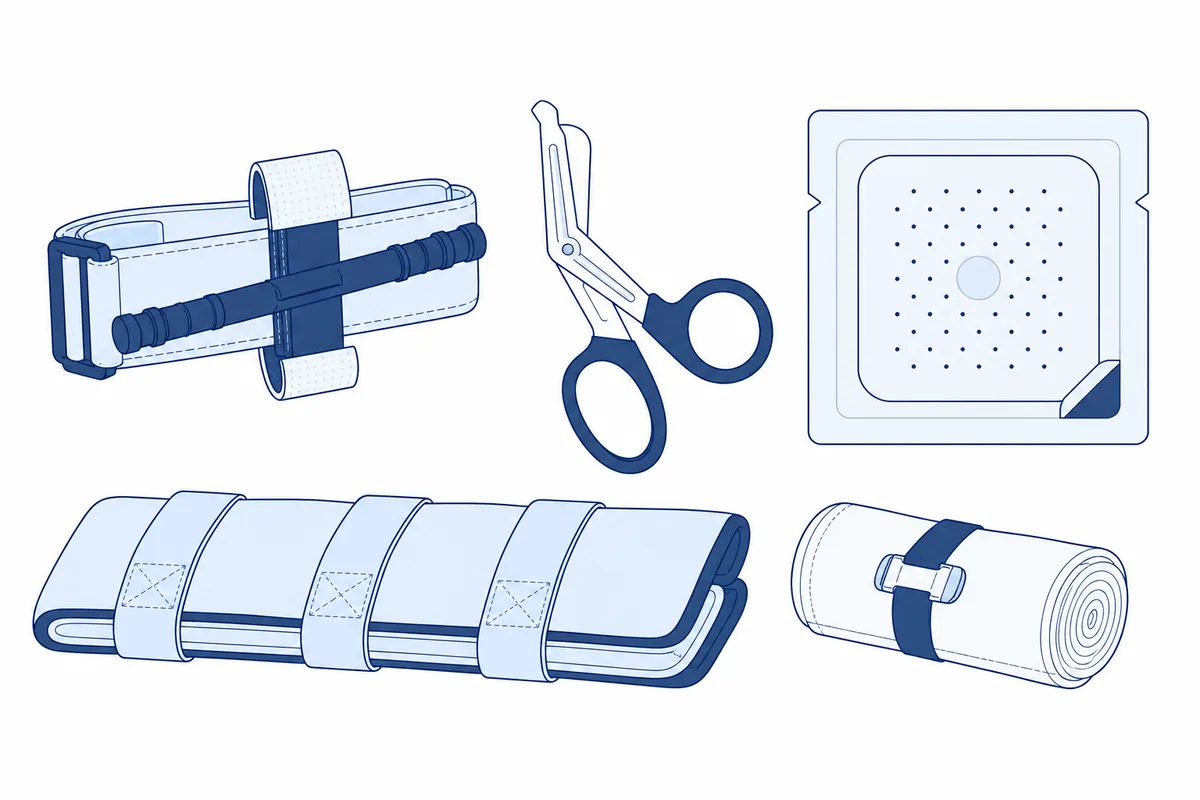
- Hemorrhage control and shock: tourniquets, wound packing, junctional bleeding, compensated versus decompensated shock.
- Head and spinal injury: herniation signs, Cushing triad, hyperventilation only for herniation, avoiding hypoxia and hypotension, spinal motion restriction decisions, neurogenic shock.
- Chest trauma: tension pneumothorax, open pneumothorax and vented chest seals, flail chest, hemothorax, tamponade.
- Abdominal and pelvic trauma: pelvic binders, eviscerations, impaled objects, seat-belt signs.
- Musculoskeletal: traction splint indications, compartment syndrome, neurovascular checks, amputations.
- Burns: depth, Rule of Nines, airway burns, electrical and chemical burns.
- Environmental: heat stroke versus exhaustion, hypothermia handling, frostbite, drowning, lightning.
- Field triage: the 2021 ACS/CDC criteria that send a patient to a trauma center.
In our 150-question practice exam this domain gets 12 questions, the middle of its official 6–10% range.
Know these cold
- A tourniquet goes 2–3 inches above the wound, not over a joint, tightened until bleeding stops, with the time recorded.
- Hyperventilate a brain-injured patient only for signs of herniation, to an EtCO2 of about 30–35 mmHg; otherwise avoid hyperventilation, hypoxia and hypotension.
- Adult Rule of Nines: head 9, each arm 9, anterior trunk 18, posterior trunk 18, each leg 18, perineum 1; an infant’s head is 18 and each leg 14.
- A pelvic binder sits over the greater trochanters, not the iliac crests.
- The 2021 field triage red criteria include a patient who cannot follow commands (motor GCS under 6), respirations under 10 or over 29, room-air SpO2 under 90%, systolic pressure under 90 (under 110 from age 65), penetrating injury to the head, neck, torso or proximal extremities, a suspected flail chest or pelvic fracture, two or more proximal long-bone fractures, amputation proximal to the wrist or ankle, and suspected spinal injury with new motor or sensory loss. A fall of more than 10 feet is a yellow mechanism criterion.
- Tension pneumothorax: absent breath sounds, hypotension, distended neck veins and rising airway pressures in a ventilated patient; decompress, do not wait for tracheal deviation.
- Handle the hypothermic patient gently, remove wet clothing, and remember that a pulse check may need up to a minute.
Common questions
Is trauma a small part of the paramedic exam?
Trauma is 6–10% of the exam under the July 2024 test plan, about 5 to 13 of the 90 to 130 scored questions. Trauma scenarios also appear in Clinical Judgment, so the subject matters more than the percentage suggests.
Which trauma numbers do you avoid testing?
Permissive hypotension targets, crystalloid bolus volumes, the Parkland formula coefficient, tranexamic acid and tourniquet conversion times, because protocols and references disagree. We test the facts the national sources agree on: hemorrhage control technique, herniation management, the Rule of Nines, binder placement and the field triage criteria.
Ready for exam day?
150 questions in 3 hours 30 minutes, weighted to the six official domains, with a score report by domain and topic and an explanation for every answer.
Or start with a free domain drillThe other Paramedic domains
- Airway, Respiration and Ventilation 8–12%
- Cardiology and Resuscitation 10–14%
- Medical, Obstetrics and Gynecology 24–28%
- EMS Operations 8–12%
- Clinical Judgment 34–38%
Domain weights and knowledge areas from the National Registry Paramedic Examination Specifications (July 2024). National Registry: AEMT and Paramedic Certification Examinations · National Registry Paramedic Examination Specifications (test plan, July 1, 2024).
Original independent practice questions. Not affiliated with or endorsed by the National Registry of Emergency Medical Technicians. Follow your local protocols and medical director in the field.