Paramedic practice test · 8–12% of the exam
Paramedic EMS Operations
EMS Operations is 8–12% of the paramedic exam. The test plan names five knowledge areas: maintenance and operation of emergency vehicles and equipment; leadership and professionalism; communication and documentation; preservation of medical and legal standards; and the environment of care.
150 questions in 3 hours 30 minutes, weighted to the six official domains, with a score report by domain and topic and an explanation for every answer.
Or start with a free domain drillTwo weeks after a call involving the drowning death of a toddler, a paramedic tells his partner he cannot sleep, is irritable at home and keeps replaying the call. What is the most appropriate response from the partner?
What the EMS Operations domain tests
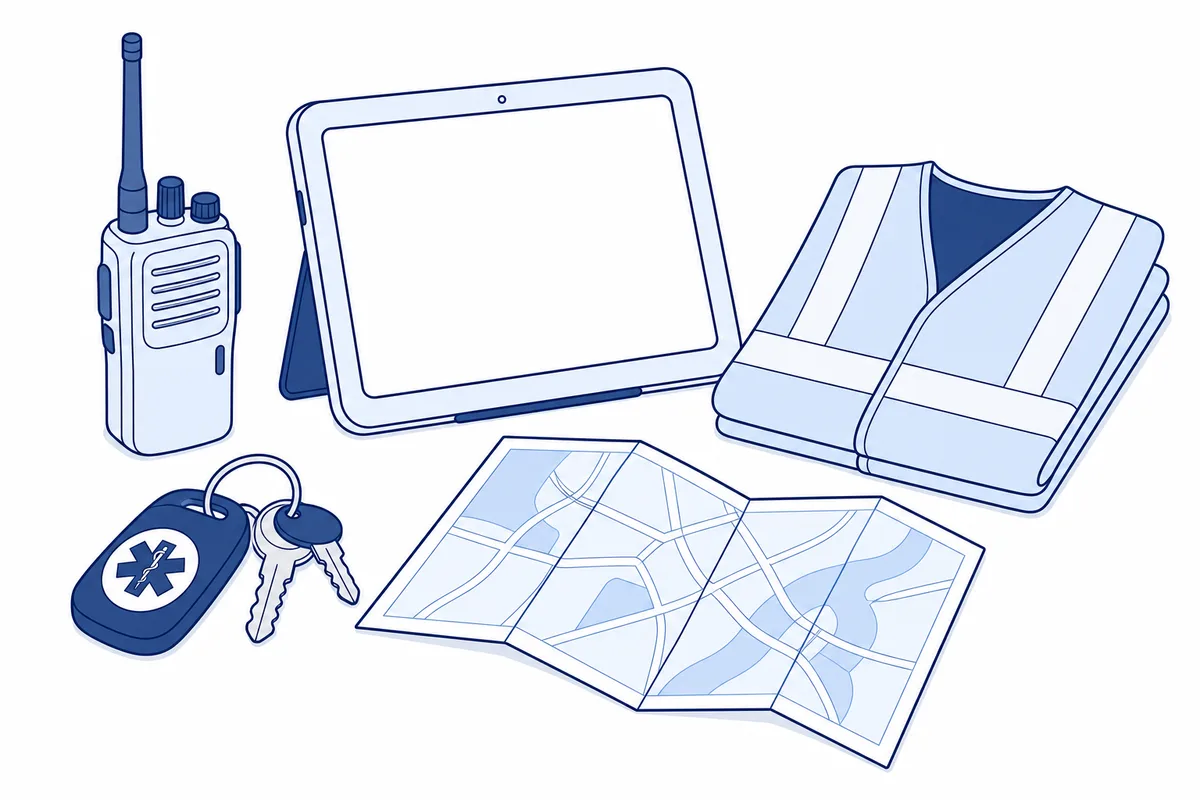
These items reward the paramedic who thinks like a crew chief: safe driving decisions, equipment and medication checks, command on a multi-patient scene, a complete and defensible patient care report, and the consent and refusal rules that keep patients and crews safe.
- Emergency vehicle operations: due regard, intersections, backing with a spotter, when lights and sirens add risk, securing patients and equipment, landing zone safety.
- Equipment and medication checks: expired or damaged stock, controlled-substance accountability.
- Leadership and professionalism: crew resource management, incident command roles, span of control, transfer of command, ethics and impaired coworkers, quality improvement.
- Communication and documentation: radio reports, handoffs, the patient care report as a legal record, corrections and late entries, pertinent negatives, HIPAA.
- Medical and legal standards: expressed, implied and minor consent, decision-making capacity, refusals, advance directives, DNR and POLST, negligence, abandonment, duty to act, mandatory reporting.
- Environment of care: hazmat zones and decontamination, multiple-casualty triage, infection control and exposure reporting, violence and scene safety, provider wellness.
In our 150-question practice exam this domain gets 14 questions, the middle of its official 8–12% range.
Know these cold
- Incident command: the first-arriving unit establishes command, span of control is 3–7, and multiple agencies share unified command.
- START triage: respirations over 30, no radial pulse or capillary refill over 2 seconds, or inability to follow commands means immediate; not breathing after the airway is opened means deceased; walking means minor.
- Negligence requires duty, breach, causation and damages; leaving a patient without handing off to equal or higher care is abandonment.
- A competent adult with decision-making capacity may refuse care; document the capacity assessment, the risks explained, the alternatives offered and the witness.
- Hazmat patients are decontaminated in the warm zone before treatment; EMS treats in the cold zone.
- Corrections to a paper report are a single line, initialed and dated; electronic records get an addendum, never a deletion.
- Lights and sirens shorten response by seconds and raise crash risk; drive with due regard and come to a complete stop at red lights and stop signs.
Common questions
Is EMS Operations the same on the AEMT and paramedic exams?
The five knowledge areas are the same, but the weight differs: 8–12% of the paramedic exam and 6–10% of the AEMT exam. Paramedic items lean harder on leadership, command and medical direction decisions.
Are medical-legal questions state-specific?
The exam tests national principles: consent types, capacity, refusals, advance directives, negligence, abandonment, mandatory reporting and confidentiality. State statutes fill in details such as the age of majority and Good Samaritan coverage, and the exam avoids questions that turn on those.
Ready for exam day?
150 questions in 3 hours 30 minutes, weighted to the six official domains, with a score report by domain and topic and an explanation for every answer.
Or start with a free domain drillThe other Paramedic domains
- Airway, Respiration and Ventilation 8–12%
- Cardiology and Resuscitation 10–14%
- Trauma 6–10%
- Medical, Obstetrics and Gynecology 24–28%
- Clinical Judgment 34–38%
Domain weights and knowledge areas from the National Registry Paramedic Examination Specifications (July 2024). National Registry: AEMT and Paramedic Certification Examinations · National Registry Paramedic Examination Specifications (test plan, July 1, 2024).
Original independent practice questions. Not affiliated with or endorsed by the National Registry of Emergency Medical Technicians. Follow your local protocols and medical director in the field.