Free NATE HVAC Support Technician Practice Test
Early-career HVAC questions written to NATE’s Support Technician KATE, every option explained.
A technician needs three pieces of tubing: 2 ft 6 in, 3 ft 9 in and 1 ft 3 in. What is the total length?
297 original NATE HVAC Support Technician questions with explanations · 100-question timed mock on the real 150-minute clock · 11 outline areas
NATE HVAC Support Technician exam format
NATE’s HVAC Support Technician exam is a proctored certificate exam for technicians with 6 to 12 months in the field: 100 closed-book questions in 2.5 hours, covering the topics of NATE’s professional certifications at a more fundamental level.
- Questions
- 100 multiple-choice questions
- Time limit
- 2.5 hours, closed book
- Passing score
- Pass/fail. NATE does not publish the passing score; it can vary slightly between test forms
- Content
- Installation 24%, System Components 13%, Safety 10%, Basic Electricity 9%, Tools 8%, and seven more areas of 4 to 7% each
- Where
- Proctored at a NATE Testing Organization or with NATE’s live online proctoring
- Fee
- Set by the testing organization. NATE’s 2023 notice listed in-person exams from $75
- Credential
- A certificate, not NATE certification. Valid five years; renew by retaking the exam
- Who it is for
- Technicians with 6 to 12 months of experience
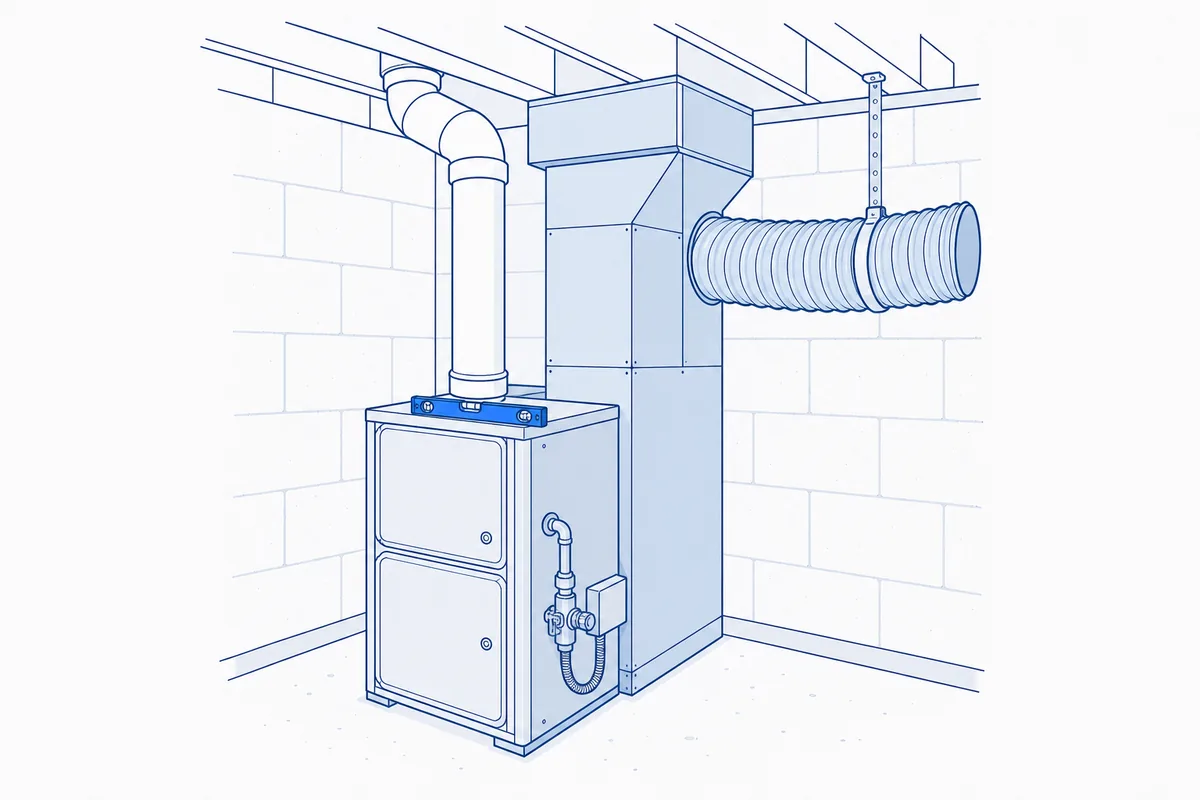
What’s on the NATE HVAC Support Technician exam
The areas and shares from NATE’s HVAC Support Technician KATE. Our timed mock draws its 100 questions in these proportions. Each area links to the free topic drill that practices it; each drill’s first attempt is free.
| Area | What the KATE lists | Share of the exam | Drill |
|---|---|---|---|
| Installation | Copper tubing and brazing, ducts, accessories, field wiring, refrigerant circuit tools, recovery and gas furnaces | 24% · 24 questions | Installation drill |
| System Components | Ducts, coils, compressors, refrigerants, blowers, grilles, thermostats and furnace components | 13% · 13 questions | Components drill |
| Safety | Personal safety, moving machinery, electrical safety, brazing, containers and hazmat | 10% · 10 questions | Safety drillElectrical safety drill |
| Introduction to Basic Electricity | Meters, basic terms, AC and DC circuits, controls and loads | 9% · 9 questions | Electrical drillWiring and motors drill |
| Tools | Measuring and scales, fabrication tools and tubing tools | 8% · 8 questions | Tools drillMeasurements drill |
| Achieving Desired Conditions | Temperature, humidity, air quality and sound | 7% · 7 questions | Comfort and air quality drill |
| Taking Temperature and Humidity Measurements | Heat, humidity, heat transfer, the Btu and thermometers | 7% · 7 questions | Temperature and humidity drillHeat transfer drill |
| Service | The cooling cycle, split, packaged and multi-capacity systems, heat pumps and planned maintenance | 7% · 7 questions | Refrigeration cycle drill |
| Applied Knowledge: Design Considerations | Comfort design, outlets and accessories, blueprint reading | 6% · 6 questions | Construction and blueprints drill |
| Using Basic Science | Chemistry, math and mechanics | 5% · 5 questions | Basic science drill |
| Basic Construction Terms | Room specs, ceilings, walls, floors, girders and trusses | 4% · 4 questions | Construction and blueprints drill |
How to take the NATE HVAC Support Technician exam
- Find a NATE Testing Organization near you, or order a live online proctored exam in your myNATE account.
- Study the eleven areas of the Support Technician KATE, starting with Installation (24%) and System Components (13%).
- Sit the 100-question exam under a proctor. You have 2.5 hours and may not use notes.
- Pass to earn the HVAC Support Technician certificate, valid for five years.
Working with refrigerant also needs EPA Section 608 certification, a separate federal exam: EPA 608 practice test.
Common questions
How many questions are on the NATE HVAC Support Technician exam?
100 closed-book questions in 2.5 hours, taken under a proctor at a testing organization or online with NATE’s live online proctoring.
What is the passing score for the NATE Support Technician exam?
NATE reports it as pass/fail. Its KATE says passing scores were set by a passing score study and may vary slightly between test forms; NATE does not publish the number.
What is on the NATE HVAC Support Technician exam?
Eleven areas: Installation 24%, System Components 13%, Safety 10%, Introduction to Basic Electricity 9%, Tools 8%, Achieving Desired Conditions 7%, Taking Temperature and Humidity Measurements 7%, Service 7%, Design Considerations 6%, Using Basic Science 5% and Basic Construction Terms 4%.
How much does the NATE Support Technician exam cost?
Testing organizations set the price. NATE’s 2023 notice on the Industry Competency Exams said in-person Support Technician exams start at $75.
What is the difference between Ready-to-Work and HVAC Support Technician?
Ready-to-Work is 50 questions, online and unproctored, for people just entering the trade. Support Technician is 100 questions, proctored and closed book, for technicians with 6 to 12 months of experience, and adds installation, service, construction and design.
Are these official NATE questions?
No. These are original practice questions written to the eleven areas of NATE’s HVAC Support Technician KATE, with an explanation for every option.
Ready for exam day?
100 questions on the 150-minute clock, weighted like NATE’s HVAC Support Technician outline, with a score for every area and an explanation for every option.
Or start with a free ten-question drillMore HVAC exam practice
One HVAC pass covers all three timed mocks.
Exam format and outline checked November 2026 on natex.org: NATE: Ready-to-Work and HVAC Support Technician certificates · NATE HVAC Support Technician KATE (PDF) · NATE: Frequently asked questions. NATE has not announced a change to this outline.
NATE is a mark of North American Technician Excellence, Inc. Game Assessment Prep is an independent practice site, not affiliated with or endorsed by NATE. Every question is original; none is taken from NATE exams, NATE study guides or another prep provider.