Praxis 5004 World History and Economics

Content category III of the Elementary Education: Social Studies Subtest (5004): about 15 of the 60 questions (25%). The topics ETS lists, how they are tested and practice questions with explanations.

60 questions on the real 60-minute clock, weighted like the ETS test, with a score by content category and an explanation for every answer.

Or start the free World History and Economics drill

What ETS lists

  • Major contributions of classical civilizations (Egypt, Greece, Rome)
  • Twentieth-century developments and transformations in world history
  • Cross-cultural comparisons in world history instruction
  • Key terms and basic concepts of economics (supply and demand, scarcity and choice, money and resources)
  • How economics affects population, resources and technology
  • The government’s role in economics and the impact of economics on government

From the ETS Elementary Education: Social Studies Subtest (5004) Study Companion, content category III.

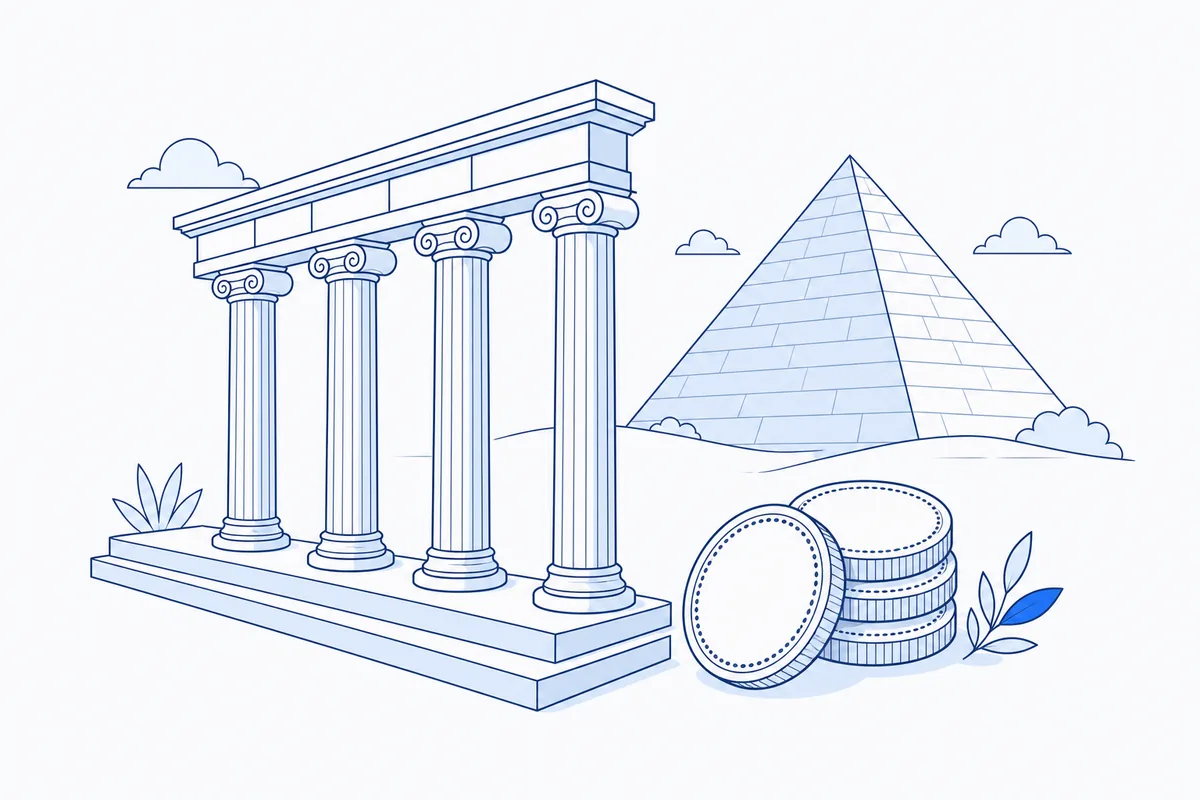
Line drawing of classical columns, a pyramid and a stack of coins

How World History and Economics is tested

World history from the classical civilizations to the twentieth century, and the economics concepts elementary students learn: scarcity, opportunity cost, goods and services, supply and demand, markets, money, banking and the government’s economic role.

Praxis 5004 World History and Economics practice questions

Answer each question, then open the explanation.

Question 1

Which statement accurately describes the Treaty of Versailles after the First World War?

  1. A.It imposed reparations and military restrictions on Germany.
  2. B.It established the United Nations to manage collective security.
  3. C.It guaranteed Germany unrestricted military expansion within Europe.
  4. D.It required the United States to transfer the Louisiana Territory to France.
Show the answer and explanation

Answer: A: It imposed reparations and military restrictions on Germany.

The treaty imposed reparations, military limits, and territorial losses on Germany. It was part of the First World War settlement, not the founding document of the United Nations.

Question 2

A bakery’s flour costs rise while other conditions stay the same. How does this change most directly affect the supply of bread?

  1. A.Supply falls because bread production becomes more costly.
  2. B.Demand increases because the bakery pays more for flour.
  3. C.Demand decreases because the supply curve cannot move.
  4. D.Supply increases because the bakery must pay more for its flour.
Show the answer and explanation

Answer: A: Supply falls because bread production becomes more costly.

Higher input costs make production less profitable at each bread price, decreasing supply. Producer costs shift supply rather than directly changing consumer demand.

Question 3

Which Roman contribution most directly influenced later systems of written law?

  1. A.The use of Egyptian hieroglyphs for royal tomb inscriptions
  2. B.The recording and development of legal principles and procedures
  3. C.The use of Chinese civil-service examinations to select officials
  4. D.The development of Athenian direct-democracy procedures
Show the answer and explanation

Answer: B: The recording and development of legal principles and procedures

Roman legal traditions included written rules, procedures, and concepts that influenced later legal systems. Those contributions should be distinguished from claims that Rome provided equal political rights to every resident.

Question 4

Demand for wood raises timber prices in a region. In response to the higher expected returns, landowners invest in replanting harvested forests. Which relationship does this example illustrate?

  1. A.Replanting changes timber from a renewable resource into a mineral resource.
  2. B.Expected returns influence investment in renewing a resource.
  3. C.Higher expected returns eliminate the need to conserve a resource.
  4. D.Consumer demand has no relationship to producers’ resource decisions.
Show the answer and explanation

Answer: B: Expected returns influence investment in renewing a resource.

Higher expected returns give landowners an incentive to invest in future timber production. Replanting supports renewal of a biological resource; it does not make that resource unlimited.

Take the full test under the real clock

60 questions on the real 60-minute clock, weighted like the ETS test, with a score by content category and an explanation for every answer.

Or start the free World History and Economics drill

Common questions

How many World History and Economics questions are on the Praxis 5004?

ETS lists about 15 of the 60 questions in World History and Economics, about 25% of the test.

What does World History and Economics cover on the Praxis 5004?

Major contributions of classical civilizations (Egypt, Greece, Rome); Twentieth-century developments and transformations in world history; Cross-cultural comparisons in world history instruction; Key terms and basic concepts of economics (supply and demand, scarcity and choice, money and resources); How economics affects population, resources and technology; The government’s role in economics and the impact of economics on government.

How should I study World History and Economics for the Praxis 5004?

World history from the classical civilizations to the twentieth century, and the economics concepts elementary students learn: scarcity, opportunity cost, goods and services, supply and demand, markets, money, banking and the government’s economic role.

Praxis is a registered trademark of ETS. Original independent practice questions written to the published ETS Study Companions; not affiliated with or endorsed by ETS.