NCLEX-RN Pharmacological and Parenteral Therapies
13–19% of the NCLEX-RN · Physiological Integrity
85 questions weighted to every client-needs category, three case studies, and a score for Pharmacology so you know where you stand.
Free Pharmacology drillA client who started lisinopril 3 weeks ago comes to the emergency department with swelling of the lips and tongue that began an hour ago. The client's voice is hoarse. Which action should the nurse take first?
Pharmacological and Parenteral Therapies on the 2026 test plan
Pharmacological and Parenteral Therapies is the second-largest category at 13–19% of the exam. It tests medication safety from the order to the evaluation: the rights, calculations, high-alert drugs, adverse effects, interactions, IV therapy, blood products and parenteral nutrition.
- Share of the exam
- 13–19% of scored stand-alone items (we weight our mock exams at 16%)
- Client Needs category
- Physiological Integrity
- Our drill
- 10 questions, untimed, a rationale for every option; one free attempt, unlimited with a pass
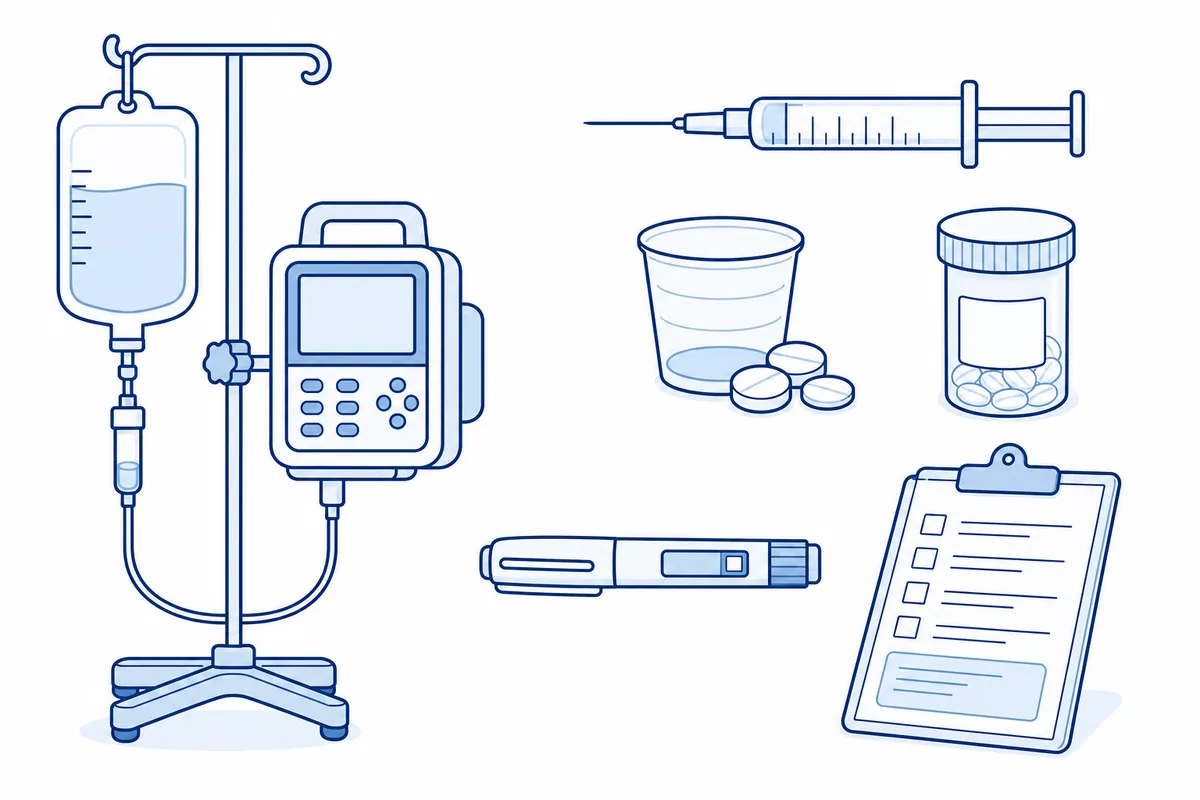
What Pharmacology questions test
- Evaluating a medication order for completeness, dose, allergies and contraindications
- The rights of medication administration and the data to check first: potassium before digoxin, INR before warfarin, apical pulse before beta blockers
- Dosage calculations: tablets and liquids, weight-based pediatric doses, IV rates in mL/hr and gtt/min, heparin and insulin
- High-alert medications: insulin, heparin, warfarin, opioids, potassium chloride, concentrated electrolytes and chemotherapy
- Adverse effects and toxicity to report now, therapeutic serum levels and antidotes
- Client teaching by drug class, food and drug interactions
- IV therapy: infiltration, extravasation, phlebitis, air embolism and central line care
- Blood products: checks, the first 15 minutes, transfusion reactions and the first action
- Parenteral nutrition, titration to parameters, controlled substances and safe disposal
Sit the full exam under the real clock
85 questions weighted to every client-needs category, three case studies, and a score for Pharmacology so you know where you stand.
Free Pharmacology drillHow to study it
- Set up every calculation the same way (desired over have times quantity; mL/hr = volume ÷ hours) and check the unit of the answer before you commit.
- For any transfusion or IV reaction, the first action is to stop the infusion, then keep the line open with normal saline, then assess and notify.
- Learn one teaching point and one danger sign for each major drug class; the questions ask for the statement that shows understanding or the finding to report.
- Antidotes are a short list: naloxone, flumazenil, protamine, vitamin K, acetylcysteine, digoxin immune fab and glucagon.
Common questions
Which medications are high-alert?
Drugs that cause serious harm when given in error: insulin, heparin and other anticoagulants, opioids, concentrated electrolytes such as potassium chloride, neuromuscular blockers, chemotherapy and intravenous sedatives. Many facilities require an independent double check before they are given.
What should the nurse check before giving digoxin?
The apical pulse for a full minute (hold and report if below 60 in an adult), the serum potassium, because hypokalemia raises the risk of toxicity, and the digoxin level and signs of toxicity: nausea, vomiting, anorexia, visual changes and new dysrhythmias.
What is the first action for a transfusion reaction?
Stop the transfusion immediately, keep the IV open with normal saline through new tubing, stay with the client and assess, notify the health care provider and blood bank, and send the blood bag and tubing back for testing. Treatment then depends on the type of reaction.
85 questions weighted to every client-needs category, three case studies, and a score for Pharmacology so you know where you stand.
Free Pharmacology drillMore NCLEX-RN guides
- NCLEX-RN Management of Care
- NCLEX-RN Safety and Infection Prevention and Control
- NCLEX-RN Health Promotion and Maintenance
- NCLEX-RN Psychosocial Integrity
- NCLEX-RN Basic Care and Comfort
- NCLEX-RN Reduction of Risk Potential
- NCLEX-RN Physiological Adaptation
- NCLEX-RN for internationally educated nurses
- Retaking the NCLEX-RN
- NCLEX-RN practice exam (85 items)
Sources
- NCSBN: 2026 NCLEX-RN Test Plan (effective April 1, 2026)
- NCLEX.com: Test plans
- NCSBN: NCLEX Candidate Bulletin (October 2025): fees, retake policy, exam length and time
- NCSBN: NCLEX registration fee change effective February 1, 2027
- NCSBN: 2025 NCLEX Examination Statistics (volumes and pass rates)
- NCLEX.com FAQs: partial-credit scoring (plus/minus, zero/one, rationale)
- NCSBN: Candidate Performance Report
Original practice questions for exam preparation, written to the 2026 NCLEX-RN Test Plan. Independent practice, not affiliated with or endorsed by the National Council of State Boards of Nursing (NCSBN) or Pearson VUE. NCLEX and NCLEX-RN are registered trademarks of NCSBN.