Easy or Hard
The pymetrics (Harver) Easy or Hard game is an effort-expenditure task. Each round asks whether you will complete a short certain-reward task or a longer task offering a larger but uncertain reward.
Create an account to save your results. A pymetrics pass includes unlimited replays. All results stay free.
Updated
How to play
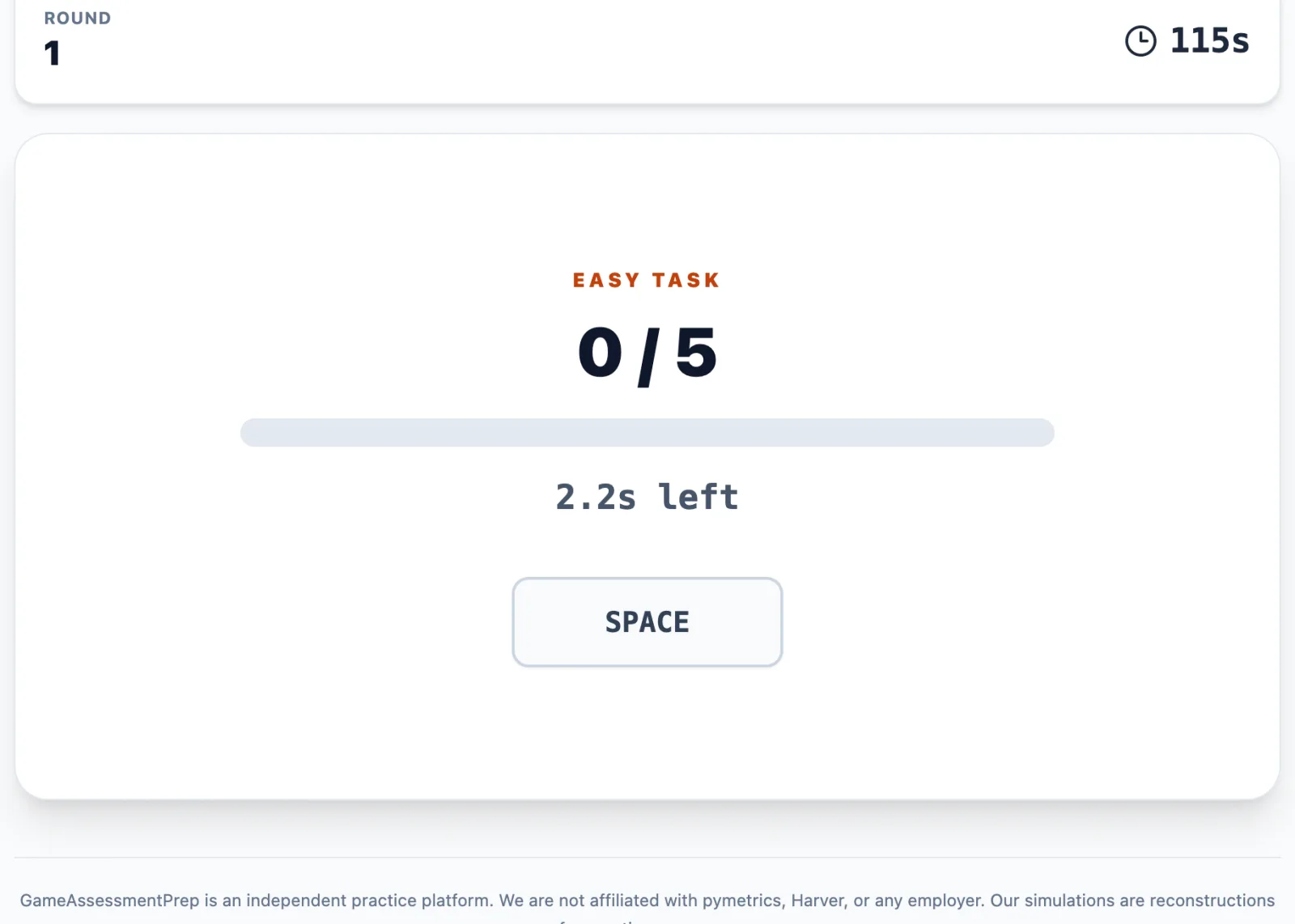
Choose Easy or Hard within 5 seconds. If time expires, Easy is selected automatically and logged as an automatic choice.
Easy requires 5 spacebar presses in 3 seconds for a guaranteed $1.00. Hard requires 60 presses in 12 seconds for the larger reward shown that round.
Hard rewards range from $1.24 to $4.30, and its shown win probability changes each round. Completing the presses resolves the reward against those odds; failing to finish forfeits that round.
Use the spacebar during the pressing phase, or the full-width TAP button on a touch device. The session ends after 2 minutes.
In the real assessment
The exact probability schedule and whether pymetrics uses a fixed round count or a two-minute cap remain unconfirmed. This reconstruction uses the recommended continuous 10–90% probabilities and timed mode; reward outcomes are part of the task.
Skills assessed
Create an account to save your results. A pymetrics pass includes unlimited replays. All results stay free.
Score improvement across practice attempts
Across our matched practice data, the median candidate improves their score by +14% between their first and fifth practice attempt on a game — with no employer ever seeing practice data.
Read the full methodologyMedian pymetrics score lift by practice attempt
Median paired change vs. first attempt on scored pymetrics practice games. Observed practice association — not a hiring-outcome guarantee.
Easy or Hard practice guide
Read the rules, scoring context and practice strategies for this game.
Read the Easy or Hard guideGameAssessmentPrep is an independent practice platform. We are not affiliated with pymetrics, Harver, or any employer. Our simulations are reconstructions for practice purposes.