pymetrics Lengths Game: Complete Practice Guide | Game Assessment Prep
By the Game Assessment Prep research teamUpdated September 28, 2026How we research
What is the pymetrics Lengths game?
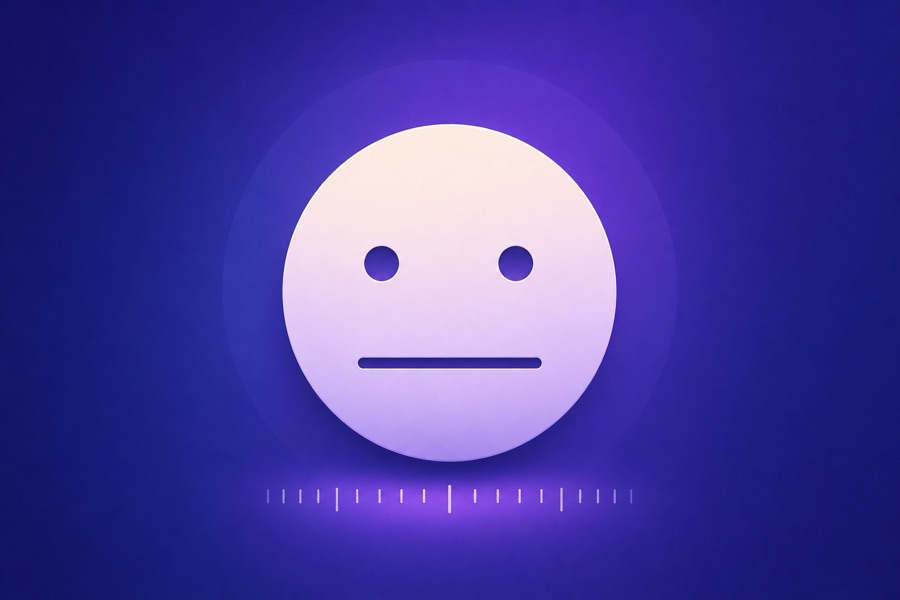
Lengths is a probabilistic reward task. A simple cartoon face appears briefly with a horizontal mouth that is either short or long. After the face disappears, you press Left Arrow for short or Right Arrow for long. The difference is deliberately subtle—about ten percent in our reconstruction—and the default flash lasts only 100 milliseconds.
The unusual part is the feedback. Some correct answers display +$0.20. Other correct answers advance silently. Incorrect answers also advance silently. One mouth variant, randomized for every seeded session, is the “rich” stimulus and receives reward opportunities three times as often as the lean variant.
You are never told which variant is rich during play. The game asks whether differential rewards gradually shift choices as well as whether you can discriminate the mouth lengths. It is not an abstract line-length task: a pymetrics patent specifically describes digital faces with short and long mouths and the Left-short, Right-long mapping.
What does Lengths measure?
The first measure is perceptual accuracy. Did you identify which mouth appeared after a very brief exposure? That skill-like outcome can be expressed as an accuracy percentage and a transparent practice percentile.
The second is response bias. If correct “long” choices are rewarded more often in a session, do you begin choosing long more frequently when the stimulus is ambiguous? Probabilistic Reward Task research summarizes this tendency with a log-b style statistic. A positive shift toward the rich answer is often described as reward responsiveness.
That shift is not a mistake or a moral judgment. It can reflect sensitivity to reinforcement, motivation, and how recent rewards influence uncertain decisions. Our completion insight uses neutral language whether your choices moved toward the rich variant, away from it, or remained balanced. Pymetrics does not publish how it weights this signal for any employer.
Why there is no right/wrong feedback
We deliberately show no check, cross, red flash, green flash, correct-answer label, or error message on any Lengths trial. Rewarded-correct trials show only +$0.20. Unrewarded-correct and wrong trials use the same blank screen for the same 500 milliseconds before the next face.
That silence is not missing product polish. The covert reward schedule is the measurement. If every correct answer received a check, you could learn the perceptual boundary directly, and the rich-versus-lean reward difference would no longer be the only asymmetric feedback. If wrong answers received a cross, they would reveal correctness while unrewarded correct answers did not, making silence informative in a different way.
Timing must also match. A longer pause after one outcome could leak information even without text or color. Keeping non-rewarded outcomes visually and temporally identical protects the task's logic. The running earnings total changes only when +$0.20 is shown, which is information the reward cue already reveals.
What is known—and what remains uncertain?
The task family and face-mouth stimulus are high-confidence because patent language is unusually specific. The approximately ten-percent mouth difference comes from academic PRT versions—often 10 versus 11 millimeters—not a published pymetrics value. Our SVG uses a similar relative difference rather than claiming exact production dimensions.
The 100-millisecond display is the academic canonical default and fits preparation descriptions of a sub-second flash. Exact pymetrics timing is unknown. The 3:1 rich-to-lean reward ratio is supported by the research paradigm and patent confirmation of asymmetric differential reinforcement, but the patent gives no numeric ratio.
Trial count is unresolved. A preparation source mentions both 135 and 90 in conflicting contexts, while academic tasks can be much longer. We use 90 balanced scored trials because it is the recommended build default and suitable for the short battery. The response window is an explicit practice assumption. Every disputed value is centralized in configuration and should be revised if reliable production footage emerges.
Six practical strategies
1. Fix the key mapping before the first trial
Repeat “left short, right long” once before starting. A reversed mapping creates errors unrelated to perception. Keep one finger over each arrow so the motor response stays consistent.
2. Look at the mouth location, not the whole screen
The face layout does not change. Rest your gaze near the center-lower part of the face before each flash. Avoid chasing the outline, eyes, or nose when the mouth is the discriminative feature.
3. Build a neutral internal reference
After several trials, form a rough memory of the midpoint between short and long. Compare each flash with that reference rather than relying on whether the previous mouth seemed longer. Trial order is randomized, so relative comparison with the last face can mislead.
4. Respond from the first clear impression
The image is gone before you answer. Repeatedly reconstructing it in your imagination can turn a weak visual trace into a confident but invented one. Make one controlled choice within the response window.
5. Notice rewards without forcing a strategy
The +$0.20 cue is real information, but one reward does not identify the rich variant. Let repeated reinforcement inform behavior naturally. Trying to count and reverse-engineer every cue can distract from seeing the mouth.
6. Treat silent trials identically
Silence does not tell you whether you were right. Do not interpret it as failure or change your key mapping. Reset your gaze and prepare for the next flash using the same routine.
How to read your practice result
Accuracy is correct choices divided by all 90 trials, including timeouts as incorrect. Earnings is the sum of visible twenty-cent rewards. The detailed record also contains the rich variant, choice rates toward short, long, and rich, plus a simple log-b response-bias estimate with a small correction so empty cells remain finite.
The practice percentile uses accuracy only. Response bias remains a neutral trait observation, not a higher-is-better score. Repeating the same seeded session is not the goal; use several rounds to see whether attention and the direction of bias are stable across random rich assignments.
Lengths FAQ
Why did I receive no feedback after my answer?
That is the intended design. Only a probabilistically rewarded correct response displays +$0.20. Every other outcome advances silently so correctness feedback cannot overwrite the covert reinforcement schedule.
Does +$0.20 mean that mouth is always correct?
It means your answer was correct on that trial and selected for reward. The same variant can be correct without reward later, and the other variant also receives some rewards.
Is moving toward the rich answer bad?
No. It is described as reward responsiveness, not an error. Accuracy and bias answer different questions and are reported separately.
Can I use touch controls?
Yes. The response screen provides left Short and right Long tap zones on coarse-pointer devices. Practice with physical arrow keys at least once because the real assessment is best taken on desktop.
Is there a pass mark?
No public universal pymetrics cutoff exists. The accuracy percentile belongs to this reconstruction, and the bias statistic is descriptive rather than evaluative.
Continue your pymetrics preparation
Review the complete guide library for game mechanics, transparent practice metrics, and focused strategies across the full battery.
Browse pymetrics guides